Fertility tracking apps are no longer niche wellness products. By 2026, they sit at the intersection of healthcare, data privacy, and personalized technology. Users expect accuracy, trust, and meaningful insights rather than simple date predictions. This shift has changed how fertility tracking apps are planned, built, and validated.
For startups and healthcare organizations, MVP development remains the smartest way to enter or expand in this space. A well-designed MVP allows teams to validate real user needs, test clinical assumptions, and build trust without overcommitting resources. However, fertility tracking app MVP development in 2026 requires a much more disciplined approach than in earlier years.
What a Fertility Tracking App MVP Means ?
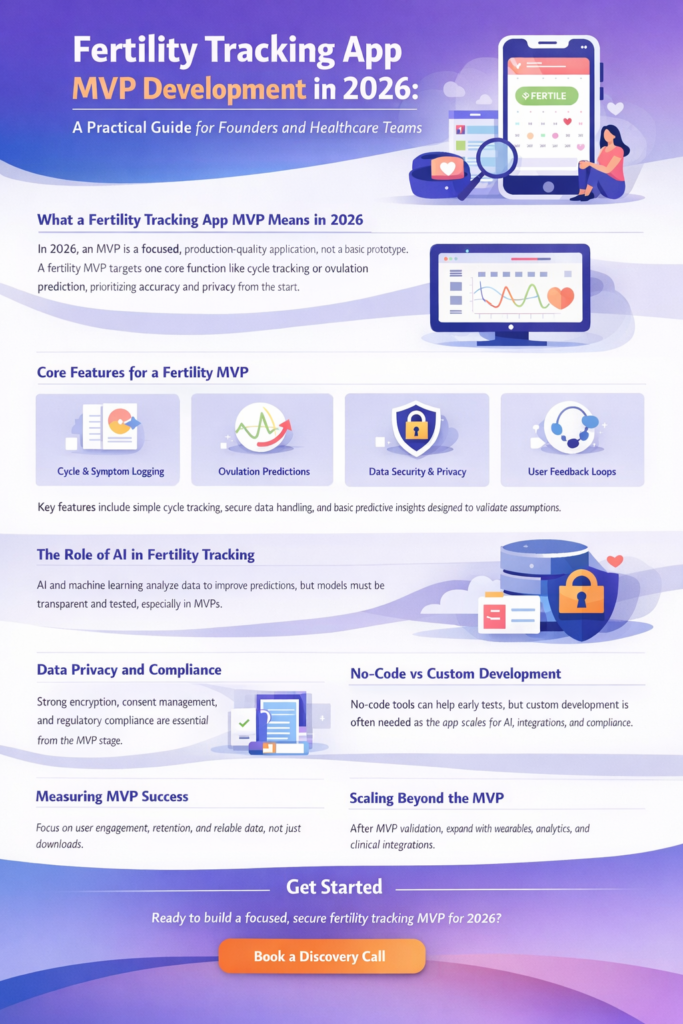
An MVP in 2026 is not a rough prototype. It is a focused, production-quality application that solves one core fertility-related problem while meeting modern expectations around privacy, reliability, and usability.
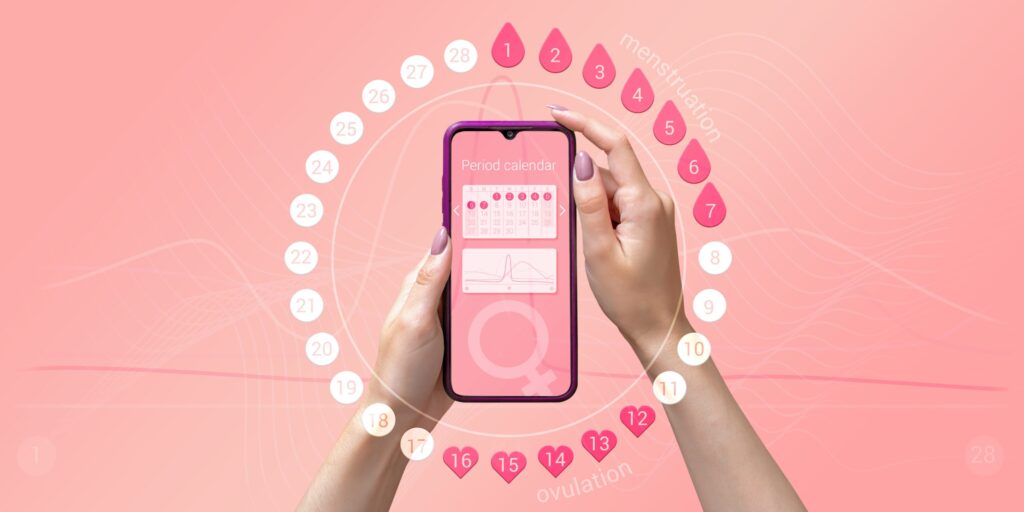
A fertility tracking MVP typically focuses on one primary function such as cycle tracking, ovulation prediction, or symptom logging. The goal is not to cover every possible feature, but to deliver consistent value and collect high-quality data and feedback from real users.
Why MVP-First Development Is Critical for Fertility Apps
Fertility data is deeply personal and highly sensitive. Building a full-scale product without validation increases the risk of poor adoption, compliance issues, and loss of user trust. An MVP-first approach allows teams to test assumptions in a controlled way.
In 2026, users are more aware of how their health data is used. They expect transparency, consent, and security from day one. An MVP helps teams prove they can meet these expectations before scaling.
Core Features of a Fertility Tracking MVP
A strong fertility tracking MVP keeps the feature set intentionally small. Common core features include secure user onboarding, cycle and symptom tracking, basic predictions, and data visualization that is easy to understand.
The emphasis should be on accuracy, clarity, and reliability rather than advanced analytics at the early stage. Each feature should exist to support learning and validation, not future marketing claims.
The Role of AI and Machine Learning in Fertility Tracking
AI plays a growing role in fertility tracking apps, but its use in 2026 is more responsible and measured. Instead of making bold medical claims, AI is used to identify patterns, support personalization, and improve predictions over time.
Machine learning models can analyze historical cycle data, lifestyle inputs, and user behavior to provide more relevant insights. However, these models must be transparent and tested carefully, especially during the MVP phase. Many teams validate AI features separately before making them central to the product experience.
Data Privacy and Compliance as MVP Requirements
Privacy is not an add-on in fertility tracking apps. It is a core requirement. Regulations and public scrutiny around reproductive health data have increased significantly, making security and compliance essential from the first release.
A fertility tracking MVP in 2026 should include encrypted data storage, clear consent mechanisms, role-based access controls, and user control over their data. Designing for privacy early prevents expensive rework and protects long-term credibility.
Designing for Trust and User Retention
Trust drives retention in fertility tracking apps. Users need to feel confident that the app respects their data and provides information responsibly. Overloading users with complex charts or unexplained predictions often reduces trust rather than increasing engagement.
Clear explanations, simple design, and honest communication about limitations help users stay engaged. An MVP should focus on building a calm, supportive experience rather than a feature-heavy interface.
Technology Architecture for Fertility MVPs
In 2026, fertility tracking apps benefit from tech-agnostic, modular architectures. This approach allows teams to update models, add integrations, or adjust workflows without rebuilding the entire system.
Scalable backend systems, well-defined APIs, and cloud-native infrastructure make it easier to move from MVP to full platform. These decisions are often invisible to users but determine how easily the product can grow.
No-Code vs Custom Development for Fertility MVPs
No-code and low-code tools can help validate early ideas or user flows, but most fertility tracking apps eventually require custom development. This is especially true when AI, integrations, or compliance requirements are involved.
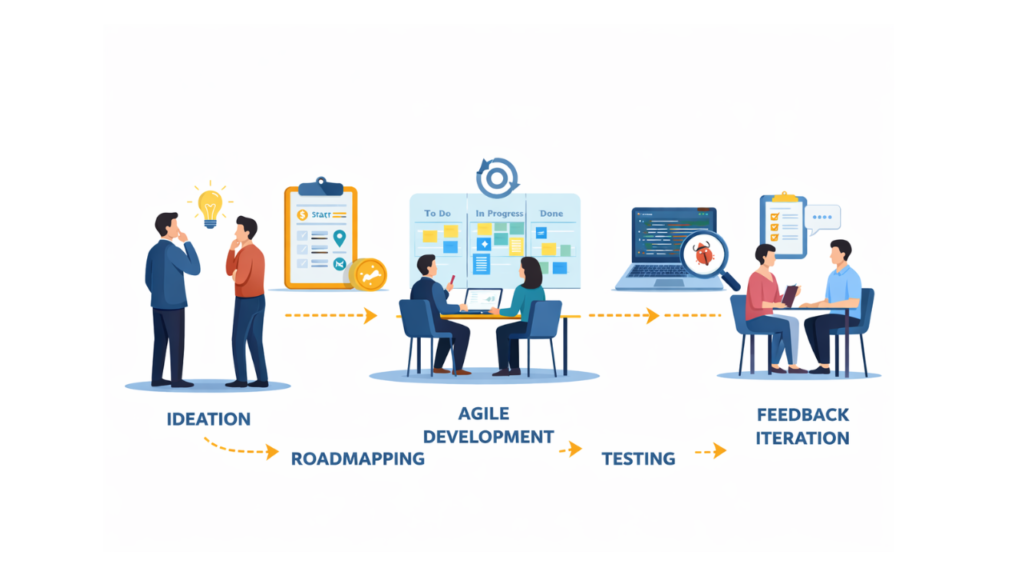
Many teams in 2026 start with lightweight tools for experimentation, then transition to custom engineering once the core use case and user demand are validated. A hybrid approach often balances speed and control effectively.
Measuring Success During the MVP Phase
Success metrics for a fertility tracking MVP are not based on downloads alone. Engagement, retention, data quality, and user feedback matter more than raw acquisition numbers.
An MVP should help teams answer key questions. Do users return consistently. Do they trust the predictions. Is the data reliable enough to support future features. These insights guide whether to iterate, pivot, or scale.
Scaling Beyond the MVP
A well-built MVP sets the foundation for scaling into a full fertility or women’s health platform. Once core assumptions are validated, teams can add advanced analytics, wearable integrations, partner features, or clinical workflows.
Because the architecture and data model were designed thoughtfully at the MVP stage, scaling becomes an extension rather than a rebuild. This reduces cost and accelerates growth.
The Future of Fertility Tracking Apps
Fertility tracking apps in 2026 are becoming part of broader healthcare ecosystems. Interoperability, evidence-based insights, and responsible AI will define successful products.
Teams that invest in disciplined MVP development position themselves to adapt to evolving regulations, technologies, and user expectations without losing trust.
Fertility tracking app MVP development in 2026 is about building responsibly, not just quickly. By focusing on a single meaningful problem, prioritizing privacy, and validating assumptions with real users, teams can create products that earn trust and scale sustainably.
A strong MVP is not the smallest product possible. It is the clearest, most reliable version of the product’s core promise.
By 2026, menstrual and fertility tracking apps remain the largest segment within the FemTech market, accounting for 37%+ of total adoption. This growth has been driven by rising awareness of menstrual health, increased focus on self-care, and global smartphone penetration exceeding 85%. Early leaders like Flo crossed 200 million users globally, setting clear benchmarks for user engagement, trust, and data-driven personalization.
User behavior continues to support market expansion. Studies conducted over the past few years consistently show that women are 20–30% more likely than men to adopt and regularly use mobile health and wellbeing apps, particularly those focused on prevention and long-term health management. As these apps integrate more deeply into daily routines, retention rates in women’s health platforms remain significantly higher than general wellness apps.
From a business standpoint, FemTech has transitioned from a niche category to a growth-driven health-tech segment. Although it represented only ~1% of total health technology investment in 2022, the global FemTech market reached an estimated valuation of $28+ billion by 2023 and has continued to expand through 2026. This growth is accelerating investment in AI-powered personalization, fertility planning solutions, menopause-focused platforms, and end-to-end health-tracking apps that support women across multiple life stages.
Fertility Tracking App FAQ
1: What is a fertility tracking app MVP?
A fertility tracking app MVP is a minimum viable product that focuses on core features like cycle tracking, symptom logging, and basic fertility insights. It helps validate user demand, data accuracy, and usability before building a full women’s health platform.
2: Why is MVP development important for fertility tracking apps in 2026?
In 2026, fertility apps must meet high standards for data privacy, trust, and accuracy. An MVP allows teams to test assumptions with real users, reduce regulatory risk, and avoid overbuilding features before validation.
3: What features should be included in a fertility tracking MVP?
A fertility tracking MVP should include secure user onboarding, menstrual cycle tracking, ovulation estimation, symptom logging, and clear data visualization. The focus should be on reliability and clarity rather than advanced or unproven features.
4: How is AI used in fertility tracking apps?
AI is used to identify patterns in cycle data, personalize insights, and improve predictions over time. In an MVP, AI should support users responsibly and transparently without making clinical claims or replacing medical guidance.
5: How do fertility tracking apps handle data privacy and security?
Fertility tracking apps must protect sensitive health data through encryption, consent management, and secure storage. Privacy-by-design architecture is essential from the MVP stage to comply with regulations and maintain user trust.
6: How long does it take to build a fertility tracking app MVP?
A focused fertility tracking MVP typically takes a few months, depending on feature scope, AI usage, and compliance requirements. The goal is fast validation, not a fully featured product.
7: Can a fertility tracking MVP be scaled into a full app later?
Yes. A well-designed MVP with modular architecture can be expanded into a full fertility or FemTech platform by adding features, integrations, and advanced analytics without rebuilding the system.
If you are planning a fertility tracking app and want to build a focused, secure, and scalable MVP for 2026, book a discovery call with Agnotic. We help founders and healthcare teams design and develop fertility tracking MVPs that are ready for real users and long-term growth.