
The women's health technology sector is experiencing unprecedented growth, with FemTech market valuations projected to exceed $60 billion by 2027. Yet despite this momentum, many FemTech founders struggle with a fundamental challenge: building an MVP that balances innovation with the complex regulatory, clinical, and user experience requirements unique to women's health.
If you're a FemTech founder or product leader planning to launch in 2026, you're entering the market at an inflection point. Investment is returning after the 2022-2023 funding slowdown, regulatory frameworks are maturing, and users expect sophisticated features like AI-driven personalization and remote patient monitoring from day one. The question isn't whether to build—it's how to build smart, compliant, and market-ready from your first release.
This guide walks you through every critical dimension of FemTech MVP development in 2026: from defining your problem and scope, to choosing your tech stack, implementing security and compliance, integrating AI features, and executing a go-to-market strategy that resonates with both users and healthcare stakeholders.
Validate Your FemTech Idea Before You Scale
Get expert guidance on features, compliance and technology before investing in full development.
Discuss FemTech IdeaWhat Makes a FemTech MVP Different From a Standard MVP
Building a minimum viable product for women's health isn't just regular MVP development with a pink color scheme. FemTech MVPs operate at the intersection of consumer health, clinical care, regulatory compliance, and deeply personal user experiences—creating unique constraints and opportunities.
The multi-stakeholder complexity
Unlike consumer apps where your user is your only customer, FemTech products often serve multiple audiences simultaneously. Your direct user might be a woman tracking her menstrual cycle, but your economic buyer could be an employer wellness program, insurance payer, or healthcare provider. Your MVP must deliver value across this ecosystem while maintaining focus.
Regulatory sensitivity from day one
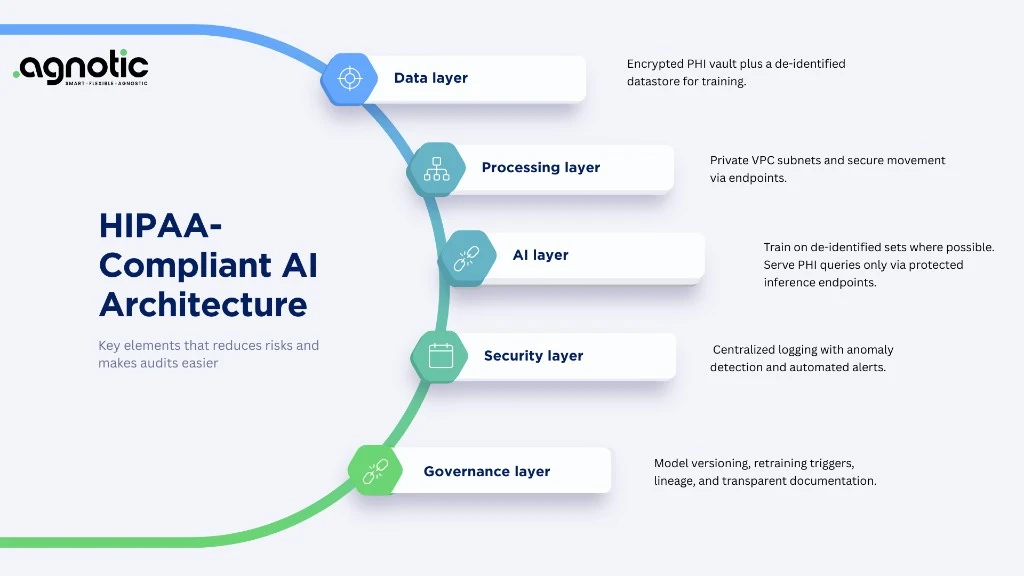
Even if you're not initially pursuing FDA clearance or making medical claims, FemTech apps handle Protected Health Information (PHI) and require HIPAA compliance if you're working with U.S. healthcare providers. European markets demand GDPR compliance with particular attention to consent management for sensitive health data. These aren't features you can add later—they're architectural decisions that shape your entire technical foundation.
Clinical workflow integration
The most successful FemTech solutions in 2026 don't exist in isolation. They integrate with existing clinical workflows, electronic health records (EHRs), remote patient monitoring platforms, and wearable devices. Your MVP scope must account for these integration points, even if initial versions use simplified implementations.
Cultural and linguistic sensitivity
Women's health encompasses sensitive topics—fertility challenges, pregnancy loss, sexual health, menopause symptoms—that require exceptional care in UX design, content, and feature presentation. A FemTech MVP must balance clinical accuracy with empathetic, inclusive language that respects diverse cultural contexts and personal circumstances.
The 2026 FemTech Landscape: Trends Shaping Your MVP Strategy
Understanding where the FemTech market is heading helps you build an MVP that won't feel dated six months after launch.
AI-driven personalization is now table stakes
Users in 2026 expect health apps to learn from their data and provide personalized insights, not generic content. Your MVP should include at least basic personalization—whether that's cycle predictions informed by individual patterns, symptom correlation analysis, or content recommendations based on health goals and life stage.
Remote patient monitoring (RPM) integration opens new revenue models
The expansion of reimbursement for remote patient monitoring has created opportunities for FemTech companies to partner with healthcare providers and payers. If your solution addresses chronic conditions like endometriosis, PCOS, gestational diabetes, or postpartum depression, consider RPM-compatible features in your MVP: regular symptom check-ins, objective health measurements from wearables, and clinical alerting capabilities.
Menopause and midlife health are hot markets
While fertility tracking dominated early FemTech, 2026 shows strong investor interest in menopause management, perimenopause support, and women's midlife health. These users often have higher disposable income, are less price-sensitive, and face significant gaps in clinical care—making them attractive MVP targets.
Employer and payer partnerships drive growth
Direct-to-consumer acquisition remains expensive. The most capital-efficient FemTech companies in 2026 pursue B2B2C models, partnering with employers, health plans, and provider organizations to reach users through benefits programs rather than paid advertising.
Mental health integration is critical
Reproductive health, hormonal changes, and mental health are deeply interconnected. FemTech MVPs that address anxiety, depression screening, stress management, or emotional wellbeing alongside physical health metrics see significantly higher engagement and retention.
Defining Your FemTech MVP: Problem, Personas, and Use Cases
The most common MVP mistake isn't building the wrong features—it's trying to solve too many problems for too many people simultaneously.
Start with a razor-sharp problem statement
Instead of "helping women with their health," get specific: "Enable women with endometriosis to track symptoms, identify triggers, and share validated clinical data with their gynecologist to inform treatment decisions." This level of specificity drives every downstream decision.
Limit yourself to 1-2 core personas
You might eventually serve patients, providers, employers, and caregivers, but your MVP should obsess over one or two. For example: Primary: Women aged 28-42 diagnosed with endometriosis, currently managing symptoms without clear treatment pathway. Secondary: Gynecologists treating endometriosis patients who need better data between visits.
Define 2-3 critical use cases
These should represent the minimum set of interactions that deliver real value. For an endometriosis MVP: Daily symptom logging with pain scales, triggers, and impact on daily activities; Pattern recognition showing correlations between symptoms, cycle phase, diet, and stress; Export validated symptom reports optimized for clinical review.
Validate with real users before building
Conduct 15-20 problem interviews with women experiencing your target condition. Run design sprints with clickable prototypes. Partner with 2-3 clinical advisors who treat your target population. This upfront validation prevents building something technically impressive that nobody uses.
Scoping Features: What to Include in a FemTech MVP (and What to Defer)
Feature scope makes or breaks MVP timelines and budgets. Use this framework to prioritize ruthlessly.
Must-have for launch
- Secure user authentication with medical-grade privacy controls
- Core tracking functionality for your primary use case (symptoms, cycles, medications, etc.)
- Basic data visualization that reveals patterns and insights
- Privacy controls allowing users to manage what data is collected and shared
- Educational content explaining how to use the app and interpret results
- Consent flows and terms that meet regulatory requirements
- Data export functionality (required for HIPAA patient rights)
Important but can be simplified for MVP
- Provider/caregiver access portals (start with exported PDFs rather than real-time dashboards)
- Wearable device integration (begin with manual data entry, add API connections post-launch)
- Community or peer support features (defer unless core to your value proposition)
- Telehealth or appointment scheduling (partner with existing platforms rather than building)
- Medication tracking and reminders (add post-launch if validated as critical)
Park for post-MVP iterations
- AI-driven clinical decision support requiring FDA clearance
- Multiple language support beyond your launch market
- Native integrations with multiple EHR systems (start with one if needed)
- Gamification and rewards programs
- Marketplace or e-commerce features
- Advanced analytics and cohort comparison tools
FemTech-specific features to consider
- Discreet mode: Privacy-conscious UI that doesn't display sensitive health information on lock screens or in app previews
- Cycle/hormone phase context: If relevant to your condition, show how symptoms correlate with menstrual cycle or hormone fluctuations
- Trigger tracking: For conditions like migraines, endometriosis, or PCOS, allow users to log potential triggers (diet, stress, sleep, exercise)
- Care pathway guidance: Step-by-step recommendations for when to see a provider, what questions to ask, and how to advocate for appropriate care
Realistic Timeline to Build a FemTech MVP in 2026
FemTech MVPs typically take 4-8 months from kickoff to launch, depending on complexity, team experience, and regulatory requirements.
Discovery and product definition (2-4 weeks)
- Stakeholder workshops to align on vision, success metrics, and constraints
- User research synthesis and persona development
- Competitive analysis and market positioning
- Feature prioritization and MVP scope lock
- Technical architecture planning with security and compliance review
UX/UI design and prototyping (3-6 weeks)
- Information architecture and user flow mapping
- Wireframes and interactive prototypes
- Visual design applying brand guidelines
- Usability testing with 5-10 target users per major flow
- Design system documentation for consistent implementation
Development and testing (12-20 weeks)
- Sprint 1-2: Authentication, user management, basic profile (2-3 weeks)
- Sprint 3-5: Core tracking functionality and data models (4-6 weeks)
- Sprint 6-8: Data visualization, insights, and pattern recognition (4-5 weeks)
- Sprint 9-10: Privacy controls, consent flows, data export (2-3 weeks)
- Sprint 11-12: Integration work (wearables, EHR, etc.) if in scope (2-3 weeks)
- Ongoing: Security testing, compliance review, performance optimization
Beta testing and refinement (2-4 weeks)
- Closed beta with 25-50 users providing structured feedback
- Bug fixes and usability refinements
- Clinical advisor review if health claims are being made
- Final compliance audit and penetration testing
Factors that extend timelines
- Custom EHR integrations (add 4-8 weeks per system)
- FDA submission preparation (add 8-16 weeks)
- Clinical validation studies (add 3-6 months)
- Building across iOS, Android, and web simultaneously (add 30-40% to development time)
- Complex AI/ML features requiring training data and model development
Factors that accelerate timelines
- Reusing proven design systems and component libraries
- Leveraging healthcare-specific development frameworks
- Starting with single platform (iOS or web only)
- Using existing authentication and compliance infrastructure
- Having clinical advisors embedded in the team from day one
Choosing the Right Tech Stack for Your FemTech MVP
Your technology decisions must balance speed to market with security, scalability, and compliance requirements.
Frontend considerations
Web application: Modern JavaScript frameworks like React or Vue.js with TypeScript offer type safety. Next.js or Nuxt add server-side rendering for better SEO—important for content-heavy FemTech apps. Mobile: React Native or Flutter enable code sharing across iOS and Android. For most FemTech MVPs in 2026, React Native with Expo offers the sweet spot: reasonable performance, extensive healthcare-specific libraries, and a large developer talent pool.
Backend architecture
Node.js with Express or NestJS provides mature FHIR libraries, HIPAA-compliant hosting options, and strong JSON handling. Python with Django or FastAPI is viable if your roadmap includes machine learning. Your backend must implement RESTful or GraphQL APIs with robust auth, HIPAA-compliant audit logging, encryption at rest and in transit, rate limiting, automated backups, and secrets management.
Database selection
PostgreSQL remains the gold standard for healthcare applications—complex queries, strong data integrity, and HIPAA compliance. JSONB supports evolving schemas. For time-series health data, consider TimescaleDB or InfluxDB.
Cloud infrastructure
AWS, Azure, and Google Cloud all offer HIPAA-eligible services with BAAs. AWS has the strongest healthcare ecosystem (HealthLake, Comprehend Medical). Azure excels for Microsoft 365 integration. Google Cloud leads on AI/ML. Use managed services (RDS, managed Kubernetes, managed Redis) to reduce operational burden.
Security, Privacy, and Compliance: Non-Negotiable Foundations
Building a compliant FemTech MVP isn't about checking boxes—it's about architecting trust into every interaction.
HIPAA compliance essentials (U.S. market)
- Execute Business Associate Agreements with all vendors handling PHI
- Implement minimum necessary access controls
- Encrypt all PHI at rest (AES-256) and in transit (TLS 1.3+)
- Maintain audit logs of all access, modifications, and deletions for 6+ years
- Establish breach notification procedures meeting 60-day requirements
- Conduct annual risk assessments and penetration testing
- Train all team members on HIPAA requirements
GDPR compliance essentials (European market)
- Granular consent management for specific data processing purposes
- Data portability in machine-readable format
- Right to erasure with documented deletion processes
- Data processing agreements with all sub-processors
- Privacy impact assessments for high-risk processing
- Data Protection Officer if processing health data at scale
- Data residency requirements (EU data stays in EU)
Security implementation checklist
- Multi-factor authentication and biometric auth (Face ID, Touch ID)
- Session management with automatic timeout
- Secure password policies and breach database checking
- API rate limiting and abuse detection
- Regular dependency updates and vulnerability scanning
- Penetration testing before launch and annually
- Incident response plan with escalation procedures
Privacy-by-design principles
- Data minimization: only collect information essential to your core use case
- Purpose limitation: clearly explain why each data point is collected
- Storage limitation: retention policies that delete data no longer needed
- Transparency: plain-language privacy policy
- User control: granular settings for data sharing, notifications, and third-party access
Integrations: Connecting Your FemTech MVP to the Healthcare Ecosystem
Standalone health apps have limited value. Strategic integrations multiply your impact.
Electronic Health Record (EHR) integration
FHIR has become the standard. Your MVP should expose FHIR-compliant APIs for patient demographics, observations, conditions, medications. Start with read-only integrations before bidirectional sync. Partner with one major EHR vendor (Epic, Cerner, Athena) for your pilot.
Wearable and device integration
Apple HealthKit and Google Fit aggregate heart rate, sleep, activity, cycle tracking, body temperature. For clinical-grade devices, partner with device manufacturers or RPM platforms.
Remote Patient Monitoring (RPM) platforms
Integrate with Vivify Health, CareSimple, or 100Plus for device provisioning, care team dashboards, billing, and CMS RPM compliance. Focus on your unique clinical insight; partner for infrastructure.
Telehealth integration
Embed video consultations using Twilio Video, Zoom Healthcare, or Doxy.me rather than building proprietary telehealth.
AI and Machine Learning: Practical Features for FemTech MVPs
AI in healthcare carries heightened responsibility. Focus on features that enhance user experience without making clinical decisions.
MVP-appropriate AI use cases
- Personalized content recommendations based on health profile and engagement
- Symptom pattern recognition (e.g., migraine correlations with cycle phase or diet)
- Predictive cycle and symptom tracking from historical data
- Smart data entry: NLP to extract structured data from free-text symptom descriptions
- Adherence and engagement nudges using ML to predict disengagement
AI guardrails for healthcare
- Never present AI outputs as medical advice or diagnosis
- Always provide explainability for insights and recommendations
- Implement human review for automated clinical communications
- Train models on diverse datasets
- Monitor for algorithmic bias and health equity impacts
- Document AI development and validation for regulatory review
- Start with narrow, well-defined problems
Data and privacy considerations
- Explicit consent before using health data for AI training
- Opt-out options for training data
- Differential privacy techniques when possible
- Never sell or share identifiable training data
- Document data lineage and versioning
Design and UX: Building Trust Through Thoughtful Interfaces
FemTech UX must balance clinical functionality with emotional intelligence.
Inclusive design principles
Design for the full spectrum—different ages, ethnicities, body types, gender identities, socioeconomic backgrounds, abilities, and health literacy levels. Test with diverse user groups.
Language and tone
- Use medically accurate terminology with plain-language explanations
- Avoid diminutive language ("Aunt Flo," "lady parts")
- Respect cultural sensitivities
- Content at 8th grade reading level or below
- Allow users to customize terminology
Privacy-conscious interactions
- Discreet mode hiding sensitive info from lock screens and app switchers
- Neutral notification copy
- Separate profiles for shared devices
- Customizable data visibility in summaries and charts
- Design for plausible deniability
Accessibility requirements
- WCAG 2.1 AA minimum (AAA for critical health info)
- Screen reader compatibility with semantic HTML and ARIA
- Sufficient color contrast
- Keyboard navigation for critical functions
- Captions and transcripts for video
- Alternatives to time-based interactions
Onboarding that builds trust
- Progressive disclosure—don't ask for complete health history on day one
- Explain the "why" behind every data request
- Show example insights before requiring input
- Provide immediate value before demanding commitment
- Make privacy controls visible throughout onboarding
- Offer guest or demo modes
Measuring Success: Metrics That Matter for FemTech MVPs
Downloads and sign-ups matter less than sustained engagement and health outcomes.
User engagement metrics
- DAU/WAU/MAU
- Symptom log completion rate (target: 60%+)
- Average session duration and depth
- Multi-week retention (30/60/90-day cohorts)
- Feature adoption for core functionality
Health outcome proxies
- Symptom improvement trends
- Medication/treatment adherence
- Care plan milestone completion
- Provider visit preparation completeness
- Patient-reported outcome measures (PROMs)
Business and growth metrics
- Cost per acquisition by channel
- Conversion from free to paid
- NPS and qualitative feedback
- Provider or employer partnership pipeline
- Referral rates
For B2B2C models
- Employer/payer engagement
- Utilization rates
- Clinical outcome improvements vs. control
- Total cost of care impact
- ROI for enterprise customers
Avoid vanity metrics
- Total downloads without activation
- Page views without engagement depth
- Social media followers without conversion
- Press mentions without user growth correlation
Go-to-Market: Launching Your FemTech MVP Successfully
The best product fails without thoughtful distribution and market positioning.
Pre-launch foundation (8-12 weeks before)
- Content marketing targeting your condition and persona
- SEO for condition-specific long-tail keywords
- Partnerships with patient advocacy organizations and influencers
- Advisory board of 3-5 clinicians willing to refer
- Waitlist landing page with 500+ signups validating demand
Pilot program strategy
Rather than broad public launch, run structured pilots: 2-3 clinical practices with 25-50 patients each; 1-2 employer wellness programs; patient advocacy organization providing access. Pilots provide controlled feedback, testimonials, case studies, and proof of clinical value.
Channel strategy
Direct to consumer: Content marketing and SEO, paid search for high-intent keywords, social media (Instagram, TikTok), influencer partnerships, PR. Healthcare providers: CME-eligible content, clinical workflow integration, case studies, presence at ACOG, NAMS. Employers and health plans: ROI calculators, pilot programs, benefits broker relationships.
Positioning and messaging
Avoid generic "women's health app" positioning. Own a specific problem: "The clinical-grade endometriosis tracking platform providers trust"; "Menopause management backed by gynecologist-validated insights"; "The pregnancy wellness companion for high-risk maternal health." Specific positioning attracts ideal users and improves unit economics.
Choosing the Right FemTech MVP Development Partner
Essential experience requirements
- Portfolio of shipped healthcare applications with HIPAA compliance
- Understanding of clinical workflows and healthcare stakeholders
- Security and privacy expertise beyond generic web development
- Product discovery and validation capabilities
- Track record launching MVPs that evolved into funded companies
Red flags to avoid
- No healthcare experience, confident they can figure it out
- Outsourcing compliance and security as afterthoughts
- Fixed-price contracts without product discovery
- Inability to show live healthcare applications
- No dedicated QA and security expertise
- Unrealistic timelines without understanding requirements
Questions to ask potential partners
- "Walk me through a healthcare MVP you've built. What were the key compliance challenges?"
- "How do you approach HIPAA compliance architecture?"
- "What's your process for user research and validation before development?"
- "How do you handle EHR, wearable, or health platform integrations?"
- "What happens if we need FDA guidance or regulatory support?"
- "Can you show 2-3 healthcare applications still actively maintained?"
- "What's your approach to post-launch iteration?"
Engagement models
Fixed-price works for well-defined scope but limits flexibility. Time and materials provides flexibility but requires active oversight. Dedicated team offers most control. Most FemTech MVPs benefit from phased approach: fixed-price discovery and design, then time and materials for development with sprint planning.
Your FemTech MVP Checklist: From Idea to Launch
Strategy and validation
- Razor-sharp problem statement
- 15+ problem interviews completed
- Clinical advisors engaged
- Competitive landscape analyzed
- Business model defined
Product and design
- User personas and jobs-to-be-done
- 2-3 critical use cases prioritized
- Wireframes and prototype tested
- Visual design aligned
- Accessibility requirements defined
Technical foundation
- Tech stack with security and scalability
- HIPAA-eligible cloud infrastructure
- Data model for privacy and compliance
- Auth architecture defined
- Integration requirements scoped
Security and compliance
- HIPAA/GDPR mapped to features
- Encryption strategy
- Audit logging design
- BAAs with all vendors
- Privacy policy with legal review
- Incident response plan
Development and testing
- Sprints with clear milestones
- QA strategy and test coverage
- Beta testing plan
- Performance and security testing
- App store submission reviewed
Go-to-market
- Launch channels defined
- Content and SEO in motion
- Pilot partners identified
- Success metrics established
- Post-launch roadmap drafted
The Path Forward: Building FemTech That Matters
Women's health has been underserved by technology for too long. The FemTech movement represents more than market opportunity—it's a chance to close critical gaps in care, give women tools to understand their bodies, and empower better health decisions through data and insight.
Building a FemTech MVP in 2026 is complex. You're navigating regulatory frameworks, technical challenges around data privacy, and the responsibility of serving users during vulnerable health experiences. But this complexity also creates moats—competitors can't simply copy features when they require clinical validation, compliance expertise, and deep understanding of women's health journeys.
Start with a focused problem you understand deeply. Build your MVP with compliance and privacy as foundations, not afterthoughts. Design for real women in real situations. Launch through partnerships that provide validation. Measure what matters: sustained engagement, health improvements, and user satisfaction.
The future of women's health technology won't be built by generic app developers adding pink themes. It will be built by teams that combine clinical expertise, technical excellence, regulatory knowledge, and genuine empathy.
Your FemTech MVP is the first step in that journey. Build it thoughtfully, launch it strategically, and iterate based on what real women tell you they need. The market is ready. The technology is mature. The opportunity is enormous. Now it's time to build.
Build Your FemTech MVP with Agnotic
Turn your women's health idea into a secure, compliant and scalable MVP. Talk to our team and get a clear roadmap for launch.