Regional / state HIE
Cross-organization exchange for a region, state, or care community.

We build HIE platforms that move patient data across organizations — C-CDA document exchange, FHIR APIs, and QHIN connectivity under TEFCA — with master patient indexing and consent management at the core.
Trusted by global innovators









An HIE moves a patient's record between organizations that don't share a database. That means resolving identity across systems with a master patient index (MPI), exchanging clinical summaries as C-CDA documents, and increasingly serving discrete data over FHIR APIs so receiving systems get structured resources rather than a PDF-like blob. Each of those is a hard problem; together they are the reason generic integration tools don't cut it.
The policy layer is now inseparable from the technology. TEFCA and its Qualified Health Information Networks (QHINs) define a national floor for interoperable data sharing, and every exchange has to honor patient consent and produce an auditable trail of who accessed what. We build the plumbing and the governance together — MPI, C-CDA and FHIR exchange, consent, and QHIN connectivity — so data sharing is trustworthy, not just technically possible.
What it is
A health information exchange lets independent organizations share a patient's clinical data. It resolves identity with a master patient index, exchanges summaries as C-CDA documents and discrete data over FHIR, and enforces consent on every disclosure.
Under TEFCA, exchanges connect to Qualified Health Information Networks for national reach. We build the technical plumbing and the governance layer together so sharing is both possible and trustworthy.
See how we design master patient indexing, C-CDA and FHIR exchange, consent, and QHIN connectivity across the HIE platforms we build.

Each capability ties a data-sharing function to the standard or policy that makes it interoperable and trusted.
Probabilistic and deterministic patient matching across source systems so a record from one organization resolves to the right person everywhere else.
Generate, parse, and reconcile Consolidated CDA documents — CCD, referral notes, and discharge summaries — the workhorse format for cross-organization clinical summaries.
Expose discrete data over FHIR R4 APIs and support US Core profiles so receiving systems consume structured resources instead of parsing documents.
Connect to the national exchange framework through a Qualified Health Information Network so your participants reach data beyond the local footprint under a common trust agreement.
Opt-in/opt-out models, purpose-of-use enforcement, and granular consent so data only flows where the patient and policy allow — with every decision recorded.
Immutable, queryable logs of every query and disclosure aligned to HIPAA, so participants can answer who accessed a record, when, and why.
Where it runs
Cross-organization exchange for a region, state, or care community.
Data aggregation across an accountable care organization's participants.
Discharge and referral summaries shared across acute and post-acute settings.
Bidirectional clinical data sharing supporting value-based programs.
Standardized reporting feeds to public health agencies.
Longitudinal patient records assembled from many source systems.
HIE fails when identity, consent, and audit are afterthoughts. We build them as the foundation, then layer exchange on top.
Health Insurance Portability and Accountability Act
Protect PHI with privacy-first architecture, encrypted storage and transmission, strict access controls, and traceable audit logs.

General Data Protection Regulation
Implement lawful consent flows, data minimization, retention controls, and secure processing for sensitive health data.

Fast Healthcare Interoperability Resources
Enable standardized health data exchange across apps, care teams, and systems through robust FHIR-ready APIs.

Health Level Seven International
Support enterprise-grade interoperability with HL7-based integrations for records, events, and clinical messaging workflows.

Health Information Trust Alliance
Align security programs to healthcare-specific control and risk management practices trusted by providers and ecosystem partners.

Health Information Technology for Economic and Clinical Health Act
Design with breach notification readiness, digital record safeguards, and operational controls that support regulated care programs.

FDA Software as a Medical Device
Plan software quality, traceability, and documentation pathways for products that may require SaMD review and submission.

Medical Device Regulation (European Union)
Prepare EU market-ready processes for risk classification, evidence tracking, and lifecycle governance under MDR expectations.

Substance Abuse and Mental Health Services Administration
Apply confidentiality controls and consent-aware sharing models for behavioral and mental health data experiences.
Standards we build against
Identity resolution, document and FHIR exchange, and governance are built together so the HIE is trustworthy from launch.
We map participants, data-sharing agreements, consent models, and TEFCA/QHIN requirements before building the exchange layer.
We stand up the master patient index with matching rules and stewardship tooling so records resolve to the right patient across systems.
We build C-CDA document exchange and FHIR R4 data services with US Core profiles, validated against real participant data.
QHIN onboarding, consent enforcement, and phased participant rollout with exchange-volume and access-audit dashboards.
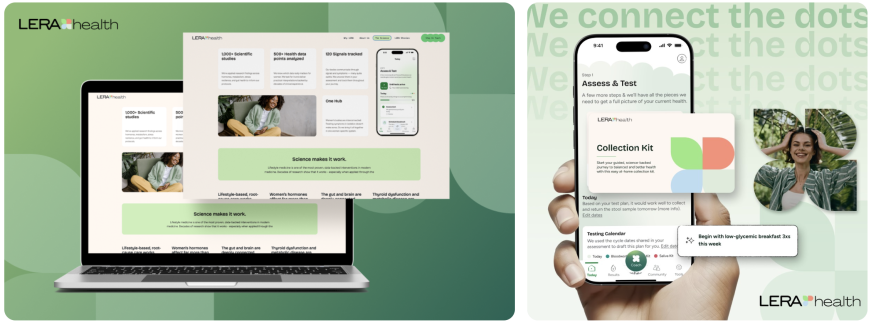
Related proof of compliant delivery: on Lera Health we built the privacy-first data layer, consent handling, and secure workflows end to end — the same governance and auditability an HIE requires to be trusted by its participants.
HIE is equal parts standards and governance. We bring both, plus the audit discipline participants demand.
Consent, purpose-of-use, and audit designed into the exchange from sprint one — the foundation participants trust.
C-CDA, FHIR US Core, and TEFCA are our working vocabulary, so your team isn't teaching us the exchange landscape.
We land a working exchange between core participants first, then scale connectivity — value early, national reach later.
Architecture that adds participants and QHIN reach without re-plumbing identity, consent, or audit.

Share your participants and data-sharing goals. We'll return a phased plan covering MPI, C-CDA and FHIR exchange, consent, and TEFCA/QHIN connectivity.
contact@agnotic.com
Partnerships
contact@agnotic.com