Challenge
One-off connector sprawl
Agnotic approach
Use reusable adapter patterns with canonical models so new integrations scale without full rewrites.

We architect, build, and operationalize interoperability across EHR/EMR systems, FHIR R4 APIs, HL7 v2 interfaces, X12 payer feeds, SMART on FHIR apps, and TEFCA/QHIN networks — so clinical data moves reliably where care happens.
Trusted by global innovators











Healthcare interoperability is the discipline of making clinical and administrative data flow safely between systems without losing context, fidelity, or auditability. Real interoperability is measured in data liquidity — the ability for the right data to reach the right system at the right moment, across EHRs, payers, labs, and patient apps.
That rarely means a single standard. Modern products need FHIR R4 for APIs, HL7 v2 for legacy event feeds, X12 for payer and claims exchange, and TEFCA/QHIN connectivity for nationwide query — all under HIPAA. We architect the hybrid, build the connectors, and operate them so data keeps moving after go-live instead of stalling at the first integration.
What this pillar covers
Healthcare interoperability is the discipline of making clinical and operational data flow safely between systems without losing context, fidelity, or auditability.
Most healthcare organizations need a hybrid approach: FHIR R4 for modern APIs, HL7 v2 for existing event flows, and SMART on FHIR for app experiences inside EHR workflows. This page is the pillar that connects those implementation tracks.
A layered interoperability architecture that separates the API and messaging layer, the terminology and canonical-model layer, and the observability and network-connectivity layer — so new standards and partners can be added without rewrites.

Common blockers
Challenge
One-off connector sprawl
Agnotic approach
Use reusable adapter patterns with canonical models so new integrations scale without full rewrites.
Challenge
Partner schema and API drift
Agnotic approach
Run version-aware contracts, compatibility checks, and rollback-safe release patterns.
Challenge
Poor production visibility
Agnotic approach
Instrument transaction-level telemetry and alerting across all interoperability paths.
Challenge
Standards chosen by preference, not fit
Agnotic approach
Apply workflow-driven standards selection with explicit FHIR, HL7, and SMART criteria.
Every capability pairs an interoperability outcome with the standard or network that makes it real in production.
Resource-level FHIR R4 integration, profile-aware mapping, SMART-aligned access, and Bulk FHIR $export for population-scale data movement — the modern backbone of health data liquidity.
ADT/ORM/ORU/SIU message pipelines through Mirth, Rhapsody, or cloud interface engines, with replay-safe queues, retries, and traceable acknowledgements for legacy hospital feeds.
X12 837/835 claims and 270/271 eligibility exchange, so interoperability extends into administrative and payer data — not just the clinical chart.
Nationwide exchange readiness under TEFCA — connecting through a QHIN (Qualified Health Information Network) and existing HIEs so your platform participates in cross-network query and retrieval.
Secure launch contexts, OAuth2 scopes, and app embedding inside clinician workflows across Epic, Cerner, and other EHR ecosystems.
SNOMED, LOINC, ICD-10, and RxNorm alignment against canonical models, plus transaction-level tracing and interface health dashboards that keep data liquidity reliable in production.
Where it applies
Unified patient context across provider systems, care teams, and patient-facing products.
Reliable order/result exchange across EHRs, diagnostic systems, and downstream analytics.
SMART-enabled specialty workflows launched directly inside provider EHR environments.
FHIR/HL7 ingestion streams powering quality metrics, utilization analysis, and risk modeling.
Telehealth and RPM experiences synchronized with systems of record for continuity of care.
Payer, pharmacy, and specialty-network data exchange with security and audit controls.
Interoperability succeeds when standards selection, integration architecture, and operations are designed together from day one.

Health Insurance Portability and Accountability Act
Protect PHI with privacy-first architecture, encrypted storage and transmission, strict access controls, and traceable audit logs.

General Data Protection Regulation
Implement lawful consent flows, data minimization, retention controls, and secure processing for sensitive health data.

Fast Healthcare Interoperability Resources
Enable standardized health data exchange across apps, care teams, and systems through robust FHIR-ready APIs.

Health Level Seven International
Support enterprise-grade interoperability with HL7-based integrations for records, events, and clinical messaging workflows.

Health Information Trust Alliance
Align security programs to healthcare-specific control and risk management practices trusted by providers and ecosystem partners.

Health Information Technology for Economic and Clinical Health Act
Design with breach notification readiness, digital record safeguards, and operational controls that support regulated care programs.

FDA Software as a Medical Device
Plan software quality, traceability, and documentation pathways for products that may require SaMD review and submission.

Medical Device Regulation (European Union)
Prepare EU market-ready processes for risk classification, evidence tracking, and lifecycle governance under MDR expectations.

Substance Abuse and Mental Health Services Administration
Apply confidentiality controls and consent-aware sharing models for behavioral and mental health data experiences.
Standards and compliance
A phased delivery that de-risks standards selection, partner onboarding, and production reliability — sequenced so early value lands first.
We map the system landscape, decide the FHIR / HL7 / X12 / TEFCA approach per data flow, and define measurable data-liquidity outcomes before any build.
We plan sandbox access, interface dependencies, QHIN/partner readiness, and canonical models before committing to build.
We build adapter-based connectors, FHIR APIs, HL7 interface engines, and X12 pipelines aligned to a canonical model, validated with contract and data-quality tests.
Phased cutovers with transaction-level telemetry, alerting, and runbooks for failure recovery and partner evolution — so data keeps flowing.
Standards decision
Most healthcare products need more than one standard. Selection should follow workflow and system constraints, not trend bias.
| Standard | Primary role | Best fit |
|---|---|---|
| FHIR R4 | Resource-oriented API interoperability | Modern product integrations, patient apps, analytics pipelines |
| HL7 v2 | Event and message-based exchange | Legacy hospital systems, lab/result workflows, scheduling and admissions |
| SMART on FHIR | Secure app launch and in-EHR context | Embedded clinical tools and third-party apps inside provider workflows |
Pillar strategy: FHIR-first where possible, HL7 where required, SMART where apps run inside EHR context.
Related proof of standards-based delivery: for Lera Health we built a privacy-first data layer and testing-to-insights workflow end to end. It demonstrates how we model PHI, consent, and standards-aligned data the same way a production interoperability program demands.
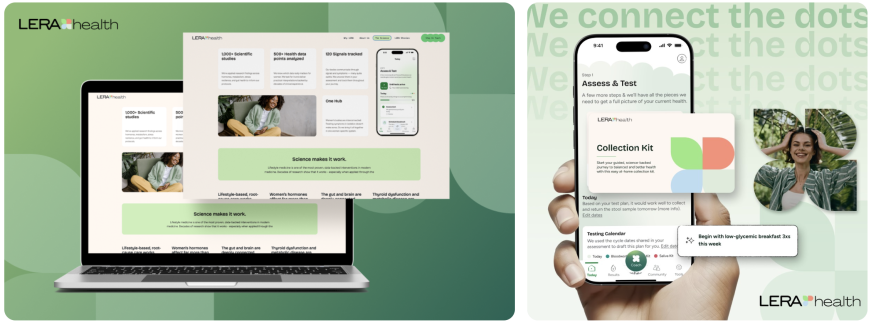
From provider systems and payers to digital-health platforms — we bring the standards fluency and operational discipline to make data liquidity real, not aspirational.
FHIR, HL7, X12, and TEFCA/QHIN patterns designed into the architecture from sprint one — chosen by fit, not by trend.
We've built across EHR, lab, payer, and network exchange, so your team won't spend the engagement teaching us how each standard behaves.
Milestone-driven delivery that ships the highest-value data flow first, then extends coverage rather than boiling the ocean.
Design, engineering, QA, and compliance under one point of accountability — a team fluent in FHIR, HL7, X12, and nationwide exchange.

Standards-native interoperability, operated in production
Interoperability solution tracks
Use this pillar page as your starting point, then go deeper into the specific interoperability stream your product needs first.
Epic, Cerner, Athenahealth, and other provider systems integrated with realistic go-live planning.
FHIR R4 APIs, resource design, SMART-aligned access, and production-compatible data exchange.
HL7 v2 ADT/ORM/ORU/SIU flows with interface-engine architecture and reliability controls.
Embedded EHR apps with secure launch contexts, OAuth2 flows, and in-workflow user experience.
Share your system landscape and integration priorities. We'll return a phased interoperability plan with standards, sequencing, and operational guardrails.
contact@agnotic.com
Partnerships
contact@agnotic.com