


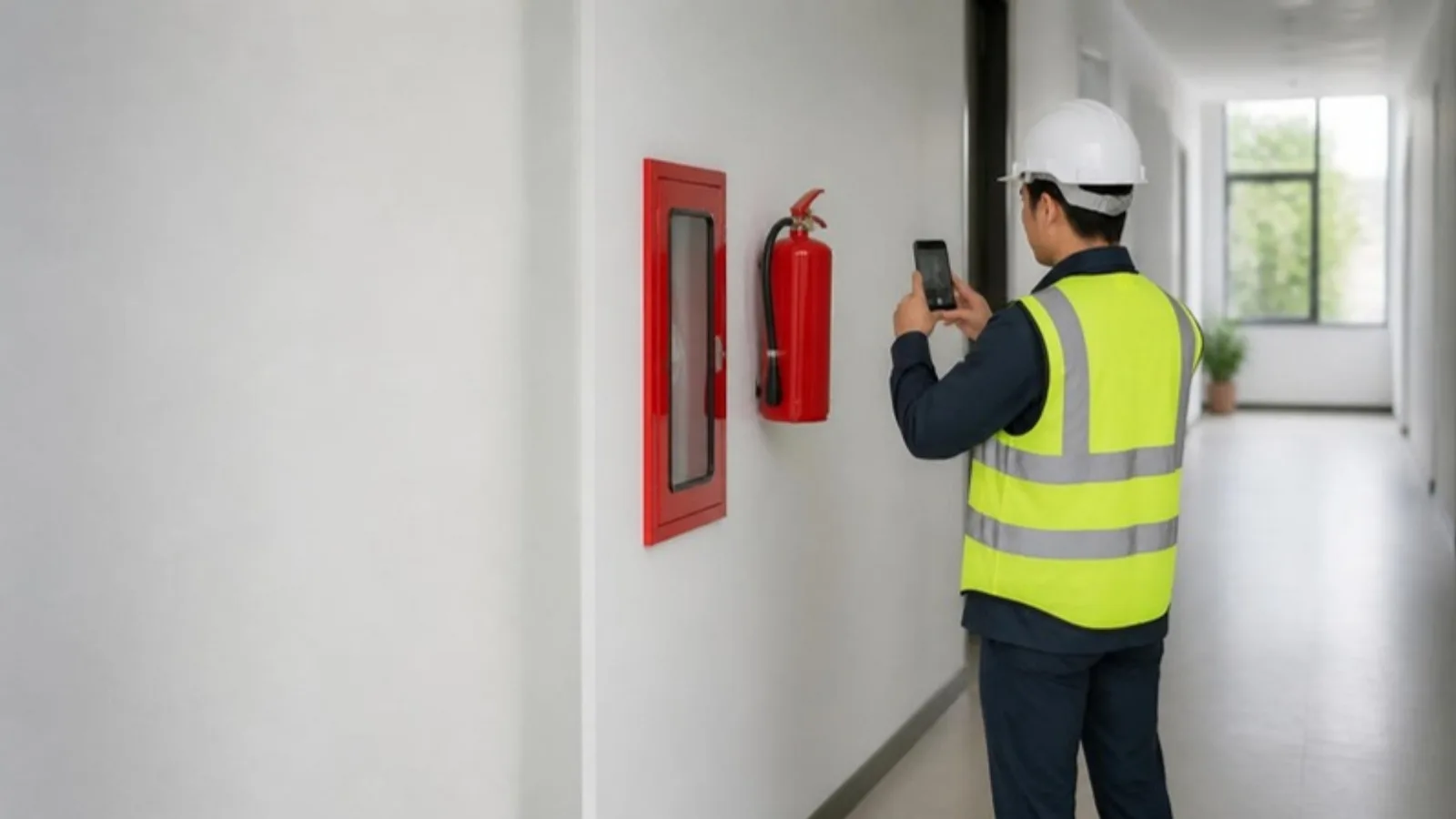
Facilities and inspection software development
Paper checklists, photos lost in chat threads and spreadsheets that never match the site. Agnotic Technologies builds inspection, audit, EHS and facilities software around your workflow: mobile checklists that work offline, incident reporting and work orders that close the loop.
What is facilities management software development?
Facilities management software development is the custom build of the inspection, audit, EHS, CMMS and work order tools a facilities team runs every day. Agnotic Technologies builds it as a services engagement: a scoping call, a fixed-scope first release with offline mobile checklists, photo evidence and reporting, then iteration with regular demos.
Who this page is for
- Facilities and EHS leaders replacing paper and spreadsheet inspections
- Operations teams running audits across many sites
- Startups building an inspection, audit or CMMS product for their market
Inspect
- Mobile checklist completed offline (Done)
- Photo evidence attached to the finding (Done)
Sync
- Queued on the device, synced on reconnect (Done)
- Conflict check against the site record (In progress)
Report
- Incident report with OSHA Form 301 fields (In progress)
- Site dashboard for EHS leaders (Next)
Fix
- Work order created from the finding (Done)
- CMMS asset history updated (Next)
Trusted by global innovators











Which inspection and facilities software do we build?
Every card is a live service or app page. Start with the one closest to your workflow; each page describes the modules, integrations and the engagement.
- ServiceCustom facilities management software developmentAsset, maintenance, work order and inspection workflows for multi-site facilities teams.
- ServiceCustom EHS software developmentIncident, audit, compliance and risk workflows for environment, health and safety programs.
- AI agentFacilities AI agent developmentAI agents for maintenance requests, work order triage and building operations, with a person approving actions.
- AI agentHealth and safety AI agent developmentAI agents for incident analysis, safety reporting and risk identification, reviewed by your EHS team.
- Mobile appSafety audit and inspection appDigital safety audits and inspections with findings, photos and corrective actions tracked to closure.
- Mobile appSafety incident reporting appIncident and near-miss reporting from the field, with an audit trail regulators can follow.
- Mobile appField audit appMobile compliance audits with offline checklists, scoring and photo evidence.
- Mobile appHousekeeping inspection appHousekeeping and hygiene inspections for facilities teams, with recurring schedules.
- Mobile appProperty inspection appCondition inspections and reports for property and facilities portfolios.
Where do inspection and EHS software projects fail?
These are the failure points we design against on every inspection software development project, learned from running our own product.
- Sync conflicts
- Two inspectors edit the same checklist offline and the last write wins. We version every finding and merge on reconnect instead of overwriting.
- Photos that never upload
- Full-size images on a weak connection stall the whole queue. We compress on the device and upload in the background with retries.
- Checklists frozen in code
- Every template change needs an app release. We store checklist templates as data the EHS team edits, with versions.
- Findings without owners
- A finding is logged and nothing follows. Every finding creates a work order or records a reason not to.
- Reports built last
- The OSHA 300 Log and management reports are bolted on after launch. We model recordable cases and forms from the first sprint.
- No audit trail
- Edits overwrite history. We keep who, what and when on every record, including deletions.
Which systems and standards does facilities software connect to?
A custom build earns its keep at the edges: the standards your records must satisfy and the systems that stay the system of record.
| System or standard | What it covers | How we build for it |
|---|---|---|
| OSHA recordkeeping (29 CFR Part 1904) | Which injuries and illnesses are recordable, the 300 Log, 300A summary and 301 report, retention and reporting deadlines | Incident forms that capture the Form 301 fields, recordability rules your safety lead can review, 300A generation and a five-year retention policy |
| ISO 45001:2018 | Requirements for an occupational health and safety management system | Hazard identification, risk assessment, corrective action and audit records that map to the clauses your auditor checks |
| CMMS, CAFM and ERP | Assets, locations, preventive maintenance schedules and work orders | Two-way sync of assets and work orders by API, with the CMMS as the system of record |
| Building systems and IoT sensors | Alarms, meter readings and equipment status | Event ingestion that opens an inspection or work order when a reading crosses a threshold |
| Identity and HR systems | Who may inspect, approve and close findings at each site | Single sign-on, role-based access and site-level permissions |
| Reporting and BI | Site, region and company dashboards | A reporting data model that separates field capture from analytics, so dashboards never slow the app |
How does Agnotic build inspection software?
The same engagement shape for an audit app, an EHS platform or a CMMS: scope it, ship a first release, prove it in the field, then grow it.
Scoping call
We map your inspection types, checklists, approval chain and the systems that must stay the system of record. You get a written scope for a first release.
Fixed-scope first release
We build the agreed checklists, offline capture, photo evidence and reporting, with regular demos so your team steers the build.
Field pilot
A small group of inspectors uses the app on real sites, on real connections. We fix what the field finds before a wider rollout.
Rollout and support
We roll out site by site, connect the CMMS and reporting, and stay on for new checklist types and integrations.
What security and data controls go into every build?
Security on an inspection platform is a set of engineering decisions: who can access what, what is logged, how data is encrypted and how long it is kept.
- Access: site-level roles decide who can inspect, approve and close findings, with single sign-on where you have it.
- Audit trail: every finding, photo and status change keeps who, what and when; nothing is overwritten.
- Encryption: data is encrypted on the device, in transit and at rest, including photos waiting to sync.
- Retention: records keep the retention your rules require, such as five years for OSHA injury and illness records, and can be exported.
- Secure development: dependency checks, code review and vulnerability response follow the NIST Secure Software Development Framework.
- Environments: test and demo environments use sample sites and checklists, never your live records.
What did we learn from building InspectWrk?
Agnotic Technologies built and runs InspectWrk, its own inspection product. Running it, rather than only shipping it, changed how we build inspection and audit software for clients.
Checklist templates belong to the people who run the audits, not to the release cycle. Offline is the normal state on a plant floor or a rooftop, not an edge case. A finding is only useful when it ends in a work order someone owns.
Those lessons carry into the related work below: EHS management software, OSHA compliance tooling, CAFM and facilities management platforms, and the plant and site inspections we build for manufacturing and construction teams.
- EHS management softwareIncident reporting, inspections, risk assessments and CAPA in one platform.
- OSHA compliance softwareRegulation tracking, workplace inspections and incident reporting.
- Facilities management software (CAFM and IWMS)Multi-site maintenance, work orders, assets and vendors.
- CAFM softwareMaintenance, space management and facility analytics across sites.
- Manufacturing software developmentPlant floor quality, maintenance and inspection systems.
- Construction software developmentSite safety, QA/QC and defect tracking for building projects.
Which rules shape inspection and EHS software?
Short, sourced facts we design to. Each links to the primary text.
OSHA's recordkeeping rule, 29 CFR Part 1904, sets out which work-related injuries and illnesses covered employers must record on the OSHA 300 Log, the 300A annual summary and the 301 incident report.
Source: 29 CFR Part 1904 (eCFR)Under 29 CFR 1904.33, employers must keep the OSHA 300 Log, the privacy case list, the annual summary and the 301 incident reports for five years following the end of the calendar year they cover.
Source: 29 CFR 1904.33 (eCFR)29 CFR 1904.39 requires employers to report a work-related fatality to OSHA within 8 hours, and an in-patient hospitalization, amputation or loss of an eye within 24 hours.
Source: 29 CFR 1904.39 (eCFR)ISO 45001:2018 is the international standard that specifies requirements for an occupational health and safety management system, with guidance for its use.
Source: ISO 45001:2018 (ISO)NIST SP 800-218, the Secure Software Development Framework, groups secure development practices into four areas: prepare the organization, protect the software, produce well-secured software and respond to vulnerabilities.
Source: NIST SP 800-218 (SSDF)
What do our clients say?
We don't just build products; we forge lasting partnerships. See how we've helped industry leaders transform their vision into technical reality.
“I can clearly see how Agnotic has a unique way of handling end-to-end development. They are always active on quick chat and provide support quickly.”

Aaron Phelan
Founder, Benchmark
“Agnotic combines deep technical expertise with strong domain knowledge. They understand the business context, anticipate challenges, and make collaboration smooth and effective.”

John Pasmore
Founder, Latimer
“Agnotic is the best technical team we evaluated. Their engineering excellence made our work dramatically easier and allowed us to stay focused on what matters most for maternal care outcomes. They took full ownership of the technical execution, and we are always happy to continue working together.”
Kim Smith
Founder, My Lauren