Challenge
Teams assume Redox erases all per-site variance
Agnotic approach
We handle the residual differences between connections in a mapping layer so your product sees consistent data.



Redox can connect your app to many health systems through one API, but it does not fit every product. We weigh Redox against a direct build, then build on the option that fits: Redox data models, event subscriptions or FHIR and HL7 v2 connections.
Trusted by global innovators









Redox is a healthcare integration platform that translates data from many EHRs and other sources into one consistent format, so the same code can serve multiple connections. It fits products that must reach many health systems quickly. Teams connecting to one or two EHRs, or needing data Redox does not model, often build direct instead.
Instead of writing bespoke HL7 feeds for every hospital, you exchange Redox data models (PatientAdmin, Clinical Summary, Results, Scheduling, Order, Media, and more) and Redox handles the translation to each connection's underlying FHIR or HL7 surface.
The value is real, but you still design event subscriptions, map Redox data models to your domain and manage go-live per health system. We build that layer, often as a hybrid with a direct FHIR or HL7 v2 connection for one large customer.
See how we design a Redox integration layer that normalizes many health systems into one clean data flow.

Common failure modes
Challenge
Teams assume Redox erases all per-site variance
Agnotic approach
We handle the residual differences between connections in a mapping layer so your product sees consistent data.
Challenge
Subscriptions deliver more or less than expected
Agnotic approach
We design subscriptions and filters deliberately and validate real payloads in the dashboard before go-live.
Challenge
Per-health-system onboarding stalls the roadmap
Agnotic approach
We treat each connection go-live as a tracked task with the health system and Redox, run in parallel with product work.
Challenge
Errors hide in the message logs
Agnotic approach
Log monitoring, alerting, and retry handling so delivery failures surface instead of silently dropping data.
The exact Redox surface behind multi-site EHR connectivity.
PatientAdmin, Clinical Summary, Results, Scheduling, Order, Notes, and Media data models mapped to your domain objects.
Event-driven subscriptions for pushed data and on-demand queries against source connections, handled through one API.
Redox developer dashboard, log inspection, environment management, and per-connection go-live coordination.
Underneath the normalized models, connections run on FHIR R4 or HL7 v2: we handle the per-source variance.
Where it runs
Connect a digital-health product to many health systems through one API.
Subscribe to lab and clinical results and surface them in your app.
Keep patient demographics and admissions in sync via PatientAdmin.
Send orders and notes back into the EHR from your platform.
Push and pull clinical documents and media through Redox.
Redox trades bespoke per-site interfaces for a normalized model. We handle the design and per-connection go-live that still remain.

Health Insurance Portability and Accountability Act
Protect PHI with privacy-first architecture, encrypted storage and transmission, strict access controls, and traceable audit logs.

General Data Protection Regulation
Implement lawful consent flows, data minimization, retention controls, and secure processing for sensitive health data.

Fast Healthcare Interoperability Resources
Enable standardized health data exchange across apps, care teams, and systems through standards-based FHIR APIs.

Health Level Seven International
Support enterprise-grade interoperability with HL7-based integrations for records, events, and clinical messaging workflows.

Health Information Trust Alliance
Align security programs to healthcare-specific control and risk management practices trusted by providers and ecosystem partners.

Health Information Technology for Economic and Clinical Health Act
Design with breach notification readiness, digital record safeguards, and operational controls that support regulated care programs.

FDA Software as a Medical Device
Plan software quality, traceability, and documentation pathways for products that may require SaMD review and submission.

Medical Device Regulation (European Union)
Prepare EU market-ready processes for risk classification, evidence tracking, and lifecycle governance under MDR expectations.

Substance Abuse and Mental Health Services Administration
Apply confidentiality controls and consent-aware sharing models for behavioral and mental health data experiences.
Standards we build against
Data-model mapping, subscription design, and per-connection go-live treated as the real work.
We map the Redox data models you need to your domain and define which events you subscribe to and query.
We build the ingestion, transformation, and outbound flows against the Redox API and your data store.
We validate in the Redox dashboard with sample payloads and per-connection nuances before production.
Per-health-system go-live with log monitoring, retry handling, and connection health tracking.
Side by side
A neutral view of both options. Neither is better in general; the right one depends on how many health systems you connect and what data you need.
| Criterion | Building on Redox | Direct EHR connection |
|---|---|---|
| Number of health systems | Suits many connections: the same code serves each one | Suits one or a few EHRs where you control the scope |
| Format your team handles | Redox data models or the Redox FHIR API, in one consistent format | Each EHR's own FHIR, HL7 v2 or proprietary format |
| Per-site onboarding | Each connection is still a business relationship and onboarding with that organization | Each site's own interface build, approval and testing |
| Real-time events | Asynchronous notifications pushed to your destination | HL7 v2 feeds, or FHIR notifications where the EHR supports them |
| On-demand queries | Synchronous queries through one API | FHIR reads against each EHR's certified API |
| Running cost | Redox platform fees plus your own hosting and support | Your own hosting, plus interface upkeep and support at every site |
| Vendor dependency | Adds a platform between you and each EHR | No intermediary, but more code for your team to maintain |
| Data outside the model | Needs custom handling or a direct path alongside Redox | Available wherever the EHR exposes it |
| Switching later | A mapping layer in your product keeps a move to direct manageable | Adding Redox later means remapping to its data models |
Many products run a hybrid: Redox for the long tail of health systems and a direct connection for the few that need more.
Each fact below links to its primary source.
Redox takes data from any source and translates it into a consistent, modern format, so once a team configures its setup it can use the same code to integrate with multiple connections.
Source: Redox developer docs, What is RedoxIn Redox, a connection is a set of subscriptions with a connected organization that agrees to exchange healthcare data with you via Redox, and it represents a business relationship between the two parties.
Source: Redox developer docs, What are Redox connectionsRedox traffic is either asynchronous, a one-way push such as a notification or writeback that does not wait for a response, or synchronous, a query that asks the connection's system for information and waits for a response.
Source: Redox developer docs, Data exchange with RedoxONC certification criterion 170.315(g)(10) requires certified EHRs to offer a standardized API for patient and population services based on HL7 FHIR.
Source: 45 CFR 170.315 (eCFR)Lera Health is related proof of compliant, integration-heavy delivery: a privacy-first platform built end to end. Building on Redox draws on the same strengths: clean data modelling, disciplined ingestion, and HIPAA-grade handling of clinical data.
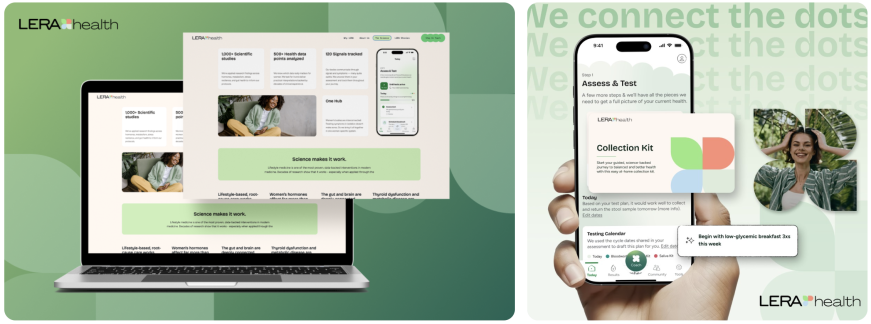
Real multi-site delivery, not just platform familiarity.
HIPAA-ready pipelines and audit logging around every data model exchanged with health systems.
We work fluently in Redox data models, subscriptions, environments, and the developer dashboard.
Where Redox fits, we use it to replace bespoke per-site feeds with a managed rollout.
We map normalized data into your product cleanly, so features ship on top of integration, not around it.

Tell us your target data models and health systems. We will return a realistic integration-layer and rollout plan.
contact@agnotic.com
Partnerships
contact@agnotic.com