

Facilities and property operations
Want defects found early and repairs scheduled in the maintenance system they already use.


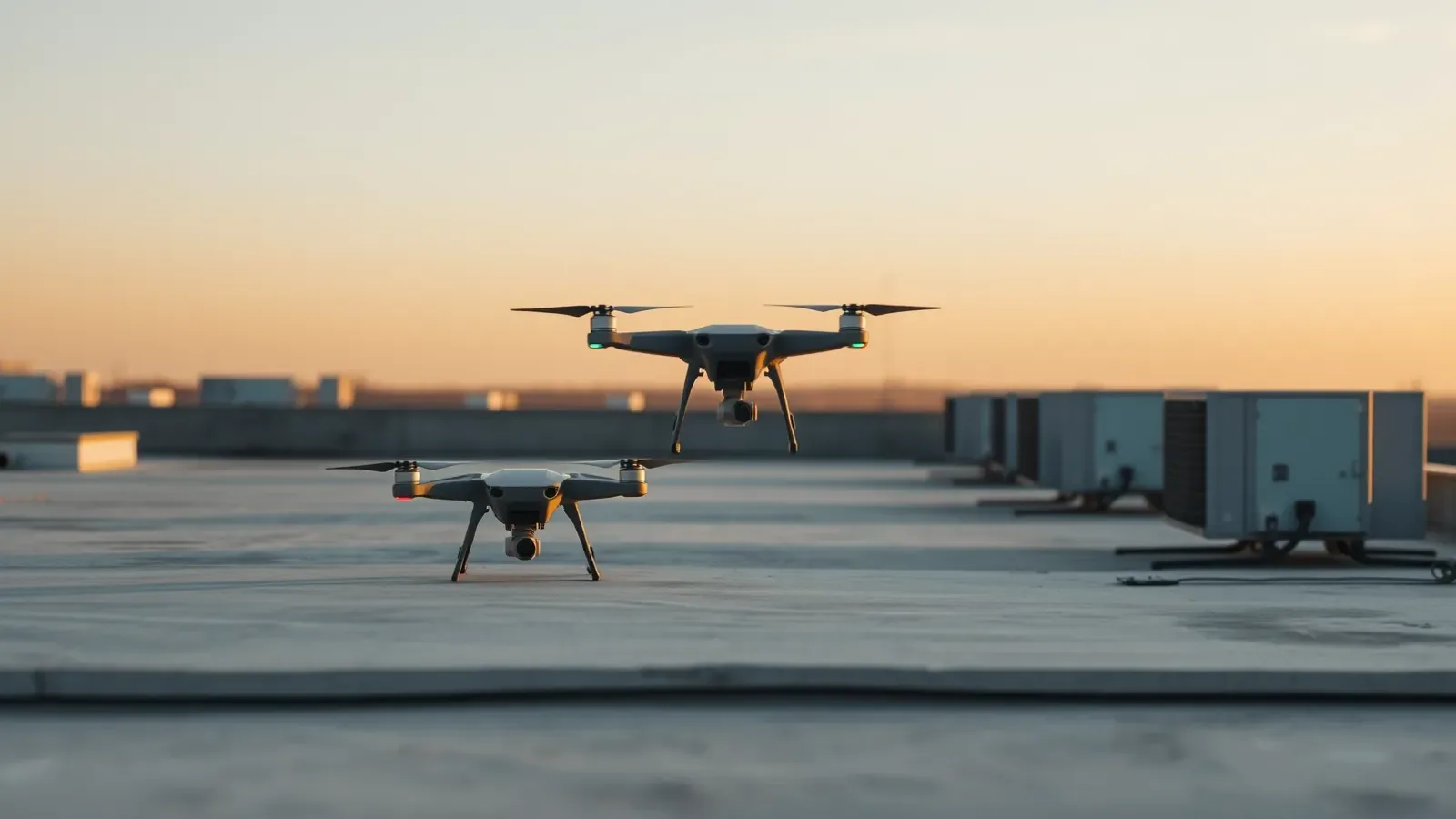
Facade surveys, roof walks and plant room checks produce thousands of photos that someone has to review by hand. Agnotic Technologies builds automated visual inspection that sorts drone and camera images, flags likely defects for a qualified reviewer, and turns each confirmed defect into a work order or a condition report entry.
Trusted by global innovators











Automated visual inspection for buildings is software that reviews drone, fixed camera and handheld photos of facades, roofs and equipment, flags likely defects such as cracks, spalling and corrosion, and routes them to a qualified reviewer. Agnotic Technologies builds it so only confirmed defects become work orders or condition report entries, each with its image evidence.
The same image can matter to several teams. Each one needs a different view of it.
Want defects found early and repairs scheduled in the maintenance system they already use.
Review survey images and sign condition findings, often under a local facade rule.
Track penetrations through rated walls and floors that need fire stopping.
Need a consistent condition baseline across buildings to plan capital work.
Build a product around survey review and reporting for their own clients.
Capture is rarely the bottleneck. Review and follow-up are.
One facade flight returns more images than an engineer can review before the report is due.
Photos are filed by date, not by elevation, floor or roof zone, so a defect cannot be found again on the next survey.
Findings live in a report PDF and never reach the maintenance system, so the repair is never scheduled.
The same crack is reported in three surveys in a row with no record of whether it has grown.
Thermal and visual images of the same roof area are stored apart, so wet insulation and visible membrane damage are never linked.
Model output is treated as a finding, and nobody records who looked at it.
Our starting map for a building inspection project. The defect list changes with your portfolio; the rule that a qualified person confirms a flag before anything is filed does not.
| Defect type | Capture method | What the model flags | Who confirms | What it feeds |
|---|---|---|---|---|
| Facade crack | Drone elevation passes, rope access or close-range photos | Linear features in masonry, render or concrete, located on the elevation | Facade engineer or qualified exterior wall inspector | Condition report entry and comparison with the previous survey |
| Spalling and loose masonry | Drone close-up passes; handheld photos at lower floors | Missing or detached surface material and exposed reinforcement | Facade engineer, with urgent items escalated the same day | Unsafe condition record and a work order for protection or repair |
| Roof membrane damage | Drone overhead and oblique roof flights; thermal survey where wet insulation is suspected | Punctures, splits, blisters, ponding, lifted seams and thermal anomalies | Roofing contractor or building surveyor | Roof work order located on the roof plan |
| Corrosion on steel and plant | Fixed cameras or handheld photos of rooftop plant, railings, lintels and supports | Rust staining, section loss and coating breakdown | Maintenance engineer | CMMS work order against the asset |
| Missing fire stopping | Handheld photos of service penetrations above ceilings and in risers | Open gaps around pipes, cables and ducts through rated walls or floors | Fire safety engineer or competent fire stopping inspector | Fire safety remediation log and work order |
Three decisions shape the build, and we make them before any model is trained.
Facades, roofs, plant and interior penetrations each need their own capture method and image naming, so every photo ties back to an elevation, roof zone or asset ID.
The model ranks images by likely defect so reviewers see the right ones first. A qualified person confirms, rejects or reclassifies every flag, and that decision is recorded.
Confirmed defects create work orders or report entries in the CMMS or CAFM you already run, with the image, location and reviewer attached.
How to build automated visual inspection for buildings: modules that follow one defect from capture to repair.
Flight and shot lists per elevation, roof zone and plant area, with naming rules so every image lands in the right place.
Batch upload from drones, fixed cameras and phones, with each image tied to a building, elevation, floor or asset.
Models trained on your defect classes, with a separate confidence threshold per class agreed with your reviewers.
Reviewers see the flagged image, the model's reason and the same spot from the previous survey, then confirm, reject or reclassify.
Confirmed defects carry forward, so the next survey shows whether a crack or corroded section has changed.
Confirmed defects become work orders in your CMMS or CAFM, or entries in a condition report, with image evidence attached.
Thermal and visual images of the same roof or facade area linked, so a reviewer sees both before deciding.
People and vehicle plates captured by chance are blurred before images reach reviewers or reports.
The review workflow we build. The model is one step in it, not the whole system.
A drone flight, fixed camera schedule or handheld walk-through follows the capture plan for that asset.
Images are checked for quality and tied to a building, elevation, roof zone or asset before analysis.
Models mark likely defects with a class, a location in the image and a confidence score.
A qualified reviewer confirms, rejects or reclassifies each flag; urgent conditions are escalated straight away.
Confirmed defects create a work order or a report entry with the image, location and reviewer attached.
On the next survey, open defects are shown at the same location so change can be judged.
Chosen around the buildings, contractors and maintenance systems you already have.
Measures that show whether review and repair keep up with capture.
Flagged images not yet confirmed or rejected, by building and defect class.
Shows where thresholds or training data need work.
From confirmation to a scheduled job in the CMMS.
Defects still open at the next survey, and whether they changed.
First releases scoped to one building type or one defect family.
Sorting drone facade images so engineers review likely defects first.
Membrane damage and ponding flagged and placed on the roof plan.
Recurring photos of plant and supports compared survey to survey.
Penetration photos reviewed and tracked to remediation.
The same defect classes applied across every building.
A quick survey and review after severe weather.
Where images come from and where confirmed defects go.
We build secure, scalable products designed for privacy, interoperability, and regulatory readiness from day one across every sector we serve.

Implement lawful consent flows, data minimization, and secure processing for global data privacy.

Adhering to the international gold standard for managing information security risks.
We combine deep technical expertise with industry-specific knowledge to deliver solutions that aren't just functional, but transformational.
We implement rigorous security protocols and compliance standards (HIPAA, GDPR, SOC2) across all industrial solutions to protect sensitive data.
Our architectures are built to handle massive data loads and user bases, keeping performance steady whether you're serving ten or ten million.
Using our suite of internal tools and proven frameworks, we cut setup work so your first release reaches users sooner.
Beyond simple wrappers, we build deep-learning integrations and predictive analytics directly into the core of your industry-specific workflows.
Automated visual inspection services from Agnotic start small. It depends on scope; we agree a fixed first release on the scoping call.
We review your portfolio, defect classes, capture methods and the maintenance systems that should receive findings.
Your reviewers label a set of past survey images with us, which fixes the defect classes and the review rules.
Intake, detection for agreed defect classes, the review queue and work order output for one building type.
More defect classes, thermal pairing and more buildings, retrained from reviewer decisions.
Model monitoring, threshold changes and new integrations under agreed change control.
Drone and facade rules the capture plan and review queue are built around. Local rules outside New York City differ.
Under FAA Part 107, a small drone may fly higher than 400 feet above ground level only while it stays within a 400-foot radius of a structure and no higher than 400 feet above the structure's uppermost limit.
Source: 14 CFR 107.51(b) (eCFR)A small drone may not be flown over a person unless that person is directly participating in the operation, is under a covered structure or inside a stationary vehicle, or the flight meets one of the operational categories in Part 107 Subpart D.
Source: 14 CFR 107.39 (eCFR)In New York City, owners of buildings higher than six stories must have exterior walls and appurtenances inspected every five years and file a technical facade report; the inspection may only be performed by a Qualified Exterior Wall Inspector.
Source: NYC Department of Buildings, Facade Inspection and Safety ProgramA New York City facade report classifies conditions as Safe, Safe with a Repair and Maintenance Program (SWARMP) or Unsafe, and owners must repair unsafe conditions within 90 days of filing the report.
Source: NYC Department of Buildings, Facade Inspection and Safety ProgramASTM E2018-24 states that, at a minimum, a property condition report consistent with the guide needs a new walk-through survey, interviews, and a review of building and fire department records for recorded material violations.
Source: ASTM E2018-24, Standard Guide for Property Condition AssessmentsWe don't just build products; we forge lasting partnerships. See how we've helped industry leaders transform their vision into technical reality.
“I can clearly see how Agnotic has a unique way of handling end-to-end development. They are always active on quick chat and provide support quickly.”

Aaron Phelan
Founder, Benchmark
“Agnotic combines deep technical expertise with strong domain knowledge. They understand the business context, anticipate challenges, and make collaboration smooth and effective.”

John Pasmore
Founder, Latimer
“Agnotic is the best technical team we evaluated. Their engineering excellence made our work dramatically easier and allowed us to stay focused on what matters most for maternal care outcomes. They took full ownership of the technical execution, and we are always happy to continue working together.”

Kim Smith
Founder, My Lauren
This page covers building condition inspection from images. These pages cover the tools and patterns around it.
Mobile condition assessments with photos, AI image analysis and defect routing to maintenance.
Maintenance management and work orders, where confirmed defects become scheduled repairs.
Facilities, space and asset management for the buildings being inspected.
Asset, maintenance and inspection workflows built for multi-site facilities teams.
The camera, edge inference and model pipeline behind site safety monitoring.
Visual inspection of manufactured parts on a production line.