Challenge
Code console onboarding stalls the project
Agnotic approach
We start code console registration and sandbox access in week one and run mapping in parallel while credentials land.


We integrate your platform with Oracle Health (Cerner) through Millennium APIs, FHIR R4, and the code console — SMART on FHIR launch, scoped OAuth2, and HL7 v2 feeds. Real integrations that pass review and reach production.
Trusted by global innovators











Oracle Health (formerly Cerner) integration spans several surfaces: FHIR R4 for modern resource access, the Millennium APIs for platform-native data and workflow, SMART on FHIR for apps that launch inside PowerChart, and HL7 v2 for legacy ADT, ORU, and ORM feeds. Onboarding runs through the code (code.cerner.com) developer console and program.
As with any large EHR, the engineering is bounded and the access is not. Code console registration, sandbox provisioning, scope approval, and client-side enablement sit on the vendor's and your customer's timelines. We scope those dependencies first so the integration doesn't stall after the interfaces are written.
A blueprint for connecting to Oracle Health (Cerner) across FHIR R4, Millennium APIs, and HL7 v2 — with auth, mapping, and monitoring built in.
Common failure modes
Challenge
Code console onboarding stalls the project
Agnotic approach
We start code console registration and sandbox access in week one and run mapping in parallel while credentials land.
Challenge
FHIR coverage varies by Millennium version
Agnotic approach
Per-site capability assessment identifies what FHIR R4 supports and where Millennium APIs or HL7 v2 fill gaps.
Challenge
OAuth2 scopes fail review
Agnotic approach
We map each call to a least-privilege scope so approval is clean the first time.
Challenge
Sandbox behavior differs from production
Agnotic approach
Partner-assisted validation and reconciliation workflows catch production drift before go-live.
The exact surface, named up front — because it determines what's buildable and by when.
Platform-native access to Oracle Health's Millennium data and workflow — the surface for capabilities that reach beyond the standardized FHIR resource set.
Read and write against Oracle Health's FHIR R4 API — Patient, Encounter, Observation, MedicationRequest, and more, with strong coverage in modern Millennium versions.
Registration and sandbox provisioning through the code (code.cerner.com) developer console — client credentials, app registration, and the path to production.
EHR and standalone SMART on FHIR launch with scoped OAuth2 for apps that run inside PowerChart, including launch context and token handling.
ADT, ORU, and ORM message feeds via an interface engine for legacy event flows where FHIR coverage doesn't reach.
Interface health dashboards, failed-message alerting, and reconciliation so a dropped feed or throttled call is caught before it becomes a clinical gap.
Where it runs
SMART on FHIR apps launching in-context inside PowerChart.
Authenticated patient access via SMART on FHIR patient scopes.
Bulk FHIR $export feeding population health and research platforms.
ORU results and ORM orders routed between Oracle Health and lab or imaging systems.
Remote-monitoring vitals written back as FHIR Observations.
ADT-driven triggers powering referral and transition-of-care tooling.
Cerner builds lose time to access and review, not code. We plan those gates in from week two.

Health Insurance Portability and Accountability Act
Protect PHI with privacy-first architecture, encrypted storage and transmission, strict access controls, and traceable audit logs.

General Data Protection Regulation
Implement lawful consent flows, data minimization, retention controls, and secure processing for sensitive health data.

Fast Healthcare Interoperability Resources
Enable standardized health data exchange across apps, care teams, and systems through robust FHIR-ready APIs.

Health Level Seven International
Support enterprise-grade interoperability with HL7-based integrations for records, events, and clinical messaging workflows.

Health Information Trust Alliance
Align security programs to healthcare-specific control and risk management practices trusted by providers and ecosystem partners.

Health Information Technology for Economic and Clinical Health Act
Design with breach notification readiness, digital record safeguards, and operational controls that support regulated care programs.

FDA Software as a Medical Device
Plan software quality, traceability, and documentation pathways for products that may require SaMD review and submission.

Medical Device Regulation (European Union)
Prepare EU market-ready processes for risk classification, evidence tracking, and lifecycle governance under MDR expectations.

Substance Abuse and Mental Health Services Administration
Apply confidentiality controls and consent-aware sharing models for behavioral and mental health data experiences.
Standards we build against
Code console access, mapping, and review run as parallel tracks so the integration reaches a real site on a predictable timeline.
We map target sites, the FHIR R4 resources and Millennium APIs you need, HL7 v2 messages, and the SMART on FHIR scopes the app will request.
Register in the code console, provision sandbox credentials, and validate OAuth2 launch and scope approval against Oracle Health test data.
Build the FHIR R4, Millennium API, and HL7 v2 interfaces plus SMART on FHIR launch, validated against synthetic and partner-assisted data.
Phased site enablement with interface dashboards, rate-limit awareness, and alert routing for failed messages.
Surface & timeline
Different needs use different Oracle Health channels. Here's how we choose.
| Surface | Method | Typical timeline | Notes |
|---|---|---|---|
| FHIR R4 API | RESTful resource read/write | 2–4 months | Strong coverage in modern Millennium versions; onboard via code console. |
| Millennium APIs | Platform-native access | 3–5 months | For workflow and data beyond the standard FHIR set. |
| SMART on FHIR | OAuth2 launch + scopes | 3–5 months | Scope approval and review drive the timeline. |
| HL7 v2 interfaces | ADT / ORU / ORM feeds | 3–5 months | Per-site interface build for legacy event flows. |
Timelines assume code console access and an engaged customer-side Oracle Health team. Access and review, not engineering, set the pace.
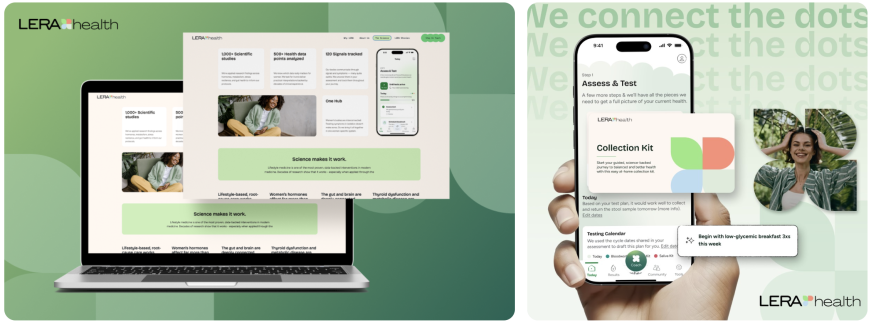
Related proof of compliant, integration-heavy delivery: for Lera Health we built the privacy-first data layer and testing-to-insights workflow end to end — the same rigor in scoping, PHI handling, and phased go-live that an Oracle Health integration requires.
We treat the integration as a first-class workstream — access, compliance, and go-live planned from sprint one.
HIPAA-ready architecture, BAA-covered data flows, and least-privilege OAuth2 scopes designed in from the first sprint.
We start code console registration and sandbox access immediately and surface Oracle Health and customer-IT blockers early.
Engineers who have shipped FHIR R4, Millennium API, and HL7 v2 integrations to production — not just read the docs.
We understand the workflows behind ADT, orders, and results so mappings reflect how clinicians actually work.

Real Oracle Health integrations, not just familiarity
Tell us your target sites and surface — FHIR R4, Millennium APIs, SMART on FHIR, or HL7 v2. We'll return a realistic plan with a code console and go-live timeline.
contact@agnotic.com
Partnerships
contact@agnotic.com