












Revenue cycle management software development mockup by Agnotic
    Healthcare / Revenue Cycle Management

    Revenue cycle management software development

    Denials, missed charges and slow follow-up drain revenue from hospitals, clinics and billing companies. Agnotic Technologies builds revenue cycle software that checks eligibility, codes, scrubs and tracks every claim, so your team fixes problems before payers reject them.

    X12 837 · 835
    Claims and remittance, the HIPAA standard transactions
    270 · 271
    Eligibility checks before the visit
    FHIR R4
    Prior authorization APIs under CMS-0057-F

    Trusted by global innovators

    Benchmark
    Chibasco
    Fundency
    Lantimer
    Lauren
    Lera
    One Minute
    Pento Pix
    TAP
    Xtrium
    Healthevolve
    Benchmark
    Chibasco
    Fundency
    Lantimer
    Lauren
    Lera
    One Minute
    Pento Pix
    TAP
    Xtrium
    Healthevolve
    Benchmark
    Chibasco
    Fundency
    Lantimer
    Lauren
    Lera
    One Minute
    Pento Pix
    TAP
    Xtrium
    Healthevolve
    Benchmark
    Chibasco
    Fundency
    Lantimer
    Lauren
    Lera
    One Minute
    Pento Pix
    TAP
    Xtrium
    Healthevolve
    Industry Overview

    What is revenue cycle management software development?

    Revenue cycle management software development is building the systems that move a patient encounter to a paid claim: eligibility checks, charge capture, coding, claim submission, denial handling and payment posting. Agnotic Technologies builds this software for providers and billing companies, connected to their EHR, clearinghouse and payers through X12 and FHIR interfaces.

    Who it is for

    What RCM problems do different healthcare providers face?

    Revenue cycle problems look different depending on who sends the claim. These are the patterns we design for.

    Hospitals and health systems

    High claim volume across many departments, service lines and payer contracts.

    • Charges missed between clinical departments and billing
    • Complex payer contracts that hide underpayments
    • Prior authorization delays for imaging, surgery and specialty drugs
    • Denials worked by hand, one queue per team
    Physician practices and clinics

    Small teams that handle scheduling, billing and follow-up together.

    • Eligibility not checked before the visit
    • Front-desk data errors that lead to rejected claims
    • Little time to follow up on unpaid claims
    • Patient balances collected late or not at all

    Medical billing companies

    Billing for many client practices, often on different EHRs.

    • A separate workflow for every client EHR and clearinghouse
    • Manual claim status checks across payer portals
    • Per-client performance reporting that is hard to prove
    • Staff time spent re-keying data between systems

    Telehealth providers

    Virtual visits billed across many states and payers.

    • Place-of-service codes and modifiers that vary by payer
    • Patients and payers spread across many states
    • High visit volume with low revenue per claim
    • Eligibility checks that must finish in seconds at booking
    Industry Challenges

    Where does revenue leak out of the revenue cycle?

    Revenue leakage is money a provider earned but never collected. It rarely shows up as one large loss; it builds up from small gaps at each step of the cycle.

    • Missed charges: services delivered but never captured as charges, often where clinical and billing systems are not connected.

    • Underpayments: payers pay less than the contracted rate, and nobody compares the payment with the contract.

    • Coding errors: wrong or incomplete codes lead to denials or lower payment for the care that was given.

    • Uncollected balances: patient balances and denied claims that are never followed up before filing deadlines pass.

    Before and after

    How does automated RCM compare with manual billing?

    The same revenue cycle steps, done by hand and with the automation we build.

    Manual billing compared with automated revenue cycle workflows
    StepManual processAutomated workflow
    EligibilityStaff check payer portals or call payers when there is timeX12 270/271 checks run at booking and again before the visit
    Charge captureBillers re-key charges from clinical notesCharges flow from the EHR into billing, with alerts for services that have no charge
    CodingCoders review every chart line by lineCoding suggestions and edit checks flag likely errors for the coder to confirm
    Claim submissionClaims are fixed after the clearinghouse rejects themClaims are scrubbed against payer rules before X12 837 submission
    DenialsDenials are worked in the order they arriveDenials are grouped by cause and ranked by value and appeal deadline
    Payment postingRemittances are posted by hand from paper or PDFX12 835 remittances post automatically, and underpayments are flagged against contract terms
    ReportingMonthly spreadsheets that are already out of dateLive dashboards for denials, days in A/R and collections
    Our Approach

    How can AI help prevent claim denials?

    AI models trained on your own claim and remittance history learn which claims are likely to be denied, so your team can fix them before submission. People stay in control: the model flags and ranks, and a person decides.

    Pre-submission error checks

    Each claim is checked for missing data, code and modifier mismatches and payer-specific rule breaks before it is sent.

    Denial risk scoring

    Claims get a risk score based on past denials for the same payer, procedure and diagnosis pattern.

    Priority work queues

    High-risk and high-value claims go to the top of the queue, with the likely reason attached.

    Capabilities

    Which RCM metrics can you track in real time?

    Dashboards built on your claim, remittance and payment data, updated as transactions arrive rather than at month end.

    Denial rate dashboard

    Denials by payer, reason code, provider and location, with week-over-week trends.

    Days in A/R tracking

    Average days from claim to payment, broken down by payer and aging bucket.

    Collection rate view

    Collected against expected payment, with underpayments flagged against contract terms.

    Outstanding claims queue

    Every unpaid claim, its age, its status at the payer and who owns the next step.

    Clean claim tracking

    Share of claims accepted on first submission, by payer and claim type.

    Alerts and thresholds

    Notifications when denials or A/R age cross the limits your team sets.

    How It Works

    How do EHRs, clearinghouses and payers connect?

    Revenue cycle data passes through systems owned by different organizations. We build and maintain the connections between them.

    EHR and practice management

    Encounters, charges and demographics come from Epic, Oracle Health (Cerner), athenahealth or your practice management system through HL7 v2, FHIR or vendor APIs.

    1

    Claim build and scrubbing

    A rules engine builds each claim and checks it against payer and coding rules before it leaves your system.

    2

    Clearinghouse

    Claims go out as X12 837. Eligibility (270/271) and claim status (276/277) requests travel the same route.

    3

    Payers

    Payers adjudicate the claim. Prior authorization is moving to FHIR-based APIs under CMS-0057-F.

    4

    Remittance and posting

    X12 835 remittances come back, post to the billing platform and update the analytics.

    5
    Engineering Stack

    Which standards and systems does RCM software use?

    The transactions, code sets and platforms we work with on revenue cycle projects.

    Transactions

    X12 837X12 835X12 270/271X12 276/277X12 278

    Code sets

    ICD-10-CMCPTHCPCS Level IICARC and RARC

    Interoperability

    HL7 v2 (ADT, DFT)FHIR R4SMART on FHIR

    EHRs

    EpicOracle Health (Cerner)athenahealtheClinicalWorksNextGen

    Backend

    Node.jsPythonPostgreSQL

    Infra

    AWSAzure
    Team workflow

    How do front desk, coding, billing and finance teams work together?

    Each team owns part of the revenue cycle. The software passes work between them with clear ownership, instead of email and spreadsheets.

    Revenue cycle responsibilities by department
    TeamOwnsHands off toWhat the software does
    Front deskRegistration, insurance capture, eligibilityCoding, with a verified patient and coverageRuns eligibility checks and flags missing or invalid insurance data
    Medical codersDiagnosis and procedure codesBilling, with a coded and documented encounterSuggests codes, runs edit checks and links each code to its documentation
    Billing teamClaim submission, denials, appealsFinance, with paid, adjusted or written-off claimsScrubs claims, tracks status and ranks denials by value and deadline
    FinancePayment posting, reconciliation, reportingLeadership, with cash and A/R reportsPosts remittances, flags underpayments and keeps dashboards current
    Measured Impact

    Which RCM KPIs should you measure?

    These are the measures we build dashboards around. Benchmarks vary by specialty and payer mix, so we track your own baseline and trend.

    Clean claims
    Clean claim rate

    Claims accepted on first submission with no edits, divided by all claims submitted.

    Denials
    Denial rate

    Claims denied by payers, divided by all claims adjudicated.

    Days in A/R
    Days in accounts receivable

    Total outstanding A/R divided by average daily charges.

    First pass
    First-pass resolution rate

    Claims paid on first submission without rework or appeal, divided by all claims paid.

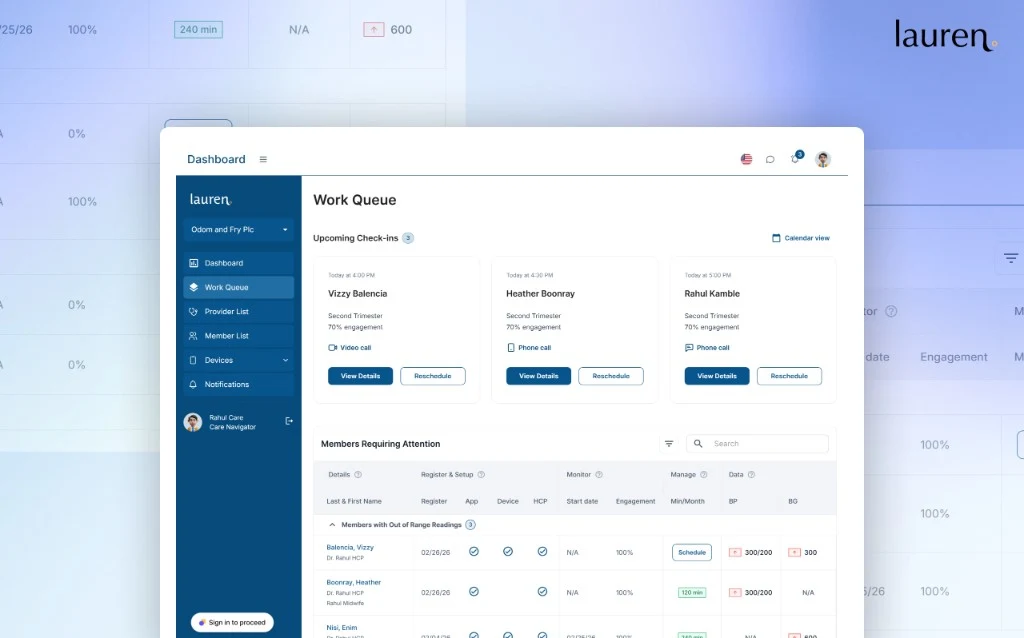
    My Lauren Maternal Health Platform | Built by Agnotic

    A HIPAA-compliant maternal health platform enabling remote patient monitoring, care coordination, and personalized engagement from pre-pregnancy through postpartum.

    Case Study
    My Lauren Maternal Health Platform | Built by Agnotic
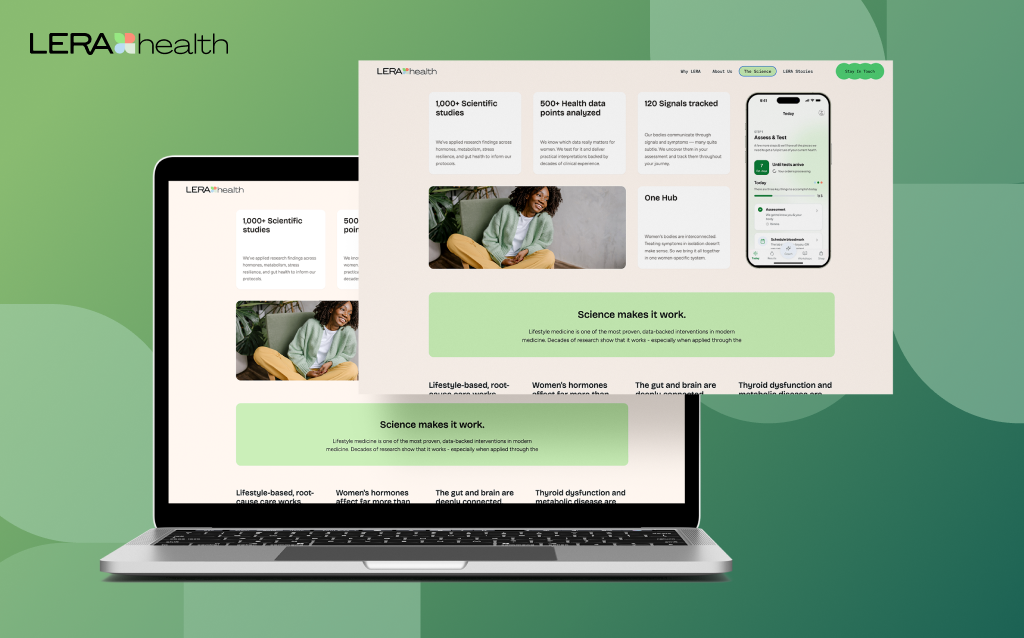
    LERA Health: Compliant Women’s Health App Platform

    LERA Health: Compliant Women’s Health App Platform

    A women’s health product experience focused on guided care journeys, education, and compliance-aware workflows to support long-term engagement.

    Case Study
    Use Cases

    How does RCM work differ by specialty?

    Each specialty has its own coding rules, authorization needs and denial patterns. These are examples of what we build for each.

    01

    Cardiology

    Prior authorization tracking for imaging and procedures, plus edit checks for complex cardiac coding and modifiers.

    02

    Radiology

    Authorization checks before scheduling, and matching professional and technical components on each claim.

    03

    Orthopedics

    Surgical coding with global period tracking, plus authorization for MRI and durable medical equipment.

    04

    Emergency care

    High-volume claims with level-of-service coding checks and fast follow-up on self-pay and out-of-network balances.

    05

    Behavioral health

    Session-based billing with time-based codes and authorization limits on visit counts.

    06

    Laboratory

    High test volumes with medical necessity checks between diagnosis and test codes before submission.

    Integrations

    Which systems do we integrate for revenue cycle work?

    Connections we build between EHRs, clearinghouses, payers and billing platforms.

    EHR

    EpicOracle Health (Cerner)athenahealtheClinicalWorksNextGen

    Clearinghouse

    Your clearinghouse (X12 EDI)

    Payers

    Payer portals and APIs

    Payments

    Patient payment platforms

    Compliance-First Development Services Backed by Global Standards

    We build secure, scalable products designed for privacy, interoperability, and regulatory readiness from day one across every sector we serve.

    HIPAA logo

    Health Insurance Portability and Accountability Act

    Protect PHI with privacy-first architecture, encrypted storage and transmission, and strict access controls.

    FHIR logo

    Fast Healthcare Interoperability Resources

    Enabling standardized health data exchange through robust, modern API mappings.

    HL7 logo

    Health Level Seven International

    Supporting enterprise-grade interoperability for clinical messaging and record workflows.

    Our Edge

    Why Global Leaders Choose Us

    We combine deep technical expertise with industry-specific knowledge to deliver solutions that aren't just functional, but transformational.

    Enterprise-Grade Security

    We implement rigorous security protocols and compliance standards (HIPAA, GDPR, SOC2) across all industrial solutions to protect sensitive data.

    High-Performance Scaling

    Our architectures are built to handle massive data loads and user bases, ensuring seamless performance whether you're serving ten or ten million.

    Accelerated Time-to-Market

    Leveraging our suite of internal tools and proven frameworks, we reduce development cycles and get your product to market 40% faster.

    Embedded AI Integration

    Beyond simple wrappers, we build deep-learning integrations and predictive analytics directly into the core of your industry-specific workflows.

    Engagement Model

    What does an RCM implementation roadmap look like?

    We deliver in stages, so each step proves value before the next one starts. Timing depends on your systems and scope, and we agree it on the scoping call.

    01

    Workflow assessment

    We map your current revenue cycle, systems and denial patterns, and agree on the first release.

    02

    Integration

    We connect your EHR, clearinghouse and payer channels, with secure data flows and audit logging.

    03

    Testing

    We run real claim scenarios end to end in a test environment, including rejections, denials and remittances.

    04

    Deployment

    We roll out by department or location, train your team and keep the old process as a fallback until results are confirmed.

    05

    Optimization

    We tune rules and models with your live denial and payment data, then add the next set of improvements.

    Facts and sources

    What rules does RCM software have to follow?

    Short facts on the regulations behind revenue cycle software, each linked to its official source.

    • HIPAA adopts ASC X12 standard transactions for electronic claims (837), payment and remittance advice (835), eligibility inquiries (270/271) and claim status (276/277).

      Source: 45 CFR Part 162 (eCFR)
    • HIPAA names ICD-10-CM as the standard code set for diagnoses, and HCPCS and CPT-4 for physician and other health care services.

      Source: 45 CFR Part 162 (eCFR)
    • The CMS Interoperability and Prior Authorization Final Rule (CMS-0057-F) requires impacted payers to implement a Prior Authorization API to support electronic prior authorization.

      Source: CMS
    • The HIPAA Security Rule requires administrative, physical and technical safeguards for electronic protected health information, which includes claims and payment data.

      Source: 45 CFR Part 164 Subpart C (eCFR)

    Voice of success

    We don't just build products; we forge lasting partnerships. See how we've helped industry leaders transform their vision into technical reality.

    Benchmark

    “I can clearly see how Agnotic has a unique way of handling end-to-end development. They are always active on quick chat and provide support quickly.”

    Aaron Phelan

    Aaron Phelan

    Founder, Benchmark

    Latimer

    “Agnotic combines deep technical expertise with strong domain knowledge. They understand the business context, anticipate challenges, and make collaboration smooth and effective.”

    John Pasmore

    John Pasmore

    Founder, Latimer

    My Lauren

    “Agnotic is the best technical team we evaluated. Their engineering excellence made our work dramatically easier and allowed us to stay focused on what matters most for maternal care outcomes. They took full ownership of the technical execution, and we are always happy to continue working together.”

    Kim Smith

    Kim Smith

    Founder, My Lauren

    Related services

    Which RCM services can we build for you?

    Detailed pages for each part of the revenue cycle we build.

    Cross-Industry Reach

    The Same Engineering Patterns, Across Other Industries

    The technical patterns behind this platform translate naturally into adjacent verticals.

    Frequently Asked Questions

    No. Agnotic Technologies is a software development company. We build and support the revenue cycle software your billing team or billing partner uses; we do not submit claims or collect payments for you.

    Build revenue cycle software that fits your workflow

    Tell us where revenue is slipping today, and we will scope a first release with you on a scoping call.

    Email

    contact@agnotic.com

    Partnerships

    contact@agnotic.com