


HIPAA requirements for software teams
Hospital security reviews and enterprise buyers want proof that your product protects PHI, and a policy document is not proof. Agnotic Technologies builds the access control, audit logging, encryption and evidence that turn HIPAA requirements into working software for digital health founders.
Trusted by global innovators









What is HIPAA compliance for software?
HIPAA compliance for software means the product enforces the HIPAA Security Rule's administrative, physical and technical safeguards for electronic protected health information: unique user access, audit logging, encryption, integrity checks and transmission security, backed by a risk analysis and documentation. Any vendor that creates, receives, maintains or transmits PHI for a covered entity needs it.
Safeguard to control map
How do HIPAA technical safeguards map to engineering controls?
Each standard in 45 CFR 164.312 becomes a feature the team builds and a record an auditor can ask for. This is the map we work from on HIPAA projects.
| Safeguard (45 CFR 164.312) | What we build | Evidence it leaves |
|---|---|---|
| Access control: unique user identification (required) | Individual accounts or SSO, role-based access and no shared logins | User and role exports, and access review records |
| Access control: emergency access procedure (required) | A break-glass path that grants time-limited access and alerts the security owner | Break-glass events with who, when and why |
| Access control: automatic logoff (addressable) | Session timeouts set per role and device type | Timeout settings and the risk analysis decision behind them |
| Access control: encryption and decryption (addressable) | Encryption at rest for databases, files and backups, with managed keys | Encryption and key management configuration |
| Audit controls | An append-only audit log of who viewed, changed or exported PHI | Log samples, retention settings and alert rules |
| Integrity | Change history on clinical records and checks that detect improper alteration | Integrity check results and record history |
| Person or entity authentication | Multi-factor sign-in for staff and admins, and service identities for APIs | MFA enforcement report and service account inventory |
| Transmission security: encryption (addressable) | TLS on every connection that carries PHI, including internal services and integrations | TLS configuration and scan results |
Addressable does not mean optional: the Security Rule expects each addressable specification to be implemented, or the reason documented and an equivalent measure adopted. This map is engineering guidance, not legal advice.
How does Agnotic build HIPAA-ready software?
We follow a compliance-first approach to building HIPAA-ready products, so privacy and security are engineered in at every stage instead of added before launch.
Assessment
We audit your current systems, data flows, and PHI touchpoints to map gaps against HIPAA's Privacy and Security Rules.
Customization
We design controls and architecture around your product: least-privilege access, encryption, and consent flows tailored to your use case.
Implementation
We build privacy-by-design features with encrypted PHI storage, audit-ready logging, and secure integrations from day one.
Testing & Support
We validate controls, run security reviews, and provide ongoing monitoring so conformance stays verifiable at every release.
App gallery
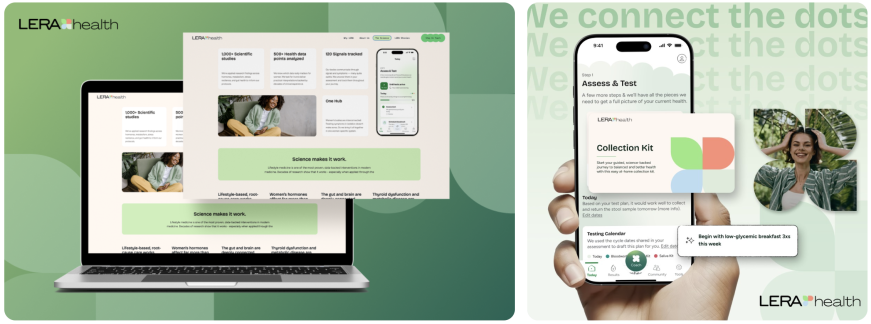
View AllLera Health
How a HIPAA engagement works
This is how we build HIPAA compliance into software, from the first architecture decision through every release, so privacy and security stay verifiable and the evidence is ready when an auditor or customer asks.
Discovery & Design
We map your regulatory scope, PHI data flows, and threat model, then design privacy-by-design architecture before a line of code is written.
Core Setup & Modules
Least-privilege access, encryption of PHI in transit and at rest, and audit-ready logging are stood up as foundational modules.
Integrations
We connect HL7 FHIR, HL7 v2 and third-party systems with conformance testing and documented, traceable data exchange, under a BAA wherever PHI flows.
Deployment & Support
We ship with compliance monitoring, release documentation and audit-ready evidence at every version.
How is PHI protected
across the architecture?
Layered safeguards protect PHI end to end: least-privilege access, network isolation, encryption in transit and at rest, and HIPAA audit logging at every layer. HIPAA encryption requirements are addressable, so we record each encryption decision in the risk analysis.

Which rules set HIPAA requirements for apps?
Short facts from the HIPAA Security Rule and Privacy Rule, each linked to the regulation text on eCFR.
The HIPAA Security Rule requires administrative, physical and technical safeguards for electronic protected health information.
Source: 45 CFR Part 164 Subpart C (eCFR)The HIPAA Security Rule's audit controls standard requires hardware, software or procedural mechanisms that record and examine activity in information systems that contain or use ePHI.
Source: 45 CFR 164.312(b) (eCFR)Encryption of ePHI at rest and in transmission is an addressable specification: the organization implements it where reasonable and appropriate, or documents why not and adopts an equivalent measure.
Source: 45 CFR 164.312(a)(2)(iv), 164.312(e)(2)(ii) and 164.306(d)(3) (eCFR)A HIPAA covered entity may share protected health information with a business associate, such as a software vendor, only under a business associate agreement that commits the vendor to safeguard it.
Source: 45 CFR 164.502(e) and 164.504(e) (eCFR)
Which other standards apply alongside HIPAA?

HIPAA
Health Insurance Portability and Accountability Act
Protect PHI with privacy-first architecture, encrypted storage and transmission, strict access controls, and traceable audit logs.

GDPR
General Data Protection Regulation
Implement lawful consent flows, data minimization, retention controls, and secure processing for sensitive health data.

FHIR
Fast Healthcare Interoperability Resources
Enable standardized health data exchange across apps, care teams, and systems through standards-based FHIR APIs.

HL7
Health Level Seven International
Support enterprise-grade interoperability with HL7-based integrations for records, events, and clinical messaging workflows.

HITRUST
Health Information Trust Alliance
Align security programs to healthcare-specific control and risk management practices trusted by providers and ecosystem partners.

HITECH
Health Information Technology for Economic and Clinical Health Act
Design with breach notification readiness, digital record safeguards, and operational controls that support regulated care programs.

SaMD
FDA Software as a Medical Device
Plan software quality, traceability, and documentation pathways for products that may require SaMD review and submission.

MDR (EU)
Medical Device Regulation (European Union)
Prepare EU market-ready processes for risk classification, evidence tracking, and lifecycle governance under MDR expectations.

SAMHSA
Substance Abuse and Mental Health Services Administration
Apply confidentiality controls and consent-aware sharing models for behavioral and mental health data experiences.
Featured case study
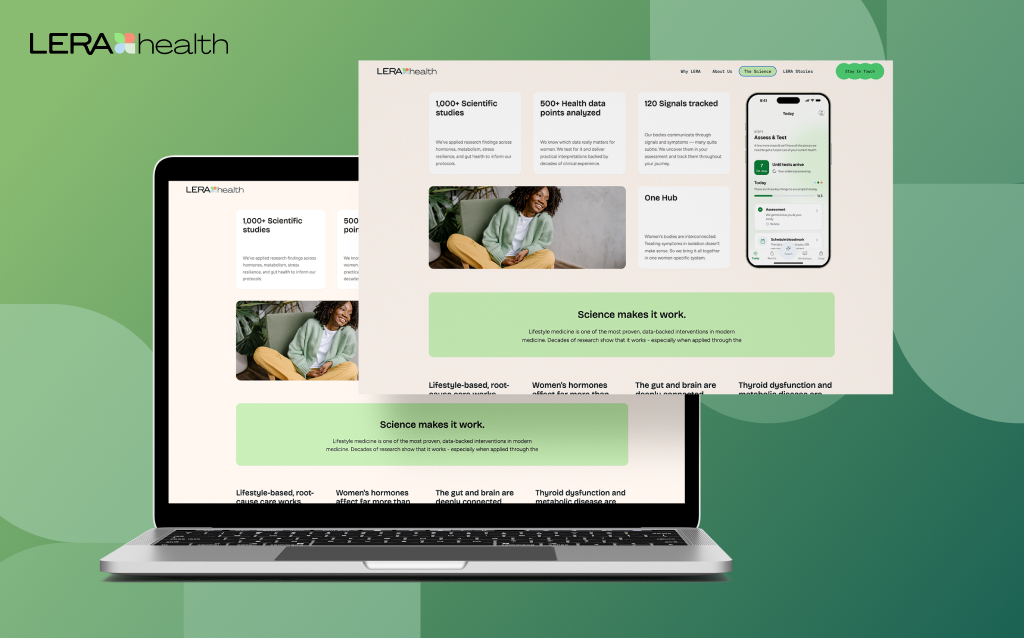
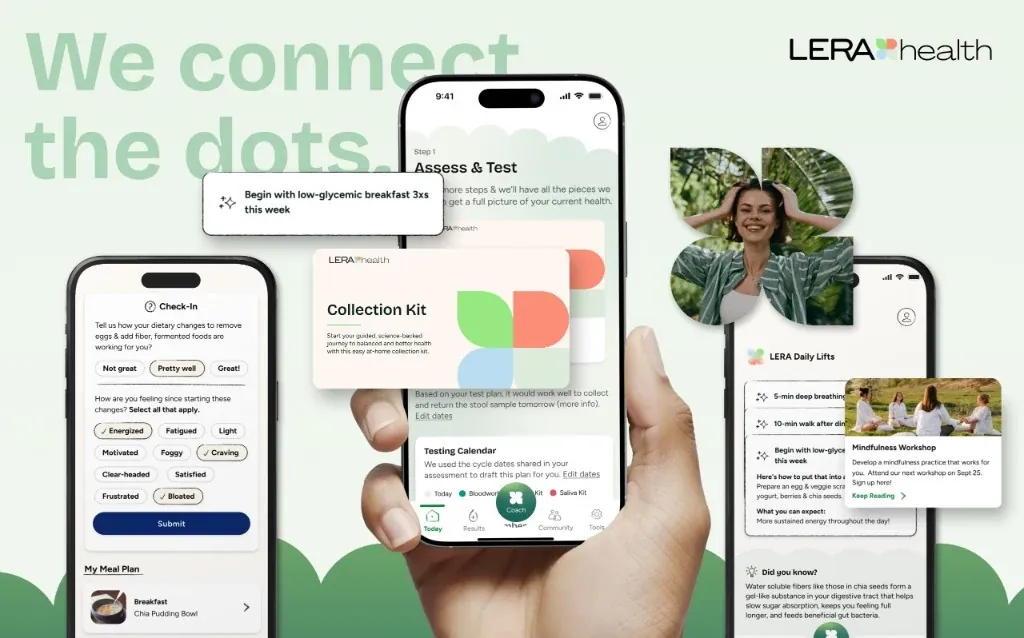
Read Case StudyLera Health: a compliance-first women's health app
A compliance-first women's health platform connecting at-home testing, lab work, and personalized care plans, built with privacy-by-design architecture, consent-aware data flows, and audit-ready controls across every release.
HIPAA compliance for software FAQs
Build compliantly