



GDPR and UK GDPR for health software
Launching a health app for UK or EU users means processing special category data under rules that ask for records, not promises. Agnotic Technologies builds the consent records, rights workflows, hosting choices and DPIA evidence that GDPR compliant health app development needs.
Trusted by global innovators





What is GDPR compliant health app development?
GDPR compliant health app development is building a health product so that data concerning health, a special category under EU GDPR and UK GDPR, is processed with a lawful basis and an Article 9 condition, kept to what each purpose needs, secured and open to data subject rights. UK and EU founders need it from the first release.
GDPR in the product
What does GDPR readiness look like in a software product?
GDPR readiness means each obligation in Regulation (EU) 2016/679 maps to a product feature that leaves evidence: consent records, rights requests, privacy defaults, processor terms, processing records, security, breach handling and DPIAs. Agnotic Technologies builds those features into health and consumer products.
| GDPR article | What it asks | Product feature | Evidence it leaves |
|---|---|---|---|
| Art. 6 and 9 | A lawful basis for every purpose; health data needs explicit consent or another Article 9(2) condition | Consent captured per purpose, and withdrawal as easy as giving it | Consent log with the text version, purpose, time and any withdrawal |
| Art. 15 to 20 | Access, rectification, erasure and portability, answered within one month, extendable by two months | Self-service export in a machine-readable format and an erasure workflow that covers analytics copies and backups | Request log with dates, the data exported or erased, and how backups are handled until they expire |
| Art. 25 | Data protection by design and by default | Only the fields a purpose needs, the shortest retention and private settings by default | Design decisions and default settings recorded per release |
| Art. 28 | Processor contracts, and no sub-processor without the controller's authorization | A subprocessor register the product team keeps current | Signed processor terms and the subprocessor list with change notices |
| Art. 30 | Records of processing activities | A data inventory kept in step with the system's actual data flows | The record of processing, updated when features change |
| Art. 32 | Security appropriate to the risk, including pseudonymisation and encryption | Encryption, pseudonymised analytics, access control and regular testing | Test results, access reviews and the security configuration |
| Art. 33 | Breach notice to the supervisory authority without undue delay, where feasible within 72 hours of becoming aware | Incident detection with a timeline that starts when the breach is discovered | Incident log with discovery time, assessment and the notification decision |
| Art. 35 | A DPIA before large-scale processing of special categories of data, such as health data | Architecture and data flow documents ready as DPIA input | The DPIA, versioned alongside the releases it covers |
Article references are to Regulation (EU) 2016/679. This table is engineering guidance, not legal advice; your DPO or counsel decides lawful bases and DPIA outcomes.
How does Agnotic build a GDPR compliant health app?
A privacy-by-design approach to GDPR, mapping personal data and lawful bases, then engineering minimization, rights handling and secure processing into every flow.
Data Mapping & DPIA
We map personal and special category data, purposes and lawful bases, and prepare the inputs for a DPIA for health apps, which large scale processing of health data always requires.
Privacy by Design
We design consent flows, minimization, retention schedules, and data-subject-rights handling around your product and lawful bases.
Secure Processing
We implement encryption, access control, pseudonymization, and records of processing activities across every data flow.
Rights & DPA Support
We build data-subject-rights workflows and support Data Processing Agreements and 72-hour breach-notification readiness.
App gallery
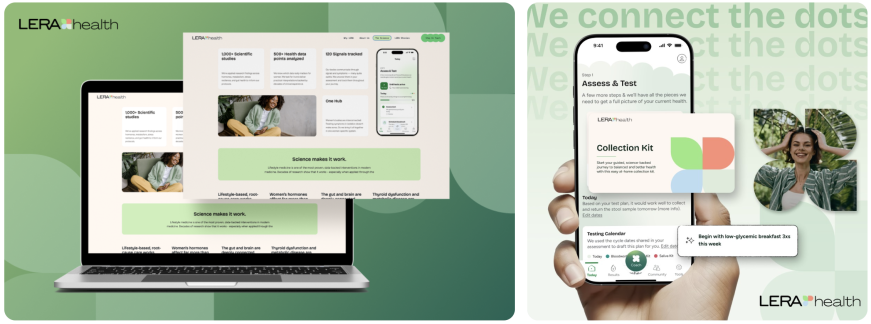
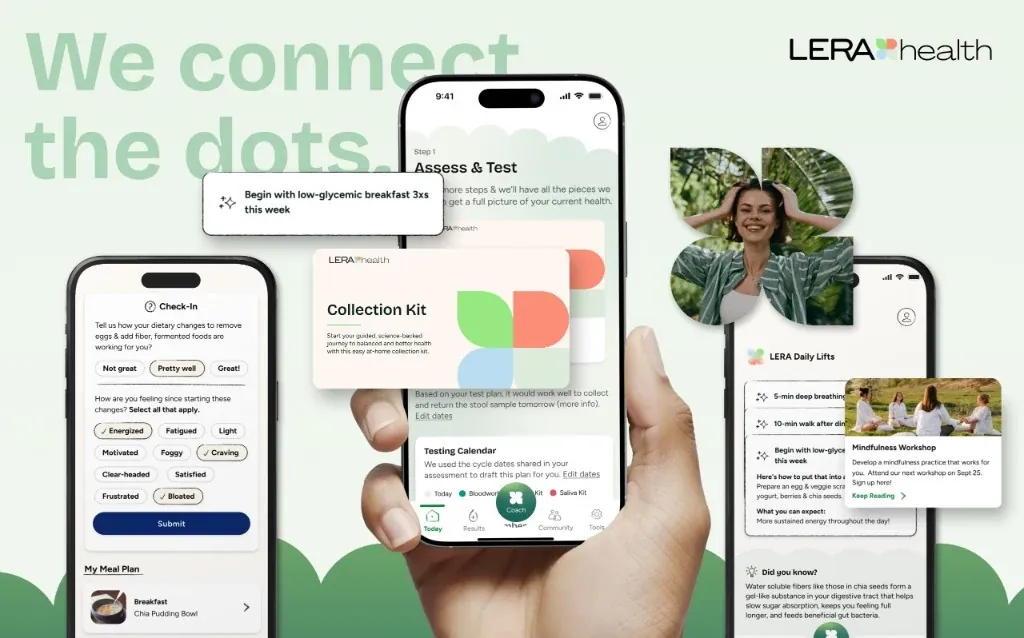
View AllLera Health
Privacy-by-design delivery
A repeatable process that builds lawful, minimized, rights-aware data handling into every stage, so GDPR conformance is demonstrable at every release.
Data Mapping & Lawful Basis
We inventory personal data, define processing purposes and lawful bases, and run a DPIA for high-risk processing.
Privacy-by-Design Build
Consent management, data minimization, retention, and pseudonymization are built into the data model and flows.
Data-Subject Rights
We implement access, rectification, erasure, restriction, and portability workflows with auditable fulfillment.
Governance & Breach Readiness
We maintain records of processing, support DPAs with processors, stand up 72-hour breach-notification readiness and, for NHS work, prepare the evidence for the NHS DSPT.
Where should UK and EU
health data live?
UK GDPR health data and EU health data can be hosted in region or transferred under a valid mechanism. We design region choice, encryption, pseudonymization, retention enforcement and rights fulfillment into every layer.

Which rules apply to UK GDPR health data?
Short facts from the UK regulator (ICO) and NHS England, each linked to its primary source.
UK GDPR singles out data concerning health as special category data that gets extra protection, and an organization that processes it must identify an Article 9 condition for processing.
Source: ICO, What is special category data?Under UK GDPR Article 35(3)(b), processing special category data on a large scale always requires a data protection impact assessment, carried out before the processing starts.
Source: ICO, When do we need to do a DPIA?Every restricted transfer of personal information outside the UK must be covered by UK adequacy regulations, appropriate safeguards or an exception.
Source: ICO, International transfers: a guideIn England, organisations that have access to NHS patient data and systems must complete the Data Security and Protection Toolkit, a self-assessment against the National Data Guardian's data security standards.
Source: NHS England, Data Security and Protection Toolkit
Which standards sit alongside GDPR?

HIPAA
Health Insurance Portability and Accountability Act
Protect PHI with privacy-first architecture, encrypted storage and transmission, strict access controls, and traceable audit logs.
GDPR
General Data Protection Regulation
Implement lawful consent flows, data minimization, retention controls, and secure processing for sensitive health data.

FHIR
Fast Healthcare Interoperability Resources
Enable standardized health data exchange across apps, care teams, and systems through standards-based FHIR APIs.

HL7
Health Level Seven International
Support enterprise-grade interoperability with HL7-based integrations for records, events, and clinical messaging workflows.

HITRUST
Health Information Trust Alliance
Align security programs to healthcare-specific control and risk management practices trusted by providers and ecosystem partners.

HITECH
Health Information Technology for Economic and Clinical Health Act
Design with breach notification readiness, digital record safeguards, and operational controls that support regulated care programs.

SaMD
FDA Software as a Medical Device
Plan software quality, traceability, and documentation pathways for products that may require SaMD review and submission.
MDR (EU)
Medical Device Regulation (European Union)
Prepare EU market-ready processes for risk classification, evidence tracking, and lifecycle governance under MDR expectations.

SAMHSA
Substance Abuse and Mental Health Services Administration
Apply confidentiality controls and consent-aware sharing models for behavioral and mental health data experiences.
Featured case study
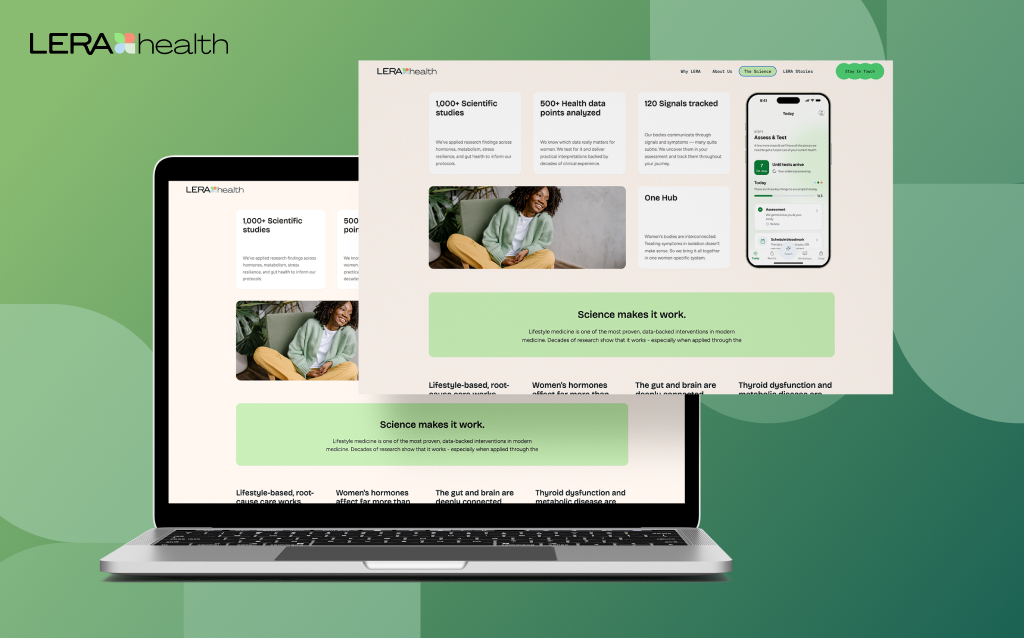
Read Case StudyLera Health: compliant health platform
Related proof of privacy-first delivery: for Lera Health we built consent-aware data flows, minimization, and encrypted processing end to end, the same foundations GDPR requires for special-category health data.
GDPR for health software FAQs
Build compliantly