Challenge
PHI sprawling across logs, analytics, and dev environments
Agnotic approach
PHI-aware logging, data classification, and environment-level controls that prevent PHI leaving production.

We build HIPAA-compliant healthcare applications with PHI handling, BAA-covered infrastructure, and audit logging engineered into the architecture from day one — the controls HIPAA requires, in every sprint, not retrofitted before launch.
Trusted by global innovators











HIPAA-compliant app development means engineering the technical and operational safeguards for Protected Health Information (PHI) into the architecture from day one — how PHI is stored, transmitted, accessed, logged, and recovered — under the Privacy, Security, and Breach Notification Rules.
Off-the-shelf compliance bolt-ons and pre-launch scrambles leave production risk in the codebase for years. We build PHI handling, audit logging, BAA-covered infrastructure, and role-based access as part of every sprint — and help you operate the policy, training, and BAA side that turns HIPAA-ready software into full organizational compliance.
What HIPAA actually requires
The Health Insurance Portability and Accountability Act defines standards for protecting Protected Health Information (PHI) — how it's stored, transmitted, accessed, and breached. Every app that handles PHI must follow the Privacy Rule, Security Rule, Breach Notification Rule, and Enforcement Rule.
Done right, HIPAA is embedded into the architecture from day one — PHI encryption, audit logs, access controls, and BAA-covered infrastructure. Done wrong, it's a pre-launch scramble that leaves production risk in the codebase for years.
A two-level compliance architecture — infrastructure and application — because one without the other fails audit. Encryption, access control, and audit logging are engineered at both layers.

Five common HIPAA failure modes
Challenge
PHI sprawling across logs, analytics, and dev environments
Agnotic approach
PHI-aware logging, data classification, and environment-level controls that prevent PHI leaving production.
Challenge
BAA inventory incomplete — some vendor touches PHI without contract
Agnotic approach
BAA inventory as first-class artefact, updated in code review whenever a new vendor is added.
Challenge
Audit logs that don't survive audit
Agnotic approach
Tamper-evident audit logs, retention enforcement in code, and integrity monitoring in production.
Challenge
Access control that drifts over time
Agnotic approach
Quarterly access reviews, automated anomaly detection on access patterns, and least-privilege defaults.
Challenge
Incident response that's never been tested
Agnotic approach
Documented incident playbooks with annual tabletop exercises and breach-notification drills.
Every control pairs a security outcome with the HIPAA rule or mechanism that makes it defensible at audit.
TLS 1.2+ in transit, AES-256 at rest, managed KMS key handling, and field-level encryption for the most sensitive PHI — with PHI-aware logging that keeps protected data out of logs, analytics, and dev environments.
Every PHI access logged with user, timestamp, action, resource, and context — tamper-evident, retention enforced in code, and queryable by compliance without going through engineering.
AWS, GCP, or Azure healthcare-eligible services under a Business Associate Agreement (BAA), with a BAA inventory maintained as a first-class artifact and updated in code review whenever a vendor touches PHI.
Least-privilege RBAC tuned to clinical roles (MD, RN, CNA, admin, billing, patient), short-lived tokens, and session management with clean override paths and quarterly access reviews.
API gateway with rate limiting, request signing, private VPC networking, managed secrets, and least-privilege IAM — compliance engineered at both the infrastructure and application levels.
Documented incident playbooks, breach-notification paths under the HITECH Breach Notification Rule, and annual tabletop exercises so response is tested before it is ever needed.
Where we apply HIPAA-ready engineering
Greenfield web and mobile apps that handle PHI — patient-facing or clinician-facing.
Video, async messaging, remote monitoring — with full HIPAA controls on every data flow.
PHI-aware messaging with retention policy, audit, and clinical escalation paths.
Patient-facing access to health records with authenticated FHIR access.
Multi-tenant healthcare SaaS with per-tenant PHI isolation and enterprise-grade controls.
FHIR and HL7 integration with healthcare partners, labs, and EHRs under full BAA coverage.
Why it matters
Two-level compliance
We engineer compliance at both levels — infrastructure and application — because one without the other fails audit.
Every Agnotic healthcare build ships with HIPAA controls in the architecture, not in a last-quarter compliance sprint.

Health Insurance Portability and Accountability Act
Protect PHI with privacy-first architecture, encrypted storage and transmission, strict access controls, and traceable audit logs.

General Data Protection Regulation
Implement lawful consent flows, data minimization, retention controls, and secure processing for sensitive health data.

Fast Healthcare Interoperability Resources
Enable standardized health data exchange across apps, care teams, and systems through robust FHIR-ready APIs.

Health Level Seven International
Support enterprise-grade interoperability with HL7-based integrations for records, events, and clinical messaging workflows.

Health Information Trust Alliance
Align security programs to healthcare-specific control and risk management practices trusted by providers and ecosystem partners.

Health Information Technology for Economic and Clinical Health Act
Design with breach notification readiness, digital record safeguards, and operational controls that support regulated care programs.

FDA Software as a Medical Device
Plan software quality, traceability, and documentation pathways for products that may require SaMD review and submission.

Medical Device Regulation (European Union)
Prepare EU market-ready processes for risk classification, evidence tracking, and lifecycle governance under MDR expectations.

Substance Abuse and Mental Health Services Administration
Apply confidentiality controls and consent-aware sharing models for behavioral and mental health data experiences.
Standards & scope
A phased delivery that builds HIPAA into every sprint, not just the pre-launch checklist — so there is no separate multi-month compliance scramble at the end.
Threat modeling, PHI mapping, and security architecture before feature engineering — the compliance boundaries are drawn before any code is written.
Cloud accounts under BAA, private networking, secrets, PHI-aware schemas, and field-level encryption where warranted — the secure foundation the app is built on.
Role-based access, token management, and audit-log emission on every PHI access — built into the application, not appended before launch.
Penetration testing, compliance walkthroughs with a named reviewer, runtime security monitoring, log-integrity checks, and quarterly compliance reviews.
Related proof of compliant delivery: for Lera Health we built a privacy-first data layer and patient experience end to end, structuring PHI, consent, and audit the same way every HIPAA-compliant build demands.
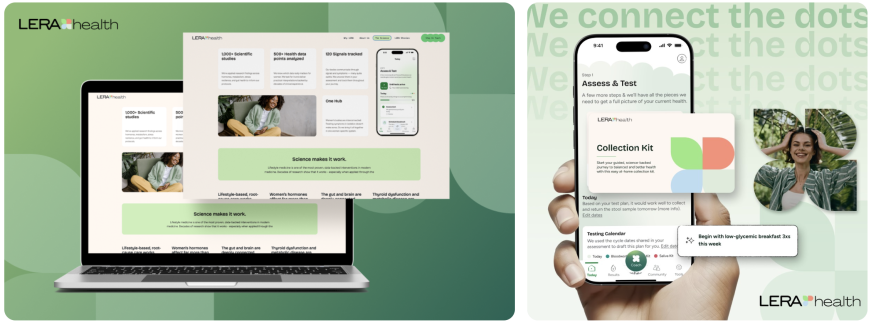
From digital-health startups facing their first enterprise procurement to health systems hardening existing platforms — we bring compliance-first engineering discipline.
HIPAA, HITECH, and BAA requirements designed into the architecture from sprint one — never bolted on before launch or discovered at audit.
We build compliant clinical and patient-facing products across specialties, so your team won't spend the engagement teaching us how PHI actually flows.
Audit trails, access matrices, and BAA inventories that pass enterprise due diligence — so compliance accelerates your sales instead of blocking them.
Design, engineering, QA, and compliance under one point of accountability — a team that treats PHI, audit, and consent as first-class requirements.

Compliance-first healthcare builds, delivered to production
Let's build a secure, scalable, and compliant healthcare solution — engineered from day one, not retrofitted before launch.
contact@agnotic.com
Partnerships
contact@agnotic.com