


Case study
My Lauren: building a maternal health platform
Maternal care teams lose sight of patients between visits. For HealthEvolve, Agnotic Technologies built My Lauren: a patient app, a provider console and a secure backend that connect care from pre-pregnancy to postpartum.
15-Minute Scoping Call- Client
- HealthEvolve
- Product
- Maternal health platform
- Users
- Patients, providers, care navigators
- Platforms
- Mobile app, provider web console, backend

Trusted by global innovators











What did Agnotic build for the My Lauren maternal health platform?
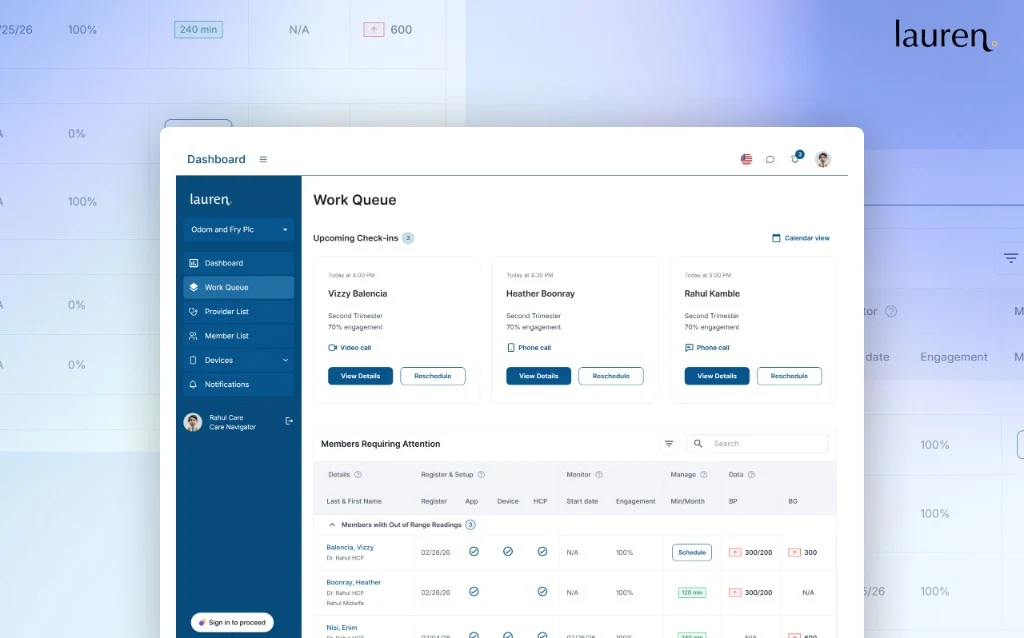
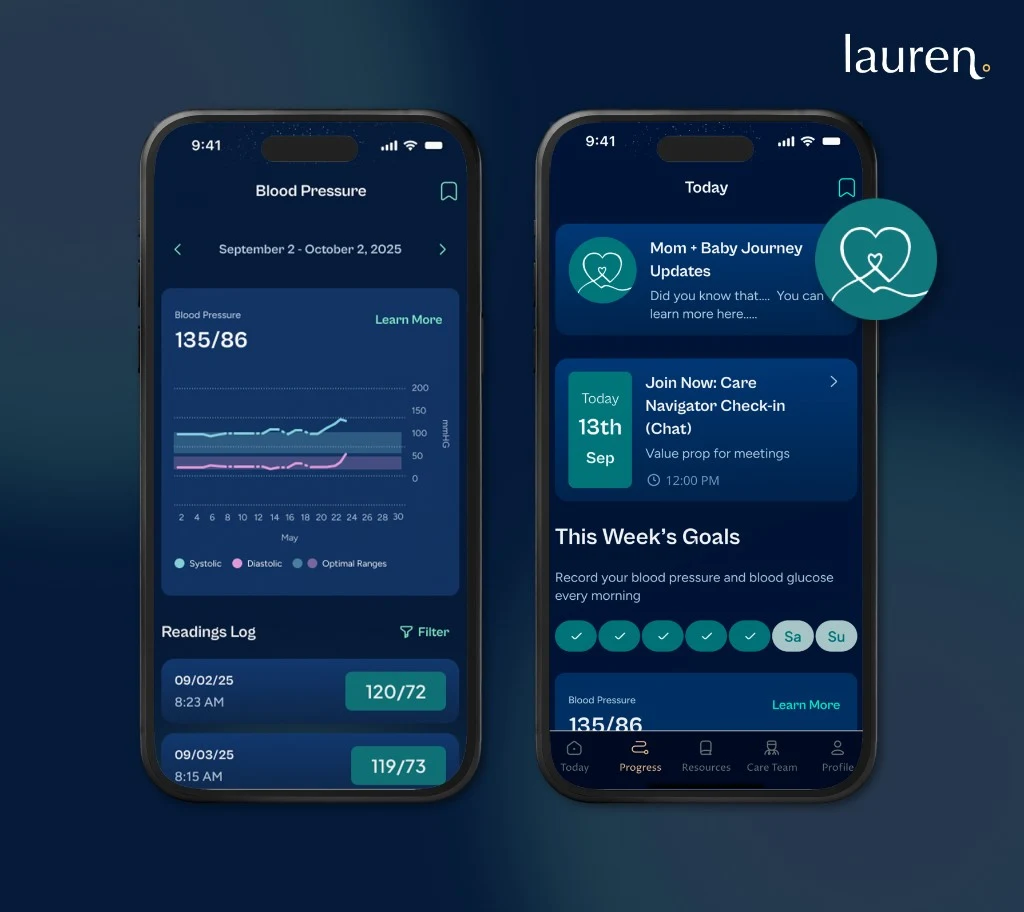
Agnotic Technologies built My Lauren, HealthEvolve's maternal health platform, as a full-stack product: a patient mobile app, a provider web console and a secure backend. It supports women from pre-pregnancy to postpartum with remote patient monitoring from connected devices, personalized care journeys, secure messaging and care-team workflows for proactive intervention.
What problem did the platform solve, and for whom?
Maternal care often runs in disconnected silos, so providers have little visibility into a patient's health between visits. HealthEvolve needed one connected system for everyone in the maternal journey.
Patients
Women from pre-pregnancy to postpartum who need guidance, reminders and an easy way to share readings and symptoms.
Providers
Clinicians who need to see trends between visits, especially for high-risk pregnancies, and act early.
Care navigators
Staff who coordinate care, follow up with patients and keep the journey on track.
Fragmented Maternal Care Workflows
Maternal healthcare systems often operate in disconnected silos, limiting provider visibility into patient health between visits. HealthEvolve needed one connected ecosystem to support providers, care navigators, and patients across the full maternal journey.
Limited Real-Time Monitoring for High-Risk Pregnancies
Continuous monitoring is critical for high-risk pregnancies, but many organizations lack integrated infrastructure for collecting and acting on real-time data from patients and connected medical devices.
Engagement and Compliance at Scale
The product had to improve engagement while meeting strict healthcare requirements. The platform needed HIPAA-ready communication, secure access controls, auditability, and enterprise-grade reliability to support long-term growth.
Which modules did we build?
Three connected products, each built for one group of users.
- Patient mobile app
- Onboarding, personalized 100-week care journeys, vitals tracking, symptom journaling and medication management.
- Provider web console
- Patient trends, risk indicators and care-team workflows so providers can intervene proactively.
- Secure communication
- HIPAA-ready messaging, multilingual notifications and consent-aware communication workflows.
- Learning content
- Educational content matched to each patient's risk profile and pregnancy stage.
How is the platform architected, and what does it integrate with?
The backend is built as microservices with event-driven notifications, CI/CD automation and centralized monitoring.
Connected devices
- What it does
- Bluetooth blood pressure devices, glucose monitoring systems and wearable data sources
Data pipelines
- What it does
- Real-time ingestion and normalization, so clinical teams see consistent health signals
Care journeys
- What it does
- Personalized journeys and content by pregnancy stage and risk profile
Notifications
- What it does
- Event-driven, multilingual reminders and alerts
Provider workflows
- What it does
- Dashboards and risk indicators for proactive intervention
Platform
- What it does
- Microservices, CI/CD automation and centralized monitoring
Which compliance decisions shaped the build?
Reproductive and maternal health data is highly sensitive, so the controls were part of the architecture from the start.
Encryption
Data encrypted in transit and at rest.
Access
Role-based access and zero-trust access patterns, so each user sees only what their role needs.
Audit logging
An audit trail of access to health data.
Consent-aware communication
Messaging and notifications that respect each patient's consent choices.
Which healthcare standards do we build to?
HIPAA
Health Insurance Portability and Accountability Act
Protect PHI with privacy-first architecture, encrypted storage and transmission, strict access controls, and traceable audit logs.

GDPR
General Data Protection Regulation
Implement lawful consent flows, data minimization, retention controls, and secure processing for sensitive health data.

FHIR
Fast Healthcare Interoperability Resources
Enable standardized health data exchange across apps, care teams, and systems through standards-based FHIR APIs.

HL7
Health Level Seven International
Support enterprise-grade interoperability with HL7-based integrations for records, events, and clinical messaging workflows.

HITRUST
Health Information Trust Alliance
Align security programs to healthcare-specific control and risk management practices trusted by providers and ecosystem partners.

HITECH
Health Information Technology for Economic and Clinical Health Act
Design with breach notification readiness, digital record safeguards, and operational controls that support regulated care programs.

SaMD
FDA Software as a Medical Device
Plan software quality, traceability, and documentation pathways for products that may require SaMD review and submission.
MDR (EU)
Medical Device Regulation (European Union)
Prepare EU market-ready processes for risk classification, evidence tracking, and lifecycle governance under MDR expectations.

SAMHSA
Substance Abuse and Mental Health Services Administration
Apply confidentiality controls and consent-aware sharing models for behavioral and mental health data experiences.
What does the platform support today?
The outcomes below are from the approved case study; we publish no metrics for this project.
- Continuous maternal monitoring across pregnancy and postpartum, with better visibility for care teams.
- Improved patient engagement through personalized journeys, reminders, and educational pathways.
- Faster, proactive clinical decisions enabled by real-time dashboards and risk indicators.
- A scalable and secure digital health foundation that supports organizational growth and compliance.
“Agnotic is the best technical team we evaluated. Their engineering excellence made our work dramatically easier and allowed us to stay focused on what matters most for maternal care outcomes. They took full ownership of the technical execution, and we are always happy to continue working together.”
 Kim SmithFounder, My Lauren
Which rules apply to maternal health apps?
The FTC Health Breach Notification Rule requires vendors of personal health records and related entities, including many health apps outside HIPAA, to notify consumers after a breach of unsecured health information.
Source: 16 CFR Part 318 (eCFR)The HIPAA Security Rule requires administrative, physical and technical safeguards for electronic protected health information.
Source: 45 CFR Part 164 Subpart C (eCFR)A HIPAA covered entity may share protected health information with a business associate, such as a software vendor, only under a business associate agreement that commits the vendor to safeguard it.
Source: 45 CFR 164.502(e) and 164.504(e) (eCFR)
What else is related to this project?
- Software development case studiesAll published Agnotic case studies.
- Women's health app case study: Lera HealthAt-home testing, lab results and care plans.
- Maternal health app developmentWhat we build for maternal care teams and founders.
- Remote patient monitoring softwareDevice data, alerts and clinician review workflows.
Frequently Asked Questions
Explore the work