

01
Diabetes & Prediabetes
CGM-backed programs, A1C tracking, and lifestyle coaching for type 2 and prediabetes.


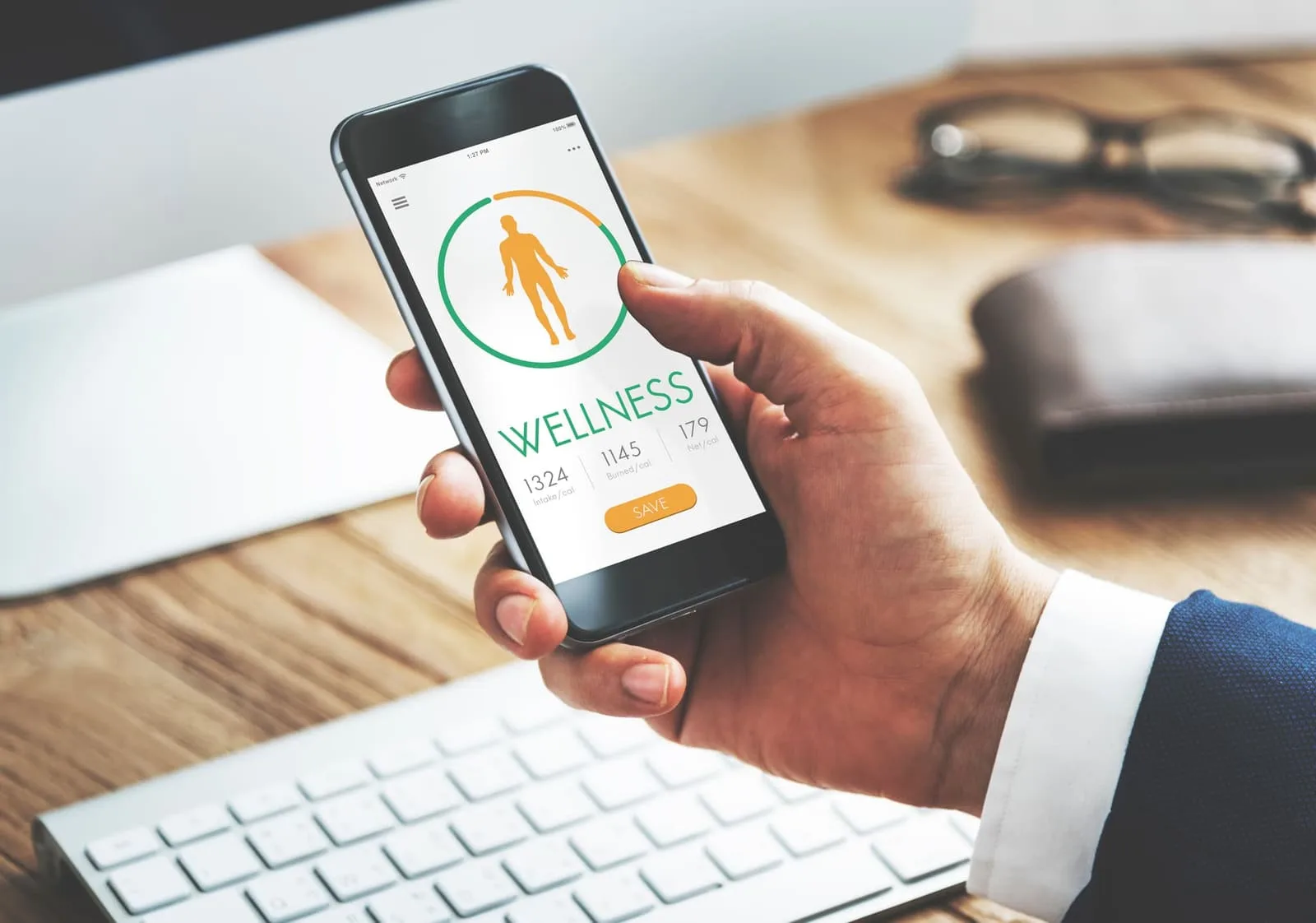
A chronic care app is software that helps patients with long-term conditions, such as diabetes, heart failure, hypertension or COPD, manage their care between visits. It connects home devices, medication reminders and care plans to the care team and the EHR. Agnotic Technologies builds them with CCM and RPM documentation and HIPAA safeguards.
Trusted by global innovators











A chronic care app works as a loop between home and clinic. Patients log symptoms and medications while home devices send readings; rules flag readings outside the care plan; care managers review the flags, message patients and document time for CCM or RPM billing; and the results sync to the EHR.
The same problems come up when teams scope chronic care software.
Logbook fatigue: self-tracking without feedback loses patients quickly.
Missed medication: patients stop or skip medicines, and the care team often finds out only after a downstream event.
Billing complexity: CCM, RPM and principal care management codes have overlapping but distinct documentation rules, so time is easy to underbill.
Care-team overload: without triage, care managers drown in low-risk alerts and miss the patients who need help.
Programs that keep patients engaged and keep billing documentation complete.
BP cuffs, CGMs, scales, pulse oximeters, and peak-flow meters flow directly into the app and the EHR.
Pill-reminder nudges, refill prediction, and behavior-change content tuned per condition and literacy level.
Automatic time-on-task tracking, documentation packets, and claim-ready summaries for CCM / RPM / PCM CPT codes.
Capabilities we build into chronic care programs.
Condition pathways for diabetes, heart failure, hypertension, COPD, CKD and obesity, set by your clinicians.
Direct sync from Dexcom, Abbott, Omron, Withings, iHealth, and Apple/Google Health.
Pill reminders, refill prediction, and pharmacy integrations for home delivery.
Condition-specific PROMs and symptom diaries with longitudinal trending.
Asynchronous messaging with triage SLAs and escalation to video visit or nurse call.
ML-assisted stratification to focus care managers on rising-risk patients first.
Literacy-tuned content, coaching journeys, and group programs for behavior change.
Time-on-task logs, documentation, and claim-ready summaries for each CPT code.
Two-way sync with Epic, Oracle Health (Cerner) and athenahealth via SMART on FHIR and FHIR write-backs.
How readings, rules and care-team work flow from home to the EHR.
iOS, Android, and SMS journeys that share a single clinical model.
BLE device SDKs and Surescripts pharmacy integrations into the clinical core.
Condition pathways, risk stratification, and reimbursement tracking run over FHIR data.
Care-manager dashboards, triage queues, and documentation tools.
SMART on FHIR, FHIR write-back, and HL7 v2 interfaces to the source-of-truth EHR.
A pragmatic stack chosen for reliability, speed, and ease of operation.
Measures we build reporting around, agreed with your clinical team before launch.
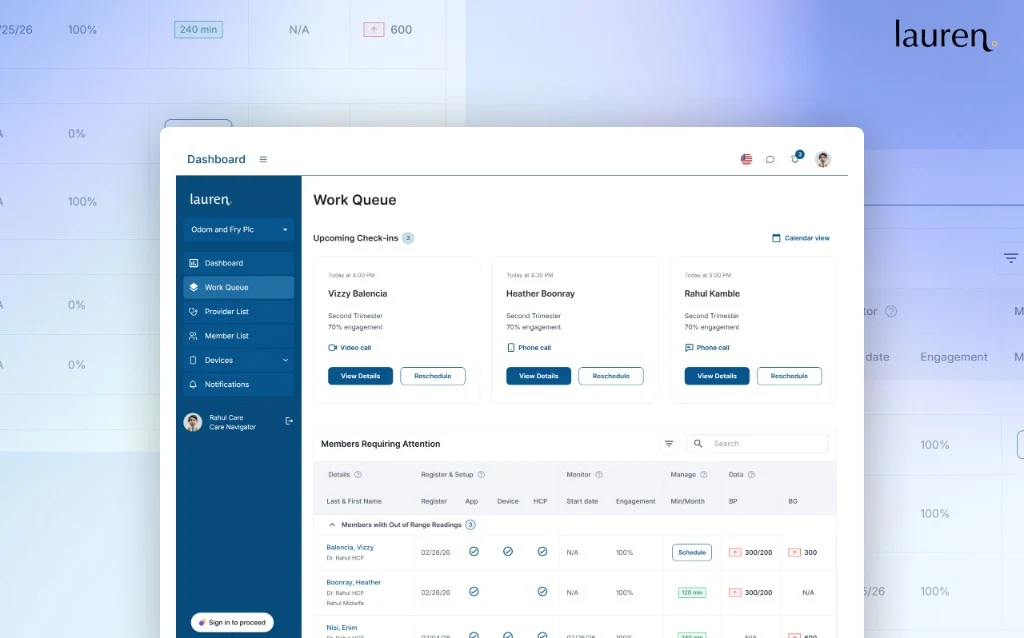
A HIPAA-ready maternal health platform enabling remote patient monitoring, care coordination, and personalized engagement from pre-pregnancy through postpartum.
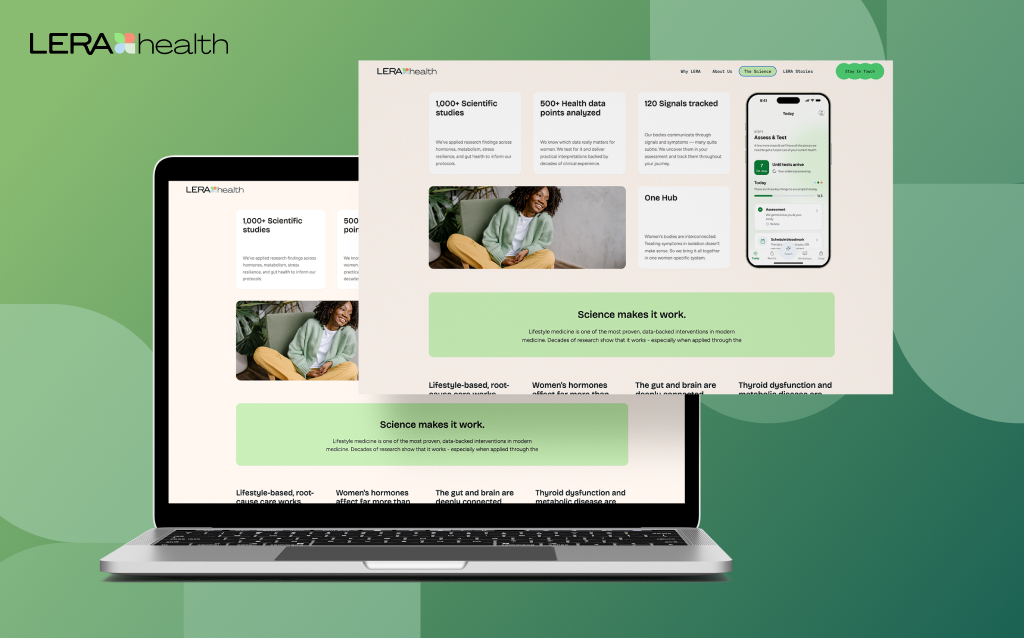
A women’s health product experience focused on guided care journeys, education, and compliance-aware workflows to support long-term engagement.
Common chronic care programs we design for.
CGM-backed programs, A1C tracking, and lifestyle coaching for type 2 and prediabetes.
Daily weight, BP, and symptom tracking with heart-failure-specific escalation rules.
Home BP cuffs, titration protocols and monitoring for uncontrolled hypertension.
Peak-flow, spirometry, and exacerbation-risk monitoring with action-plan support.
GLP-1 titration support, side-effect tracking, and lifestyle coaching for weight-management programs.
ACO and VBC programs that need HEDIS, MIPS, and Stars measure lift.
We connect to the systems your teams already know.
We build secure, scalable products designed for privacy, interoperability, and regulatory readiness from day one across every sector we serve.

Protect PHI with privacy-first architecture, encrypted storage and transmission, and strict access controls.

Implement lawful consent flows, data minimization, and secure processing for global data privacy.

Enabling standardized health data exchange through standards-based API mappings.

Supporting enterprise-grade interoperability for clinical messaging and record workflows.
We combine deep technical expertise with industry-specific knowledge to deliver solutions that aren't just functional, but transformational.
We implement rigorous security protocols and compliance standards (HIPAA, GDPR, SOC2) across all industrial solutions to protect sensitive data.
Our architectures are built to handle massive data loads and user bases, keeping performance steady whether you're serving ten or ten million.
Using our suite of internal tools and proven frameworks, we cut setup work so your first release reaches users sooner.
Beyond simple wrappers, we build deep-learning integrations and predictive analytics directly into the core of your industry-specific workflows.
A scoping call, a fixed-scope first release, then scale and support.
We map your conditions, care team, devices and billing programs.
One condition pathway with device sync, alerts and care-manager review working end to end.
CCM and RPM documentation and EHR sync added before the program scales.
More conditions, devices and sites, with our team supporting the product.
Short facts we design around, each linked to its primary source.
Medicare's remote physiologic monitoring codes include CPT 99453, 99454, 99457 and 99458, and the CY 2026 Physician Fee Schedule added 99445 and 99470 for shorter monitoring periods and shorter management time.
Source: Federal Register, November 5, 2025 (CY 2026 Physician Fee Schedule final rule, CMS-1832-F)The HIPAA Security Rule requires administrative, physical and technical safeguards for electronic protected health information.
Source: 45 CFR Part 164 Subpart C (eCFR)A HIPAA covered entity may share protected health information with a business associate, such as a software vendor, only under a business associate agreement that commits the vendor to safeguard it.
Source: 45 CFR 164.502(e) and 164.504(e) (eCFR)ONC certification criterion 170.315(g)(10) requires certified EHRs to offer a standardized API for patient and population services based on HL7 FHIR.
Source: 45 CFR 170.315 (eCFR)We don't just build products; we forge lasting partnerships. See how we've helped industry leaders transform their vision into technical reality.
“I can clearly see how Agnotic has a unique way of handling end-to-end development. They are always active on quick chat and provide support quickly.”

Aaron Phelan
Founder, Benchmark
“Agnotic combines deep technical expertise with strong domain knowledge. They understand the business context, anticipate challenges, and make collaboration smooth and effective.”

John Pasmore
Founder, Latimer
“Agnotic is the best technical team we evaluated. Their engineering excellence made our work dramatically easier and allowed us to stay focused on what matters most for maternal care outcomes. They took full ownership of the technical execution, and we are always happy to continue working together.”

Kim Smith
Founder, My Lauren
Detailed pages for the services chronic care teams ask us about.
Care plans, CCM time tracking and care-team tasks.
Device data, alerts and RPM billing support.
Rules and alerts that help care teams act on readings.
Reminders, education and messaging between visits.
The safeguards we build into every healthcare product.
All the healthcare products and integrations we build.
Explore other production-grade engineering platforms we deliver across healthcare.
The technical patterns behind this platform translate naturally into adjacent verticals.
Tell us which condition and program you want to start with, and we will scope a first release with you.
contact@agnotic.com
Partnerships
contact@agnotic.com