Chronic Care Management (CCM)
20-minute monthly CCM programs billing CPT 99490 and 99439.



We build care management platforms that operationalize chronic care management end to end: structured care plans, care-team task routing, and defensible CPT 99490/99439 time capture that survives an audit.
Trusted by global innovators









Care management software coordinates longitudinal care for high-risk and chronic patients across nurses, care coordinators, pharmacists and physicians. Agnotic Technologies builds it for providers and digital health teams: FHIR care plans, CCM time tracking, task routing and EHR write-back, with HIPAA safeguards designed in.
The hard part is not the UI. It is modeling FHIR CarePlan, Goal and CareTeam resources so a plan is truly shared, and capturing clinical time precisely enough to meet the 20-minute monthly Chronic Care Management (CCM) threshold.
What it is
Care management software gives a distributed care team a single, structured plan for each high-risk patient: the goals, interventions, medications, and tasks that keep chronic conditions controlled between visits.
Done well, it captures the clinical time CCM programs bill for, keeps the EHR in sync, and surfaces the patients who need attention. Done poorly, it becomes a parallel spreadsheet no one trusts.
A care-management data layer engineered around FHIR CarePlan and defensible time tracking, designed to interoperate with your EHR, not replace it.
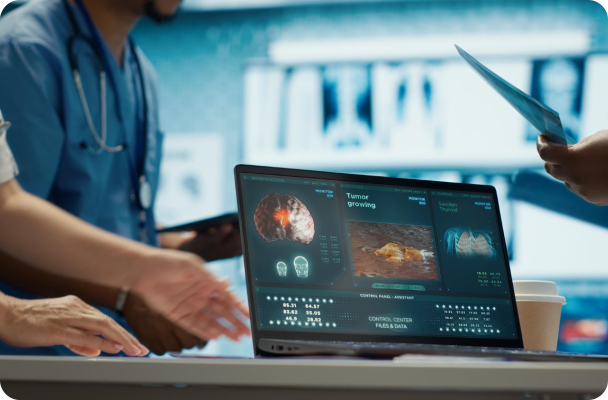
Each capability pairs a care-team workflow with the standard or billing rule that makes it defensible.
Problem-oriented care plans modeled on FHIR R4 CarePlan, Goal, and CareTeam resources, so each plan is shareable across the EHR and patient app instead of trapped in free-text notes.
Automatic, per-activity time capture that rolls up to the 20-minute monthly CCM threshold for CPT 99490 and each additional 20 minutes for 99439, with an immutable audit trail for payer review.
Role-based task assignment, escalation, and handoffs across nurses, care coordinators, and physicians, with FHIR Task and Communication resources tracking every touchpoint.
Rules-based and model-assisted stratification using ICD-10 problem lists and utilization signals to surface the patients whose plans need attention this week.
Captures and versions the beneficiary consent CCM requires, tracks enrollment status, and flags patients who lapse eligibility before a claim is generated.
Care-plan updates and CCM summaries flow back to Epic, Oracle Health (Cerner) or athenahealth via FHIR R4 and HL7 v2, so the chart stays the source of truth.
Where it fits
20-minute monthly CCM programs billing CPT 99490 and 99439.
Single high-risk condition management with dedicated care plans.
Multi-morbidity patients with layered goals and multiple specialists.
Health-plan care teams managing risk-bearing member panels.
Transitional care and medication reconciliation after hospitalization.
Collaborative care models that blend physical and behavioral goals.
CCM staffing
A CCM program needs enough care managers to cover the monthly minutes its enrolled patients require. Work it out in five lines with your own panel size, minutes per patient and available hours; the lines hold no rates or benchmarks.
CCM revenue depends on defensible time capture and enrolled panel size. We build both as first-class concerns instead of afterthoughts.

Health Insurance Portability and Accountability Act
Protect PHI with privacy-first architecture, encrypted storage and transmission, strict access controls, and traceable audit logs.

General Data Protection Regulation
Implement lawful consent flows, data minimization, retention controls, and secure processing for sensitive health data.

Fast Healthcare Interoperability Resources
Enable standardized health data exchange across apps, care teams, and systems through standards-based FHIR APIs.

Health Level Seven International
Support enterprise-grade interoperability with HL7-based integrations for records, events, and clinical messaging workflows.

Health Information Trust Alliance
Align security programs to healthcare-specific control and risk management practices trusted by providers and ecosystem partners.

Health Information Technology for Economic and Clinical Health Act
Design with breach notification readiness, digital record safeguards, and operational controls that support regulated care programs.

FDA Software as a Medical Device
Plan software quality, traceability, and documentation pathways for products that may require SaMD review and submission.

Medical Device Regulation (European Union)
Prepare EU market-ready processes for risk classification, evidence tracking, and lifecycle governance under MDR expectations.

Substance Abuse and Mental Health Services Administration
Apply confidentiality controls and consent-aware sharing models for behavioral and mental health data experiences.
Standards and compliance
A phased approach that treats care-plan modeling, billing rules, and EHR interoperability as parallel tracks from day one.
We map your care programs, CCM billing rules, and target EHRs, then model the FHIR CarePlan, Goal, and CareTeam structures your workflows depend on.
We build the care-plan engine, task routing, and the per-activity time-capture layer that underpins CPT 99490 and 99439 claims.
We wire FHIR R4 and HL7 v2 interfaces for problem lists, medications, and care-plan write-back, validated against synthetic and sandbox data.
Phased go-live with care-team training, billing reconciliation dashboards, and ongoing tuning as enrolled panel size grows.
Program comparison
CCM and PCM pay for care management time against a care plan, while RPM and RTM pay for device data and the management time around it. We build the shared care plan, consent and time tracking once and add each program's evidence rules on top.
| Program | Who it is for | What the software must record | Code family |
|---|---|---|---|
| Chronic care management (CCM) | Patients with multiple chronic conditions | Consent, a care plan, and clinical staff or practitioner minutes per calendar month | 99490, 99439, 99491, 99437, 99487 and 99489 |
| Principal care management (PCM) | Patients with a single high-risk condition | A care plan for that condition and minutes per calendar month | 99424 to 99427 |
| Remote physiologic monitoring (RPM) | Patients sending physiologic readings, such as blood pressure or glucose, from a device | Days of readings in each 30-day period and monthly management time | 99453, 99454, 99445, 99457, 99458 and 99470 |
| Remote therapeutic monitoring (RTM) | Patients on a therapy program, such as respiratory or musculoskeletal care, sending non-physiologic data | Days of data in each 30-day period and monthly treatment management time | 98975 to 98981, plus 98979 and 98984 to 98986 |
Code descriptors and rules change in each year's Physician Fee Schedule, so we check the current year before writing billing logic.
Short facts we design around, each linked to its primary source.
Medicare's remote physiologic monitoring codes include CPT 99453, 99454, 99457 and 99458, and the CY 2026 Physician Fee Schedule added 99445 and 99470 for shorter monitoring periods and shorter management time.
Source: Federal Register, November 5, 2025 (CY 2026 Physician Fee Schedule final rule, CMS-1832-F)The CY 2026 Physician Fee Schedule final rule describes separate code sets for chronic care management of multiple chronic conditions and principal care management of a single high-risk condition, and adds RTM codes 98984, 98985, 98986 and 98979 for shorter monitoring periods and management time.
Source: CY 2026 Physician Fee Schedule final rule, 90 FR (govinfo)A HIPAA covered entity may share protected health information with a business associate, such as a software vendor, only under a business associate agreement that commits the vendor to safeguard it.
Source: 45 CFR 164.502(e) and 164.504(e) (eCFR)ONC certification criterion 170.315(g)(10) requires certified EHRs to offer a standardized API for patient and population services based on HL7 FHIR.
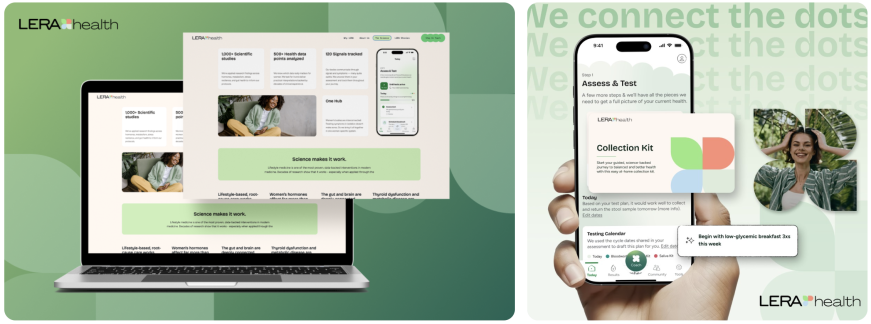
Source: 45 CFR 170.315 (eCFR)Related proof of compliant delivery: for Lera Health we built the privacy-first data layer, longitudinal care workflow, and patient experience end to end. It is not a CCM product, but it demonstrates how we model longitudinal, consent-driven care on a HIPAA-ready foundation.
We bring the clinical-domain depth and interoperability experience to ship a care-management platform that bills correctly and survives audit.
CCM time tracking and consent capture are engineered around CMS rules from sprint one, with immutable audit logs, not reconstructed after a denial.
We design for how coordinators, nurses, and physicians actually hand off work, so the tool reduces coordination load instead of adding clicks.
FHIR R4 and HL7 v2 write-back to Epic, Cerner/Oracle Health, and athenahealth is scoped upfront, so care plans reach the chart.
We have built consent-driven, longitudinal care experiences across chronic and women's health, so your team is not educating ours.

Care coordination, engineered, not templated.
Share your care programs and EHR landscape. We'll return a phased plan with care-plan modeling, CCM time tracking, and integration sequencing.
contact@agnotic.com
Partnerships
contact@agnotic.com