

01
Co-working and flexible offices
Pantry, cleaning and print supplies across many locations.


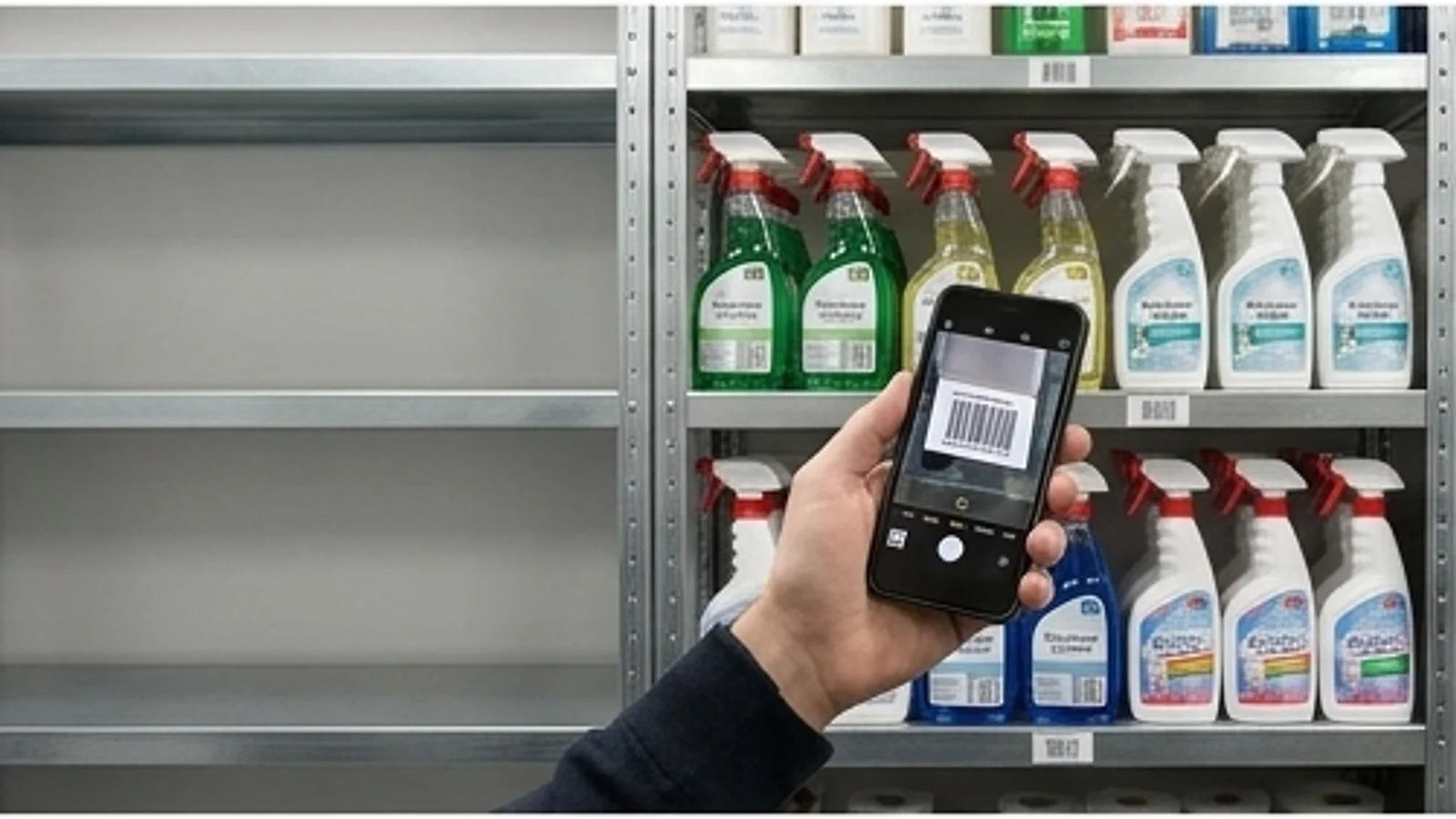
Cleaning chemicals, paper, pantry stock, filters and first aid supplies are usually tracked in a spreadsheet that is out of date by Friday. Agnotic Technologies builds consumables inventory management software that counts stock by site, sets a reorder point for every item and stops the overstocking that ties up cash and storeroom space.
Trusted by global innovators











Consumables inventory management software tracks the supplies a building uses up, such as cleaning chemicals, paper, pantry stock and maintenance spares, by site and storeroom. Agnotic Technologies builds it with barcode counts, usage-based reorder points and purchase requests, so facilities teams stop overstocking some items while running out of others.
Consumables are cheap one at a time, so nobody owns the total.
Hundreds of items are tracked in a shared spreadsheet that only one person updates.
Each site orders on its own, so one storeroom overflows while another runs out.
Reorders are based on how the shelf looks, not on how fast the item is used.
Front desk and cleaning staff change often, so counting habits reset every few months.
Off-the-shelf tools charge per named user, which gets expensive when many people count stock.
Safety data sheets for cleaning chemicals are filed separately from the stock they belong to.
The starting rules we set with facilities teams. Usage history from the first few months replaces the guesses.
| Consumable type | Examples | How usage is counted | Reorder rule |
|---|---|---|---|
| Cleaning chemicals | Floor cleaner, disinfectant, dishwasher detergent | Scan out from the storeroom by cleaner or contractor | Reorder point from weekly usage, with the safety data sheet linked to the item |
| Paper and hygiene | Toilet rolls, hand towels, soap refills | Count by floor or washroom during cleaning rounds | Reorder point per site, adjusted for occupancy |
| Pantry and hospitality | Coffee, tea, milk, cups | Count at restock, by kitchen | Short reorder cycle; perishables by expiry date |
| Maintenance spares | Filters, lamps, batteries, fuses | Issued against a work order | Minimum stock from planned maintenance schedules |
| First aid and safety | First aid kit refills, eye wash, gloves | Checked during safety inspections | Never below the kit list; expiry dates tracked |
| Office and print | Printer paper, toner, stationery | Count at restock | Reorder point per site |
Three changes, each small enough for busy front-line staff to adopt.
Every shelf and item gets a barcode or QR label. Staff scan and enter a quantity on their phone, so counts take minutes and any team member can do them.
Each item's reorder point comes from how fast it is used at that site, and the system raises a purchase request when stock falls below it.
Stock at every location is visible in one place, so a site that is short can take from one that is overstocked before anyone orders more.
The modules facilities teams use day to day.
Every consumable with its unit, pack size, supplier and barcode, using the supplier's GTIN where the pack has one.
Phone counts by shelf and storeroom, with large buttons and no training needed.
Minimum and reorder levels per item and site, recalculated from real usage.
Requests raised when stock falls below the reorder point, approved by the facilities manager and sent to the supplier or procurement system.
Move surplus stock to a site that is short before ordering more.
Expiry dates for perishables and first aid items, and safety data sheets linked to each chemical.
Usage per site, per occupant and per month, so budgets reflect what buildings actually use.
Counting, approving and reporting rights by role and site, so new staff can start counting on day one.
Chosen around how your sites buy and store supplies today.
Measures that show whether stock matches what buildings use.
By site and category, with the date stock hit zero.
Items holding more than a set number of weeks of usage.
By site and storeroom.
Makes sites of different sizes comparable.
Teams that run buildings with many small, frequent purchases.
Pantry, cleaning and print supplies across many locations.
Consumables for offices, kitchens and washrooms.
Chemical and hygiene stock issued to crews by site.
Cleaning, paper and first aid stock across buildings.
Guest amenities and housekeeping supplies by floor.
Non-clinical consumables alongside the clinical stock system.
Where items and budgets come from, and where orders go.
We build secure, scalable products designed for privacy, interoperability, and regulatory readiness from day one across every sector we serve.

Implement lawful consent flows, data minimization, and secure processing for global data privacy.

Adhering to the international gold standard for managing information security risks.
We combine deep technical expertise with industry-specific knowledge to deliver solutions that aren't just functional, but transformational.
We implement rigorous security protocols and compliance standards (HIPAA, GDPR, SOC2) across all industrial solutions to protect sensitive data.
Our architectures are built to handle massive data loads and user bases, keeping performance steady whether you're serving ten or ten million.
Using our suite of internal tools and proven frameworks, we cut setup work so your first release reaches users sooner.
Beyond simple wrappers, we build deep-learning integrations and predictive analytics directly into the core of your industry-specific workflows.
We start from your current spreadsheet and one or two sites. It depends on scope; we agree a fixed first release on the scoping call.
We review your item list, sites, how ordering works today and who counts stock.
We merge duplicates in your spreadsheet, add units and barcodes, and print shelf labels.
The catalog, scan-to-count app, reorder points and purchase requests for the first sites.
A few months of counts replace the starting reorder points with real ones.
More sites, supplier integration, transfers and spend reporting.
Item identification, chemical safety data and first aid stock, each linked to its source.
GS1 says a company can use the Global Trade Item Number (GTIN) to uniquely identify all of its trade items, which GS1 defines as products or services that are priced, ordered or invoiced at any point in the supply chain.
Source: GS1, Global Trade Item Number (GTIN)OSHA's Hazard Communication Standard requires employers to keep safety data sheets for each hazardous chemical readily accessible to employees in their work areas during each shift, and allows electronic access if it creates no barrier to immediate access.
Source: 29 CFR 1910.1200(g)(8), OSHA (eCFR)OSHA's medical services and first aid standard requires that adequate first aid supplies be readily available.
Source: 29 CFR 1910.151(b), OSHA (eCFR)We don't just build products; we forge lasting partnerships. See how we've helped industry leaders transform their vision into technical reality.
“I can clearly see how Agnotic has a unique way of handling end-to-end development. They are always active on quick chat and provide support quickly.”

Aaron Phelan
Founder, Benchmark
“Agnotic combines deep technical expertise with strong domain knowledge. They understand the business context, anticipate challenges, and make collaboration smooth and effective.”

John Pasmore
Founder, Latimer
This page covers consumables that buildings use up. These pages cover the assets, spaces and inventory around them.
Inspection, audit and EHS software for buildings and sites.
Facilities, space and asset management for multi-site portfolios.
Stock control for products and materials beyond facilities consumables.
Tracking equipment and durable assets rather than consumables.
Facilities workflows built around your own sites and teams.
Showing 10 of 19 industries