Challenge
Backfill and live streams double-count EGVs
Agnotic approach
Deterministic de-duplication keyed on timestamp and system time, with overlap windows explicitly reconciled.


We connect diabetes and RPM platforms to Dexcom continuous glucose monitoring through the sanctioned Dexcom API — estimated glucose values, trends, and events mapped into your clinical data model. Real integration against the real EGV surface, not just familiarity.
Trusted by global innovators










Dexcom exposes patient glucose data through the Dexcom API — a REST surface returning estimated glucose values (EGVs), calibration events, device metadata, and data-range endpoints. Access is gated behind an OAuth2 authorization-code flow with patient consent, a sandbox for development, and a production promotion step. The real-time surface (Dexcom's push-based v3 endpoints) and the retrospective batch surface behave differently and need different sync strategies.
The hard part is not the first API call — it is building a patient-generated health data (PGHD) pipeline that stays correct at scale: reconciling backfill against live streams, handling token refresh and revoked consent, de-duplicating EGVs across overlapping windows, and normalizing mg/dL versus mmol/L before anything reaches a clinician's screen. We scope all of it upfront so glucose data lands in your platform accurately and on time.
See how we design device-data pipelines that turn raw CGM readings into clean, consented, FHIR-ready observations.

Common failure modes
Challenge
Backfill and live streams double-count EGVs
Agnotic approach
Deterministic de-duplication keyed on timestamp and system time, with overlap windows explicitly reconciled.
Challenge
Tokens expire or consent is revoked silently
Agnotic approach
Refresh-token rotation, revocation detection, and re-consent prompts so data gaps are surfaced, not hidden.
Challenge
mg/dL vs mmol/L unit confusion
Agnotic approach
Canonical internal unit with normalization at ingest and correct UCUM units on every FHIR Observation.
Challenge
Sandbox works, production onboarding stalls
Agnotic approach
We plan Dexcom production promotion into the timeline from the start, not as an afterthought.
We build against the exact technical surface Dexcom sanctions — nothing improvised.
Estimated glucose values, calibrations, device, and dataRange endpoints via the Dexcom API v3, with the sandbox-to-production promotion path handled end to end.
Authorization-code OAuth2 flow, scoped access, refresh-token rotation, and revocation handling so every glucose pull is explicitly consented and auditable.
Separate strategies for the near-real-time stream and the retrospective backfill, with overlap de-duplication and gap detection across windows.
EGVs mapped to FHIR R4 Observation resources with LOINC glucose codes, mg/dL vs mmol/L unit normalization, and device provenance.
Time-in-range, GMI, and hypo/hyper event detection computed on clean data — surfaced to clinicians without raw-sensor noise.
Where it runs
Patient-facing apps showing live glucose trends and time-in-range.
CGM data feeding remote monitoring dashboards and CPT-billable workflows.
Retrospective glucose reports for endocrinology and primary care.
Closed-loop coaching that responds to glucose patterns.
Consented EGV exports for trials and real-world evidence.
Cohort-level glycemic reporting across a patient panel.
Glucose data is only useful if it is complete, de-duplicated, and correctly typed. We build the pipeline that guarantees that.

Health Insurance Portability and Accountability Act
Protect PHI with privacy-first architecture, encrypted storage and transmission, strict access controls, and traceable audit logs.

General Data Protection Regulation
Implement lawful consent flows, data minimization, retention controls, and secure processing for sensitive health data.

Fast Healthcare Interoperability Resources
Enable standardized health data exchange across apps, care teams, and systems through robust FHIR-ready APIs.

Health Level Seven International
Support enterprise-grade interoperability with HL7-based integrations for records, events, and clinical messaging workflows.

Health Information Trust Alliance
Align security programs to healthcare-specific control and risk management practices trusted by providers and ecosystem partners.

Health Information Technology for Economic and Clinical Health Act
Design with breach notification readiness, digital record safeguards, and operational controls that support regulated care programs.

FDA Software as a Medical Device
Plan software quality, traceability, and documentation pathways for products that may require SaMD review and submission.

Medical Device Regulation (European Union)
Prepare EU market-ready processes for risk classification, evidence tracking, and lifecycle governance under MDR expectations.

Substance Abuse and Mental Health Services Administration
Apply confidentiality controls and consent-aware sharing models for behavioral and mental health data experiences.
Standards we build against
A phased approach that treats Dexcom app registration, consent flows, and data reconciliation as parallel tracks toward a predictable go-live.
We map which Dexcom endpoints you need — real-time EGVs, retrospective ranges, events — and design the consent model and data schema before writing code.
Register the Dexcom developer app, wire the OAuth2 authorization-code flow, and validate against the Dexcom sandbox with synthetic EGV data.
Build the sync engine, EGV de-duplication, unit normalization, and the PGHD-to-FHIR mapping, testing token refresh and revoked-consent paths.
Production promotion with sync-health dashboards, token-expiry alerts, and gap detection so missed glucose windows are caught, not silently dropped.
Access surface
Dexcom exposes more than one surface. Here is how we choose between them.
| Surface | Method | Typical use | Notes |
|---|---|---|---|
| Real-time EGVs | Dexcom API v3 near-real-time | Live RPM dashboards | Latency-aware sync; watch for backfill overlap. |
| Retrospective ranges | dataRange + EGV batch pull | Reports, analytics | Best for time-in-range and GMI computation. |
| Events & calibrations | Events endpoint | Context for readings | Needed to interpret spikes accurately. |
| Direct BLE (sensor) | Native mobile SDK path | Own-hardware apps | Higher effort; usually the API is the right path. |
Most platforms should start with the Dexcom API rather than direct sensor BLE; we advise per use case.
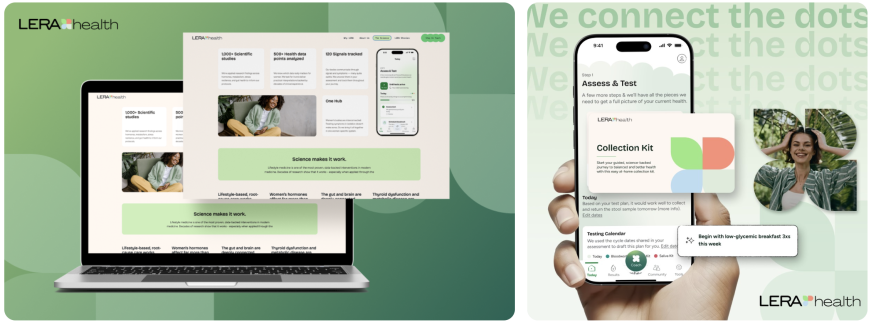
Related proof of compliant, integration-heavy delivery: Lera Health is a women-first platform where we built the privacy-first data layer and a testing-to-insights workflow. The same consent-first PGHD engineering underpins how we bring CGM data into a clinical product.
We treat CGM integration as a first-class data-engineering problem, not a one-off API call.
HIPAA-ready pipelines, explicit patient consent, and audit trails on every glucose pull — designed in from sprint one.
We understand EGVs, time-in-range, GMI, and the difference between sensor noise and clinical signal — your team won't be educating ours.
Sandbox-first delivery means a working consent flow in weeks, not a quarter lost to Dexcom onboarding surprises.
One accountable team across design, engineering, QA, and compliance — owning the CGM pipeline end to end.

Tell us your target endpoints and consent model. We'll return a realistic plan with a sandbox-to-production timeline.
contact@agnotic.com
Partnerships
contact@agnotic.com