Remote patient monitoring
Clinical vitals from BLE cuffs and oximeters feeding RPM programs.


We connect your platform to Apple HealthKit, Android Health Connect, Bluetooth Low Energy (BLE) devices, and aggregators like Validic, with HIPAA-ready pipelines and FHIR-native data modeling, not brittle one-off SDK glue.
Trusted by global innovators









Wearable integration is connecting smartwatches, fitness trackers and medical devices to your app and clinical systems so their readings arrive complete and in one format. Agnotic Technologies builds it through Apple HealthKit, Android Health Connect, Bluetooth Low Energy and aggregators such as Validic or Terra, with consent and HIPAA safeguards designed in.
Each source has its own units, sampling cadence, consent model and gaps, so one wearable is rarely one API.
We normalize units, remove duplicate samples, fill sync gaps and model every reading as a FHIR R4 Observation, so care, analytics and RPM billing work from one record.
What it is
Wearable and device integration connects consumer wearables, clinical BLE devices, and multi-vendor aggregators to your platform, then normalizes their output into a single clinical stream. Done well, it gives care teams a trustworthy, real-time view without exposing them to a dozen vendor quirks.
We decide per source whether direct integration (HealthKit, Health Connect, BLE/GATT) or an aggregator (Validic, Terra) is the right trade-off, then model everything to FHIR R4 so the data is portable across care, analytics, and billing.
See how HealthKit, Health Connect, BLE, and Validic feeds converge into a normalized, consent-aware FHIR data layer.

Consumer platforms, clinical BLE devices, and aggregators, normalized into one canonical, consented data layer.
Background delivery, anchored queries, and workout/vitals sampling from Apple Watch and iPhone, with explicit per-type read permissions and correct unit handling for heart rate, HRV, SpO2, and activity.
Unified reads across Fitbit, Samsung Health, and Google Fit through Health Connect's permission model, replacing the deprecated Google Fit APIs with change tokens for incremental sync.
Direct BLE/GATT connectivity for blood pressure cuffs, pulse oximeters, weight scales, and glucometers using standard health profiles, plus vendor-specific characteristics where needed.
Validic and Terra integrations for hundreds of consumer and clinical devices through one API, cutting the per-device maintenance burden when broad coverage matters more than direct control.
Every reading normalized to FHIR R4 Observation with unit conversion, de-duplication, and a consent record, so PHI is captured, scoped, and auditable from the device to the chart.
Where it runs
Clinical vitals from BLE cuffs and oximeters feeding RPM programs.
Continuous activity and vitals for diabetes, hypertension, and cardiac care.
Consumer wearable data for engagement and incentive programs.
Objective digital biomarkers captured via Validic across cohorts.
HealthKit and Health Connect activity data for coaching experiences.
Home-based vitals tracking to catch deterioration early.
The demo always works. We engineer for the sync gaps, duplicate samples, and unit mismatches that break production wearable pipelines.

Health Insurance Portability and Accountability Act
Protect PHI with privacy-first architecture, encrypted storage and transmission, strict access controls, and traceable audit logs.

General Data Protection Regulation
Implement lawful consent flows, data minimization, retention controls, and secure processing for sensitive health data.

Fast Healthcare Interoperability Resources
Enable standardized health data exchange across apps, care teams, and systems through standards-based FHIR APIs.

Health Level Seven International
Support enterprise-grade interoperability with HL7-based integrations for records, events, and clinical messaging workflows.

Health Information Trust Alliance
Align security programs to healthcare-specific control and risk management practices trusted by providers and ecosystem partners.

Health Information Technology for Economic and Clinical Health Act
Design with breach notification readiness, digital record safeguards, and operational controls that support regulated care programs.

FDA Software as a Medical Device
Plan software quality, traceability, and documentation pathways for products that may require SaMD review and submission.

Medical Device Regulation (European Union)
Prepare EU market-ready processes for risk classification, evidence tracking, and lifecycle governance under MDR expectations.

Substance Abuse and Mental Health Services Administration
Apply confidentiality controls and consent-aware sharing models for behavioral and mental health data experiences.
Standards we build against
We treat data quality and consent as first-class from day one, so the stream is clinically trustworthy, not just present.
We inventory target devices and platforms (HealthKit, Health Connect, BLE, Validic) map their data types and units, and define the canonical FHIR Observation model.
Platform permission flows, BLE pairing and GATT handling, and aggregator onboarding, with consent capture wired into each source.
Unit conversion, de-duplication, gap and backfill handling, and incremental sync tokens so the data layer stays clean under real-world device behavior.
FHIR write-back, downstream event hooks for care and billing, and observability on sync health and device drop-off.
Evaluation criteria
Evaluate a wearable data source on regulatory status, data granularity, sync path, history, update signal, consent handling and BAA terms. Ask each device maker or SDK the questions below; the answers decide whether you connect directly, through the phone's health store or via an aggregator.
| Criterion | What to find out | Question to ask |
|---|---|---|
| FDA status | Whether the device is marketed as a general wellness product or is an FDA cleared or approved medical device | Is this measurement cleared for the clinical use we plan, and under which intended use? |
| Data granularity | Individual readings with timestamps, or only daily summaries | Can we get each reading with its time and unit, or only daily totals and averages? |
| Sync path | Whether data reaches you through the on-device store (HealthKit or Health Connect), the vendor's cloud API, or both | Which path carries the complete data set, and does either one drop data types? |
| Historical backfill | How far back data can be pulled when a patient first connects | How much history can we request on first connection, and at what granularity? |
| Push or polling | Whether the source sends webhooks when new data arrives or must be polled | Do you send webhooks, and if not, what polling limits apply? |
| Consent revocation | What happens when the patient disconnects the device or withdraws permission | Are we notified when a user revokes access, and what happens to data already shared? |
| BAA for the vendor cloud | Whether the vendor will sign a business associate agreement when its cloud holds PHI for you | Will you sign a BAA for this use, and which of your services does it cover? |
We do not rank vendors. The same device can be the right choice for an engagement feature and the wrong one for data that drives care decisions.
Short facts we design around, each linked to its primary source.
Apple's App Review Guideline 5.1.3 bars apps from using or disclosing HealthKit and other health data for advertising, marketing or data mining, other than improving health management or health research with permission.
Source: Apple App Review Guidelines, 5.1.3Google Play reviews every request for Health Connect health and fitness permissions, and apps must justify each data type they request and request only the minimum they need.
Source: Google Play Console Help, Health Connect permissionsThe HIPAA Security Rule requires administrative, physical and technical safeguards for electronic protected health information.
Source: 45 CFR Part 164 Subpart C (eCFR)The FTC Health Breach Notification Rule requires vendors of personal health records and related entities, including many health apps outside HIPAA, to notify consumers after a breach of unsecured health information.
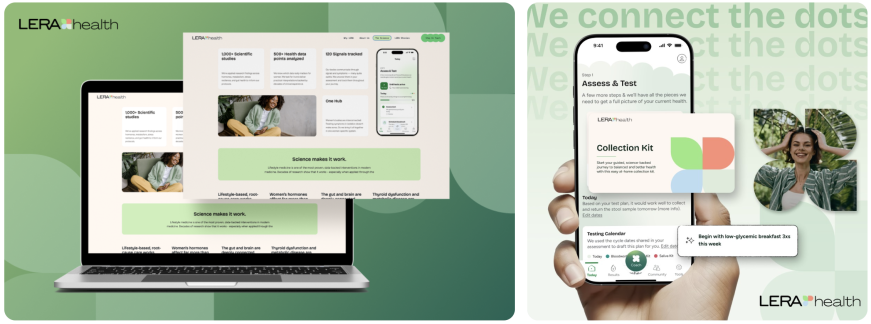
Source: 16 CFR Part 318 (eCFR)Related proof of compliant delivery: Lera Health turns biomarker data into personalized, compliant care. We built the privacy-first data layer and patient experience: the same consent and PHI discipline that safe wearable ingestion demands.
We build data pipelines that stay clean and compliant after the demo, when real devices misbehave.
Per-source consent, scoped permissions, and audit logging built into the pipeline, not bolted on before launch.
We choose direct APIs, BLE, or an aggregator like Validic deliberately, balancing control against long-term maintenance.
Unit normalization, de-duplication, and gap handling so clinicians trust the numbers they act on.
Everything lands as FHIR R4 Observation, so your device data flows into the EHR, analytics, and RPM/RTM billing.

One clean, consented stream from many devices
Tell us your device list and target platforms. We'll return an integration plan with the right mix of direct, BLE, and aggregator connections and a FHIR data model.
contact@agnotic.com
Partnerships
contact@agnotic.com