Challenge
Only live readings sync; offline history is lost
Agnotic approach
We implement the device's stored-record transfer (e.g. glucose RACP) so history isn't dropped between syncs.


We build native Bluetooth Low Energy connectivity for medical devices — GATT profiles, secure pairing, and reliable data sync — and map the readings into a consented, FHIR-ready clinical record. Real firmware-to-cloud engineering, not just an SDK wrapper.
Trusted by global innovators











Bluetooth Low Energy medical devices expose data through the GATT (Generic Attribute Profile) — a hierarchy of services and characteristics. Many device categories map to standardized Bluetooth SIG health profiles: the Blood Pressure Service, Glucose Service, Health Thermometer, Pulse Oximeter, Heart Rate, and Weight Scale services, each with defined characteristics and data formats. Others expose proprietary GATT services that must be reverse-engineered from a spec. On top of that sit pairing, bonding, and encryption, plus platform quirks in Core Bluetooth (iOS) and Android BLE.
The hard part is reliability at the edge: handling connection drops and background reconnection, syncing the device's stored offline history (not just live notifications), de-duplicating records across syncs, and doing it within iOS and Android background-execution limits. Then the readings must be normalized and mapped into FHIR Observations with consent. We build that firmware-aware, mobile-native pipeline so device data arrives complete and correctly typed.
See how we take raw GATT characteristics all the way to consented, FHIR-ready observations.

Common failure modes
Challenge
Only live readings sync; offline history is lost
Agnotic approach
We implement the device's stored-record transfer (e.g. glucose RACP) so history isn't dropped between syncs.
Challenge
Connections drop in the background
Agnotic approach
State-restoration and reconnection logic within iOS and Android background-execution limits.
Challenge
Pairing/bonding differs per device
Agnotic approach
Per-device pairing flows — just-works vs. passkey — validated against real hardware early.
Challenge
Proprietary GATT payloads are opaque
Agnotic approach
We decode the vendor's characteristic spec and build a tested parser rather than guessing.
We build against the actual Bluetooth SIG health profiles and the GATT layer beneath them.
Reading and subscribing to GATT services and characteristics, including notifications, indications, and offline history transfer.
Standardized Blood Pressure, Glucose, Pulse Oximeter, Health Thermometer, Heart Rate, and Weight Scale services.
Secure pairing, bonding, and encrypted characteristics with correct just-works vs. passkey flows per device.
GATT payloads decoded and mapped to FHIR R4 Observations with correct LOINC codes and UCUM units.
Reconnection, offline-history sync, and de-duplication within iOS Core Bluetooth and Android BLE background limits.
Where it runs
OEM firmware-to-app connectivity for a new device.
BLE pairing UX for patients enrolling home devices.
Spot-check devices syncing to a clinical app.
A single app managing several BLE devices per patient.
Reliable device capture for study data collection.
Home-based monitoring with dependable sync.
Most BLE integrations lose data to dropped connections and missed offline history. We don't.

Health Insurance Portability and Accountability Act
Protect PHI with privacy-first architecture, encrypted storage and transmission, strict access controls, and traceable audit logs.

General Data Protection Regulation
Implement lawful consent flows, data minimization, retention controls, and secure processing for sensitive health data.

Fast Healthcare Interoperability Resources
Enable standardized health data exchange across apps, care teams, and systems through robust FHIR-ready APIs.

Health Level Seven International
Support enterprise-grade interoperability with HL7-based integrations for records, events, and clinical messaging workflows.

Health Information Trust Alliance
Align security programs to healthcare-specific control and risk management practices trusted by providers and ecosystem partners.

Health Information Technology for Economic and Clinical Health Act
Design with breach notification readiness, digital record safeguards, and operational controls that support regulated care programs.

FDA Software as a Medical Device
Plan software quality, traceability, and documentation pathways for products that may require SaMD review and submission.

Medical Device Regulation (European Union)
Prepare EU market-ready processes for risk classification, evidence tracking, and lifecycle governance under MDR expectations.

Substance Abuse and Mental Health Services Administration
Apply confidentiality controls and consent-aware sharing models for behavioral and mental health data experiences.
Standards we build against
A phased approach treating GATT profiling, pairing, and background sync as parallel tracks.
We profile the device's GATT services — standard or proprietary — and design the pairing and sync model.
We validate pairing, bonding, and characteristic reads against real hardware early.
Offline-history sync, de-duplication, background reconnection, and the GATT-to-FHIR mapping.
Production go-live with connection-reliability telemetry and sync-completeness monitoring.
Profile table
Many device categories map to a standardized GATT service — which speeds integration.
| Service | Device category | Data | Notes |
|---|---|---|---|
| Blood Pressure Service | BP monitors | Systolic/diastolic/pulse | Standardized; includes measurement status flags. |
| Glucose Service | Glucometers | Glucose + context | Offline record access via RACP. |
| Pulse Oximeter Service | SpO2 devices | SpO2 + pulse | Spot-check and continuous variants. |
| Weight Scale Service | Scales | Weight + BMI | Multi-user support in spec. |
| Proprietary GATT | Vendor-specific | Varies | Requires vendor protocol spec; more effort. |
Standard services integrate faster; proprietary GATT needs the vendor's characteristic spec, which we handle.
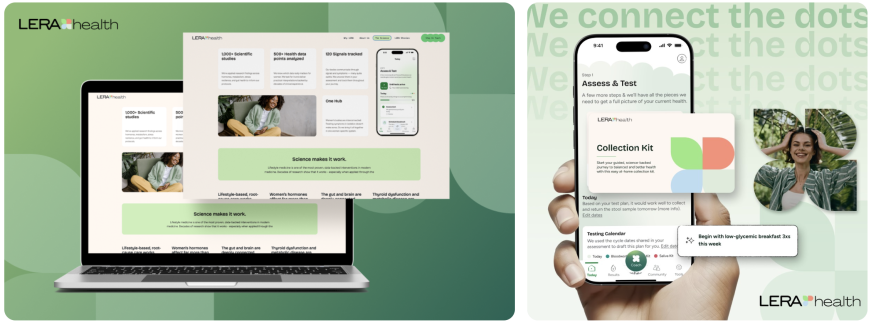
Related proof of compliant, integration-heavy delivery: our privacy-first data-layer work for Lera Health reflects the same consent and data-integrity discipline we bring from the GATT layer up.
We engineer BLE reliability at the edge, where most integrations quietly fail.
Encrypted transport, consent, and audit trails from sprint one.
We work at the GATT layer and know the iOS/Android BLE quirks that break naive integrations.
Hardware-validated early so pairing surprises don't derail the timeline.
One accountable team from firmware protocol to FHIR mapping.

Tell us your device and its GATT profile. We'll return a realistic firmware-to-cloud plan.
contact@agnotic.com
Partnerships
contact@agnotic.com