Challenge
Each device type needs different mapping
Agnotic approach
A shared ingest layer with per-device-type FHIR mapping so adding a vital is incremental.


We connect RPM platforms to iHealth's connected devices — blood pressure, glucose, pulse oximetry, weight, and more — mapping each reading into a clean, consented clinical record. Real multi-vital device integration, not a demo.
Trusted by global innovators











iHealth builds a family of connected home-health devices — blood-pressure monitors, glucometers, pulse oximeters (SpO2), scales, and thermometers — that sync readings to iHealth's cloud, reachable through the iHealth API or via a device-data aggregator. Each device type carries its own payload, units, and quality flags, and access is gated behind an OAuth-style patient connection and consent step. RPM programs favor iHealth because one vendor spans several vitals.
Because iHealth spans multiple vitals, the integration is really several PGHD pipelines under one connection: SpO2, BP, glucose, and weight each need correct FHIR mapping, unit normalization, and threshold logic. We build a shared ingest layer with per-device-type mapping so a single iHealth connection populates a coherent, correctly typed, consented clinical record.
See how we turn multi-vital iHealth readings into clean, consented, FHIR-ready observations.

Common failure modes
Challenge
Each device type needs different mapping
Agnotic approach
A shared ingest layer with per-device-type FHIR mapping so adding a vital is incremental.
Challenge
Units differ across vitals
Agnotic approach
Canonical units per vital with correct UCUM codes on every Observation.
Challenge
SpO2 artifact readings mislead alerts
Agnotic approach
Quality-flag-aware filtering so poor-perfusion readings don't trigger false alarms.
Challenge
Consent spans multiple devices
Agnotic approach
A single connection consent model covering all authorized iHealth devices with revocation handling.
We build against the iHealth API surface across every device type it spans.
OAuth-based access to BP, glucose, SpO2, weight, and temperature data — directly or through an aggregator.
One vendor connection spanning several device types, each mapped to its correct clinical schema.
Patient-authorized device linking, connection status, and revocation handling with audit trails.
Per-device-type mapping to FHIR R4 Observation with LOINC codes and correct UCUM units.
Per-vital thresholds, trend detection, and RPM alerting on clean, de-duplicated data.
Where it runs
BP, glucose, SpO2, and weight in one monitoring program.
Multi-vital panels for diabetes and heart failure.
Home vitals after discharge with threshold alerts.
SpO2 tracking for pulmonary and post-COVID care.
Consented multi-vital data for trials and RWE.
Vital screening across a member population.
iHealth spans several device types; we make them a single coherent clinical record.

Health Insurance Portability and Accountability Act
Protect PHI with privacy-first architecture, encrypted storage and transmission, strict access controls, and traceable audit logs.

General Data Protection Regulation
Implement lawful consent flows, data minimization, retention controls, and secure processing for sensitive health data.

Fast Healthcare Interoperability Resources
Enable standardized health data exchange across apps, care teams, and systems through robust FHIR-ready APIs.

Health Level Seven International
Support enterprise-grade interoperability with HL7-based integrations for records, events, and clinical messaging workflows.

Health Information Trust Alliance
Align security programs to healthcare-specific control and risk management practices trusted by providers and ecosystem partners.

Health Information Technology for Economic and Clinical Health Act
Design with breach notification readiness, digital record safeguards, and operational controls that support regulated care programs.

FDA Software as a Medical Device
Plan software quality, traceability, and documentation pathways for products that may require SaMD review and submission.

Medical Device Regulation (European Union)
Prepare EU market-ready processes for risk classification, evidence tracking, and lifecycle governance under MDR expectations.

Substance Abuse and Mental Health Services Administration
Apply confidentiality controls and consent-aware sharing models for behavioral and mental health data experiences.
Standards we build against
A phased approach treating each device type as a mapping under one shared ingest layer.
We inventory the iHealth device types you need and design the shared ingest and consent model.
iHealth developer credentials and validation against test data per device type.
Shared ingest, per-vital FHIR mapping, unit normalization, and threshold logic.
Production go-live with per-device sync dashboards and connection-status alerts.
Access surface
iHealth data can be reached directly or via an aggregator.
| Path | Method | Typical use | Notes |
|---|---|---|---|
| iHealth API (direct) | OAuth cloud API | iHealth-centric RPM | Full device coverage; requires developer credentials. |
| Aggregator | Unified device API | Multi-vendor RPM | iHealth plus other vendors through one integration. |
| Direct BLE | GATT health profiles | Own-hardware apps | Higher effort; standard health services exist. |
iHealth-centric programs use the direct API; multi-vendor RPM often reaches iHealth via an aggregator.
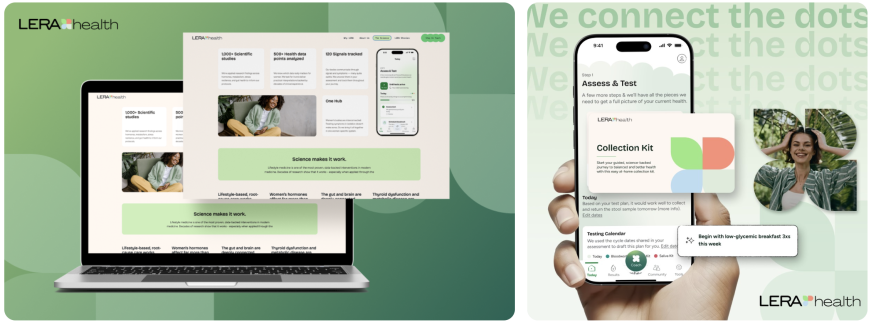
Related proof of compliant, integration-heavy delivery: the privacy-first data layer we built for Lera Health reflects the same multi-source, consent-first engineering we apply to multi-vital device platforms.
We turn a multi-vital vendor into one coherent clinical record.
Consent, audit trails, and HIPAA-ready pipelines from sprint one.
We know how BP, glucose, and SpO2 differ clinically and model each correctly.
A shared ingest layer means adding device types is fast, not a rebuild.
One accountable team owning the multi-vital pipeline end to end.

Tell us your device mix and program. We'll return a realistic multi-vital integration plan.
contact@agnotic.com
Partnerships
contact@agnotic.com