Hypertension RPM
BLE and cellular BP cuffs feeding managed programs.


We onboard BLE and cellular remote monitoring devices into a reliable data pipeline — pairing, ingestion, normalization, and FHIR-native modeling — so every reading lands in the clinician worklist and the 16-day billing window.
Trusted by global innovators











Remote monitoring devices come in two flavors, and they fail differently. BLE cuffs, scales, and oximeters depend on a paired phone app and a patient who keeps Bluetooth on; cellular devices phone home directly but bring carrier, provisioning, and firmware concerns. Either way, a missed reading isn't just a UX blemish — it can drop a patient below the 16-day threshold and forfeit the CPT 99454 device-supply claim.
We build the onboarding and the pipeline so readings arrive reliably: guided BLE pairing or zero-touch cellular provisioning, a data pipeline that de-duplicates and back-fills, and normalization to FHIR R4 Observation. The result is a stream clinicians trust and billing can count.
What it is
RPM device integration is the work of getting readings from home devices into your platform reliably and safely. It spans device onboarding, the ingestion pipeline, data quality, and normalization — the unglamorous layer that determines whether an RPM program produces trustworthy data and clean claims.
We handle BLE and cellular devices, build de-duplication and back-fill into the pipeline, and normalize to FHIR R4 so the clinician worklist, EHR, and billing all read from one clean record.
See how BLE and cellular readings move through onboarding, ingestion, and normalization into the clinician worklist and billing window.

Onboarding and a data pipeline engineered so readings don't get lost between the home and the chart.
Guided Bluetooth Low Energy pairing for cuffs, scales, oximeters, and glucometers using standard GATT health profiles, with a pairing flow designed for non-technical patients.
Zero-touch onboarding for cellular RPM devices that transmit without a phone, including provisioning, carrier connectivity, and firmware-aware ingestion.
Ingestion that de-duplicates overlapping readings, back-fills after connectivity loss, and validates plausibility so bad data never reaches a clinician or a claim.
Device readings are PHI from the first byte — encrypted in transit and at rest, consent-scoped, and access-logged from the device through the pipeline.
Readings normalized to FHIR R4 Observation with LOINC coding, plus 16-day data-threshold tracking so device-supply billing (CPT 99454) is defensible.
Where it runs
BLE and cellular BP cuffs feeding managed programs.
Connected scales for heart-failure programs.
Pulse oximeters for pulmonary monitoring.
Glucometer and CGM device onboarding.
Patients on several devices with one clean feed.
Device onboarding across a large enrolled population.
In RPM, a lost reading can cost a device-supply claim. We build onboarding and ingestion to protect the 16-day threshold.
Health Insurance Portability and Accountability Act
Protect PHI with privacy-first architecture, encrypted storage and transmission, strict access controls, and traceable audit logs.

General Data Protection Regulation
Implement lawful consent flows, data minimization, retention controls, and secure processing for sensitive health data.

Fast Healthcare Interoperability Resources
Enable standardized health data exchange across apps, care teams, and systems through robust FHIR-ready APIs.

Health Level Seven International
Support enterprise-grade interoperability with HL7-based integrations for records, events, and clinical messaging workflows.

Health Information Trust Alliance
Align security programs to healthcare-specific control and risk management practices trusted by providers and ecosystem partners.

Health Information Technology for Economic and Clinical Health Act
Design with breach notification readiness, digital record safeguards, and operational controls that support regulated care programs.

FDA Software as a Medical Device
Plan software quality, traceability, and documentation pathways for products that may require SaMD review and submission.

Medical Device Regulation (European Union)
Prepare EU market-ready processes for risk classification, evidence tracking, and lifecycle governance under MDR expectations.

Substance Abuse and Mental Health Services Administration
Apply confidentiality controls and consent-aware sharing models for behavioral and mental health data experiences.
Standards we build against
We engineer for the failure modes — dropped pairings and connectivity gaps — not just the happy path.
We inventory target BLE and cellular devices, map their data formats, and design the ingestion pipeline and FHIR model.
Guided BLE pairing and zero-touch cellular provisioning, designed for the patients who actually use RPM.
De-duplication, back-fill, plausibility checks, and FHIR mapping validated against real device behavior.
Readings routed to the clinician worklist and billing window, with observability on device drop-off and threshold risk.
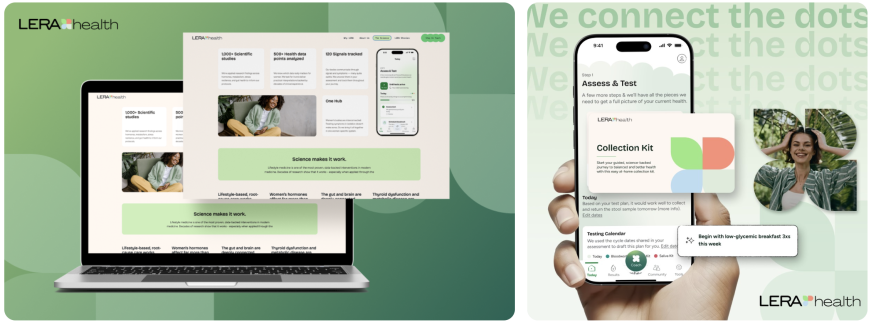
Related proof of compliant delivery: for Lera Health we built the privacy-first pipeline that turns device and lab data into trusted, actionable records — the same reliability and PHI discipline RPM device onboarding demands.
We build pipelines that stay reliable when devices, patients, and networks don't cooperate.
Encryption, consent, and access logging from the first byte a device transmits.
De-duplication and back-fill so readings hit the 16-day threshold and CPT 99454 holds up.
One team across pairing, provisioning, and ingestion so the whole path actually works.
Normalized readings that flow straight into the clinician worklist, EHR, and analytics.

BLE and cellular RPM devices onboarded into a reliable pipeline
Tell us your device list. We'll return an onboarding and pipeline plan for BLE and cellular devices with FHIR normalization and threshold tracking.
contact@agnotic.com
Partnerships
contact@agnotic.com