Hypertension monitoring
BP cuffs feeding a managed monitoring program.


We build the full remote patient monitoring product — a patient app for enrollment and readings, and a clinician dashboard for review and billing — wired to devices and CPT 99453-99458 from the first sprint.
Trusted by global innovators









A remote patient monitoring product is really two apps that have to agree perfectly: a patient-facing app that handles enrollment, device pairing, and daily readings, and a clinician dashboard that triages incoming data, documents review, and drives billing. When those two halves are built by different vendors or bolted together late, the program leaks time and revenue.
We build them as one system. The patient app captures consented readings from BLE and cellular devices; the clinician dashboard surfaces a prioritized worklist, tracks the 16-day data threshold and 20-minute management windows, and produces clean CPT 99453-99458 claims. A shared FHIR R4 data model keeps both sides — and the EHR — in sync.
What it is
Custom RPM app development means building both sides of a remote monitoring program: the patient app that captures readings and the clinician dashboard that turns them into care and billing. The value is in how well the two fit — a shared model, a clean handoff, and no data lost between them.
We design the patient experience for adherence and the clinician experience for throughput, wire CPT 99453-99458 billing through both, and keep everything on a FHIR R4 record that also syncs to the EHR.
See how enrollment, device readings, the clinician worklist, and CPT 99453-99458 billing share one FHIR data layer.

Two halves of one product — patient capture and clinician workflow — with billing wired through.
iOS/Android app for consented enrollment, device pairing, daily readings, reminders, and education — designed for older and lower-tech patients, not just power users.
A prioritized worklist that surfaces out-of-range and non-adherent patients first, with review documentation, messaging, and escalation built for a monitoring team's real day.
99453 setup, 99454 device supply with the 16-day threshold, 99457 first 20 minutes of management time, and 99458 for each additional 20 minutes — tracked in-product with an audit trail.
Explicit consent capture, PHI encryption in transit and at rest, and immutable access logs across both apps so the whole program is HIPAA-ready and audit-defensible.
Readings as FHIR R4 Observation shared by the patient app, dashboard, and EHR — one canonical record instead of two systems drifting apart.
Where it runs
BP cuffs feeding a managed monitoring program.
Glucometer and CGM readings with clinician review.
Weight and vitals tracking to prevent readmissions.
Structured 30-day monitoring after acute care.
Enterprise RPM across multiple chronic conditions.
White-label patient and clinician apps for RPM providers.
RPM revenue depends on adherence and documented minutes. We build both the patient side that drives adherence and the clinician side that captures the time.

Health Insurance Portability and Accountability Act
Protect PHI with privacy-first architecture, encrypted storage and transmission, strict access controls, and traceable audit logs.

General Data Protection Regulation
Implement lawful consent flows, data minimization, retention controls, and secure processing for sensitive health data.

Fast Healthcare Interoperability Resources
Enable standardized health data exchange across apps, care teams, and systems through robust FHIR-ready APIs.

Health Level Seven International
Support enterprise-grade interoperability with HL7-based integrations for records, events, and clinical messaging workflows.

Health Information Trust Alliance
Align security programs to healthcare-specific control and risk management practices trusted by providers and ecosystem partners.

Health Information Technology for Economic and Clinical Health Act
Design with breach notification readiness, digital record safeguards, and operational controls that support regulated care programs.

FDA Software as a Medical Device
Plan software quality, traceability, and documentation pathways for products that may require SaMD review and submission.
Medical Device Regulation (European Union)
Prepare EU market-ready processes for risk classification, evidence tracking, and lifecycle governance under MDR expectations.

Substance Abuse and Mental Health Services Administration
Apply confidentiality controls and consent-aware sharing models for behavioral and mental health data experiences.
Standards & billing
We build patient and clinician experiences against a shared data model so the two halves never drift.
We map enrollment, the monitoring team's day, and the CPT 99453-99458 model, then design the shared FHIR data layer both apps use.
Enrollment, device pairing, readings, reminders, and consent — designed for accessibility and adherence.
The worklist, review documentation, time tracking, and escalation the monitoring team lives in every day.
CPT claim generation, EHR write-back, and a phased rollout with monitoring on thresholds and adherence.
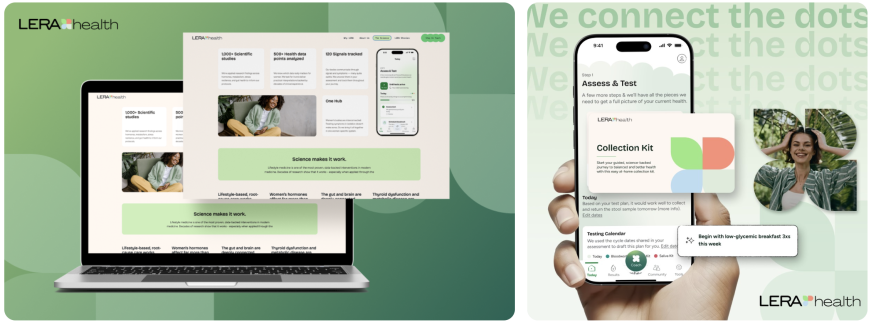
Related proof of compliant delivery: for Lera Health we built a patient experience and a privacy-first data layer end to end — the same two-sided, consent-driven discipline a custom RPM product depends on.
We build the patient and clinician sides as one product, so the program actually runs.
Consent, PHI encryption, and audit logging across both apps from sprint one.
CPT 99453-99458 thresholds and time tracking built in so the program is reimbursable, not just functional.
Patient and clinician experiences built together against one FHIR model — no integration gap between halves.
Enrollment and daily use designed for the patients RPM actually serves, driving adherence and revenue.

Patient app and clinician dashboard, delivered as one system
Tell us your conditions and device mix. We'll return a plan for the patient app, clinician dashboard, and CPT 99453-99458 billing on a shared FHIR model.
contact@agnotic.com
Partnerships
contact@agnotic.com