RPM startup launch
Getting the regulatory and PHI foundation right before scale.


We build remote patient monitoring with the regulatory question answered first — whether your software is a wellness tool, Clinical Decision Support, or SaMD — and rigorous PHI handling and audit evidence built in from the start.
Trusted by global innovators











Two very different regimes govern RPM, and teams often conflate them. HIPAA governs how you protect PHI; the FDA governs whether your software is a regulated medical device at all. Getting either wrong is expensive — a HIPAA gap invites breach liability, and misjudging FDA status can stall a launch or invite enforcement.
We answer the FDA question early: does your RPM function as general wellness, as Clinical Decision Support that qualifies for the 21st Century Cures Act carve-out, or as Software as a Medical Device (SaMD) that needs a regulatory pathway? Then we build the HIPAA safeguards — encryption, access controls, audit logging, and a documented risk analysis — as architecture, so the evidence exists when you need it.
What it is
Compliant RPM means satisfying two separate authorities: HIPAA for protecting PHI, and the FDA for whether your software is a regulated device. They demand different work — safeguards and evidence for HIPAA, classification and a pathway for the FDA — but both must be answered before you scale.
We assess FDA status early, build the HIPAA Security Rule safeguards as architecture, and produce the risk analysis and documentation as we go — so the platform is defensible and the evidence exists when a partner, payer, or auditor asks.
See how PHI safeguards, audit logging, and regulatory documentation are wired into the RPM platform rather than retrofitted.

The regulatory pathway and the PHI safeguards, engineered together as evidence, not paperwork.
We classify your RPM software — general wellness, Cures Act CDS carve-out, or SaMD — and, where a device pathway applies, structure the software and documentation to support it rather than fight it.
AES-256 encryption at rest and TLS 1.2+ in transit, key management, least-privilege access, and de-identification where analytics allow — PHI handling engineered from the first commit.
Immutable, tamper-evident audit logs of every PHI access, role-based access control, and session controls that satisfy the HIPAA Security Rule's technical safeguards.
A HIPAA security risk analysis, data-flow diagrams, and — for SaMD — design history and risk-management artifacts, produced alongside the build so the evidence trail is real.
Business Associate Agreement coverage across every subprocessor that touches PHI — cloud, device vendors, and AI inference — so the compliance boundary is complete.
Where it applies
Getting the regulatory and PHI foundation right before scale.
Reassessing FDA status as a product adds clinical claims.
Device-classified monitoring needing a regulatory pathway.
Passing health-system security and compliance reviews.
Meeting payer data-protection and audit requirements.
Retrofitting safeguards and evidence on an existing RPM app.
The costliest compliance mistakes are made in the first architecture decisions. We make them deliberately, with the evidence to prove it.

Health Insurance Portability and Accountability Act
Protect PHI with privacy-first architecture, encrypted storage and transmission, strict access controls, and traceable audit logs.

General Data Protection Regulation
Implement lawful consent flows, data minimization, retention controls, and secure processing for sensitive health data.

Fast Healthcare Interoperability Resources
Enable standardized health data exchange across apps, care teams, and systems through robust FHIR-ready APIs.

Health Level Seven International
Support enterprise-grade interoperability with HL7-based integrations for records, events, and clinical messaging workflows.

Health Information Trust Alliance
Align security programs to healthcare-specific control and risk management practices trusted by providers and ecosystem partners.

Health Information Technology for Economic and Clinical Health Act
Design with breach notification readiness, digital record safeguards, and operational controls that support regulated care programs.

FDA Software as a Medical Device
Plan software quality, traceability, and documentation pathways for products that may require SaMD review and submission.

Medical Device Regulation (European Union)
Prepare EU market-ready processes for risk classification, evidence tracking, and lifecycle governance under MDR expectations.

Substance Abuse and Mental Health Services Administration
Apply confidentiality controls and consent-aware sharing models for behavioral and mental health data experiences.
Standards & regulation
We resolve the regulatory question before architecture, so nothing is retrofitted before launch.
We assess FDA status — wellness, CDS carve-out, or SaMD — and scope the HIPAA obligations for your data and workflows.
Encryption, key management, access controls, and audit logging designed into the platform from sprint one.
Risk analysis, data-flow diagrams, and design-control artifacts produced as the build proceeds, not after.
Security testing, BAA closure across subprocessors, and a go-live with monitoring and incident-response readiness.
Related proof of compliant delivery: for Lera Health we architected a privacy-first platform with PHI handling designed in from the first commit — the same compliance-as-architecture approach a regulated RPM program needs.
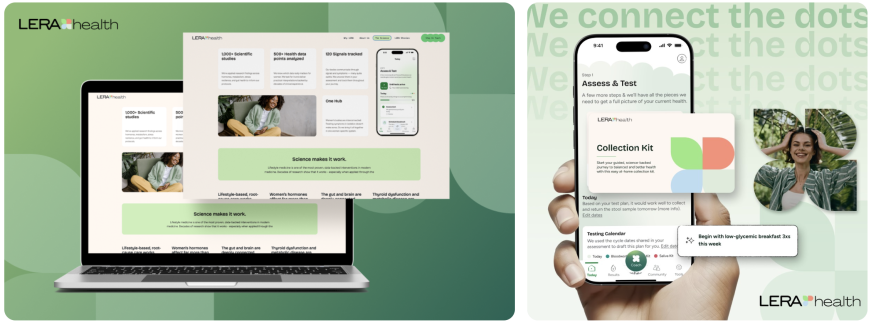
We treat compliance as architecture and evidence, not a checklist bolted on before launch.
Encryption, access control, and audit logging designed in — so the safeguards are real, not documented aspirations.
We resolve wellness vs. CDS vs. SaMD before you build, so the pathway doesn't surprise you at launch.
Risk analysis, data-flow diagrams, and design artifacts produced during the build, ready for auditors and partners.
BAA coverage across every subprocessor, including cloud, devices, and AI inference on PHI.

FDA pathway clarity and HIPAA safeguards engineered from day one
Tell us your product and clinical claims. We'll return an FDA classification, a HIPAA safeguard plan, and the evidence you'll need for partners and auditors.
contact@agnotic.com
Partnerships
contact@agnotic.com