Specialty clinics
Behavioral health, fertility, oncology, and other specialties whose workflows generic EHRs handle poorly.

We build custom EHR platforms on a FHIR-native architecture — designed around your specialty's clinical workflows and mapped to an ONC certification path from the first sprint, not retrofitted before launch.
Trusted by global innovators











A custom EHR is more than a database of charts — it is a clinical system of record that has to model encounters, orders, results, medications, and problems the way your clinicians actually work. Generic, off-the-shelf platforms force your specialty into someone else's templates; a custom build inverts that, shaping the data model and UX around your care pathways while staying standards-based underneath.
The hard part is doing this without painting yourself into a corner. We anchor the architecture on FHIR R4 resources, HL7 v2 feeds for legacy interfaces, and USCDI data classes, so the EHR can exchange data, pass an ONC certification path, and integrate with labs, pharmacies, and payers without a rewrite. That means designing for interoperability and auditability on day one — not the week before go-live.
What it is
Custom EHR development builds an electronic health record around your clinical workflows instead of forcing your practice into a rigid template. Done well, structured data is captured at the point of care, interoperability is native, and the platform is ready for the ONC certification path.
Done poorly, it becomes a closed silo that cannot exchange data or pass review. We anchor everything to FHIR R4, USCDI, and standard terminologies so the EHR is both bespoke and standards-compliant.
A layered, FHIR-native EHR architecture that separates the clinical data model, API surface, and workflow UI — so each can evolve without destabilizing the others.

Every capability pairs a clinical outcome with the standard, API, or control that makes it real in production.
The clinical data model is built on FHIR R4 resources (Patient, Encounter, Observation, Condition, MedicationRequest) with USCDI coverage, so exchange, bulk export via FHIR $export, and SMART on FHIR app embedding are first-class — not adapters bolted on later.
We architect toward the ONC Health IT Certification Program from sprint one — (g)(10) Standardized API, (b)(1) transitions of care via C-CDA, and audit logging under §170.315(d) criteria — so certification is a planned milestone, not a surprise rebuild.
Encounter templates, order sets, and problem lists modeled around your specialty — coded with SNOMED CT, LOINC, ICD-10-CM, and RxNorm so structured data is captured at the point of care, not reconstructed later.
Ambient note capture and coding suggestions that draft the clinical note and surface likely ICD-10/CPT codes, with PHI handling and clinician sign-off in the loop before anything is committed to the chart.
HL7 v2 ADT/ORU/ORM interfaces for labs and downstream systems, Surescripts-ready e-prescribing with EPCS, and payer connectivity via X12 270/271 eligibility — the connective tissue an EHR needs to be usable.
Immutable audit trails, granular role-based access, and patient consent modeling designed to the HIPAA Security Rule and 21st Century Cures Act information-blocking requirements.
Where it fits
Custom EHR development pays off when off-the-shelf platforms can't model your care or your economics.
Behavioral health, fertility, oncology, and other specialties whose workflows generic EHRs handle poorly.
New care models that need an EHR embedded in their product rather than a third-party seat license per user.
Providers migrating off aging, unsupported systems onto a modern FHIR-native platform.
Groups that need quality-measure capture and analytics native to the record, not bolted on.
Organizations standardizing disparate site systems onto one interoperable record.
Virtual care models that need charting, e-prescribing, and scheduling in one connected platform.
Custom EHR builds fail when interoperability and certification are treated as afterthoughts. We treat them as first-class workstreams from week two.

Health Insurance Portability and Accountability Act
Protect PHI with privacy-first architecture, encrypted storage and transmission, strict access controls, and traceable audit logs.

General Data Protection Regulation
Implement lawful consent flows, data minimization, retention controls, and secure processing for sensitive health data.

Fast Healthcare Interoperability Resources
Enable standardized health data exchange across apps, care teams, and systems through robust FHIR-ready APIs.

Health Level Seven International
Support enterprise-grade interoperability with HL7-based integrations for records, events, and clinical messaging workflows.

Health Information Trust Alliance
Align security programs to healthcare-specific control and risk management practices trusted by providers and ecosystem partners.

Health Information Technology for Economic and Clinical Health Act
Design with breach notification readiness, digital record safeguards, and operational controls that support regulated care programs.

FDA Software as a Medical Device
Plan software quality, traceability, and documentation pathways for products that may require SaMD review and submission.

Medical Device Regulation (European Union)
Prepare EU market-ready processes for risk classification, evidence tracking, and lifecycle governance under MDR expectations.

Substance Abuse and Mental Health Services Administration
Apply confidentiality controls and consent-aware sharing models for behavioral and mental health data experiences.
Standards and compliance
A phased delivery that treats the clinical data model, certification criteria, and integrations as parallel tracks — so the EHR reaches production on a predictable timeline.
We map your specialty workflows, target certification criteria, and required FHIR resources, then design the clinical data model and access flows before any code is written.
Encounter, ordering, results, and medication modules built on the FHIR core, with role-based access, audit logging, and terminology services (SNOMED, LOINC, RxNorm) wired in.
We build the (g)(10) Standardized API, HL7 v2 interfaces, e-prescribing, and C-CDA exchange, validating each against ONC test data and inferno FHIR test suites.
Phased production go-live with monitoring, integration health dashboards, and ongoing support as your user base and integration mix grow.
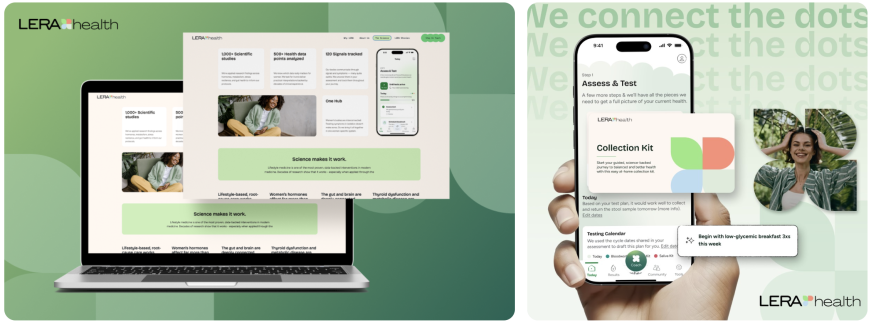
Related proof of compliant clinical delivery: for Lera Health we built a privacy-first data layer and a testing-to-insights workflow end to end. It is not an EHR, but it demonstrates how we structure PHI, consent, and standards-based data the same way a certified EHR build demands.
We bring the clinical-domain depth, standards fluency, and delivery discipline to get a certified-grade EHR right the first time.
HIPAA, ONC, and 21st Century Cures requirements designed into the data model from sprint one — never bolted on before certification.
We plan the ONC certification path as milestones, so (g)(10) API and audit criteria are engineered in rather than reverse-fitted.
Design, engineering, QA, and compliance under one point of accountability — a team that speaks FHIR and clinical workflow fluently.
We have built compliant clinical data platforms across specialties, so your team won't spend the engagement teaching us how care actually works.

Standards-native clinical builds, delivered to production
Share your specialty, workflows, and certification goals. We'll return a phased build plan with a FHIR-native architecture, integration scope, and a realistic ONC path.
contact@agnotic.com
Partnerships
contact@agnotic.com