Independent practices
Clinics that want charting shaped around their specialty rather than a one-size-fits-all template.

We build custom EMR software that fits the way your clinicians document, order, and review care — optimized for the practice's clinical workflows, with FHIR-native foundations so it can grow into a fully interoperable EHR.
Trusted by global innovators











An EMR (electronic medical record) is the digital chart within a single practice: it captures encounters, notes, orders, and results for the clinicians who work there. An EHR (electronic health record) is broader — it is built to share that record across organizations, so labs, hospitals, and patients all see a consistent view. To differentiate EMR vs EHR simply: an EMR is optimized for your practice's clinical workflows; an EHR is optimized for exchange across the whole care continuum.
That distinction drives the build. A great EMR is fast to chart in and shaped around your specialty's day-to-day workflows. We build the EMR clinicians actually want to use, but on FHIR R4 foundations and standard terminologies — so the moment you need to exchange data or pursue certification, the platform grows into EHR-grade interoperability instead of hitting a wall.
What it is
EMR software is the electronic medical record used within a practice to document encounters, place orders, and review results. Unlike a broad EHR built for cross-organization exchange, an EMR is tuned for the clinicians who use it every day.
We build EMRs that are fast to chart in and shaped around your clinical workflows, on FHIR-native foundations so they can grow into EHR-grade interoperability when you need it.
A workflow-first EMR core on a FHIR-native data model — fast to document in today, ready to interoperate tomorrow.
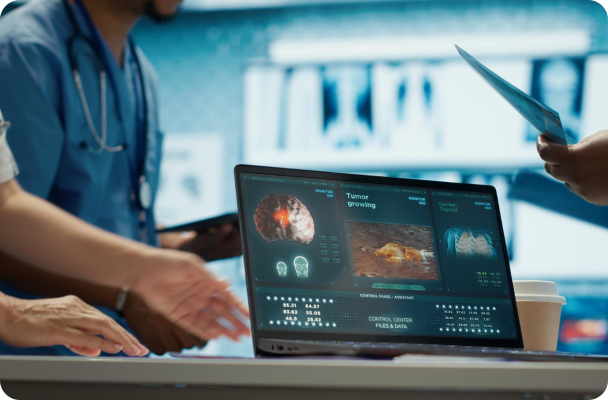
Charting speed at the front, standards-based data underneath — so the record is both usable and future-proof.
Encounter templates, smart phrases, and problem-oriented notes shaped around your specialty's clinical workflows — so a visit is documented in the fewest possible clicks, with structured data captured as a byproduct.
Even a single-practice EMR is stored as FHIR R4 resources with SNOMED CT, LOINC, and RxNorm coding, so when you need lab feeds, referrals, or a patient portal, the data is already exchange-ready.
CPOE for labs and medications, inbound HL7 v2 ORU result routing, and medication reconciliation with drug-interaction checks built into the documentation flow.
Ambient and template-driven note drafting with ICD-10-CM and CPT code suggestions surfaced at sign-off, keeping the clinician in control and PHI handled safely.
The EMR is designed to differentiate from — and grow into — an EHR: add a FHIR Patient Access API, C-CDA exchange, and interoperability when you're ready, without re-platforming.
HIPAA-aligned encryption, role-based access, and immutable audit logging so every chart access and edit is traceable from day one.
Where it fits
Custom EMR development suits practices whose workflows generic systems slow down.
Clinics that want charting shaped around their specialty rather than a one-size-fits-all template.
Dermatology, ophthalmology, behavioral health, and others with distinct documentation needs.
High-throughput settings where every saved click compounds across thousands of visits.
Groups migrating off slow, unsupported systems onto a modern FHIR-native record.
Teams standardizing documentation and orders across many clinicians.
Virtual and hybrid practices that need charting integrated with their own product.
The best measure of an EMR is whether clinicians document faster and cleaner. We design for that outcome, on standards that don't box you in.

Health Insurance Portability and Accountability Act
Protect PHI with privacy-first architecture, encrypted storage and transmission, strict access controls, and traceable audit logs.

General Data Protection Regulation
Implement lawful consent flows, data minimization, retention controls, and secure processing for sensitive health data.

Fast Healthcare Interoperability Resources
Enable standardized health data exchange across apps, care teams, and systems through robust FHIR-ready APIs.

Health Level Seven International
Support enterprise-grade interoperability with HL7-based integrations for records, events, and clinical messaging workflows.

Health Information Trust Alliance
Align security programs to healthcare-specific control and risk management practices trusted by providers and ecosystem partners.

Health Information Technology for Economic and Clinical Health Act
Design with breach notification readiness, digital record safeguards, and operational controls that support regulated care programs.

FDA Software as a Medical Device
Plan software quality, traceability, and documentation pathways for products that may require SaMD review and submission.

Medical Device Regulation (European Union)
Prepare EU market-ready processes for risk classification, evidence tracking, and lifecycle governance under MDR expectations.

Substance Abuse and Mental Health Services Administration
Apply confidentiality controls and consent-aware sharing models for behavioral and mental health data experiences.
Standards and compliance
We start from the exam-room workflow and work outward — so the EMR is fast to use before we layer in interoperability.
We shadow how your clinicians document and order, then design encounter templates and the FHIR data model around those real clinical workflows.
Encounters, notes, problem lists, and medication management built on the FHIR core, with terminology services and audit logging wired in.
CPOE and HL7 v2 lab interfaces, plus e-prescribing and reconciliation, validated against synthetic and partner test data.
Phased go-live with training, then optional expansion into portal, referrals, and EHR-grade interoperability as the practice scales.
Related proof of compliant delivery: for Lera Health we designed a privacy-first clinical data layer and a documentation-to-insights workflow. It shows how we structure PHI and standards-based records — the same foundation a custom EMR build rests on.
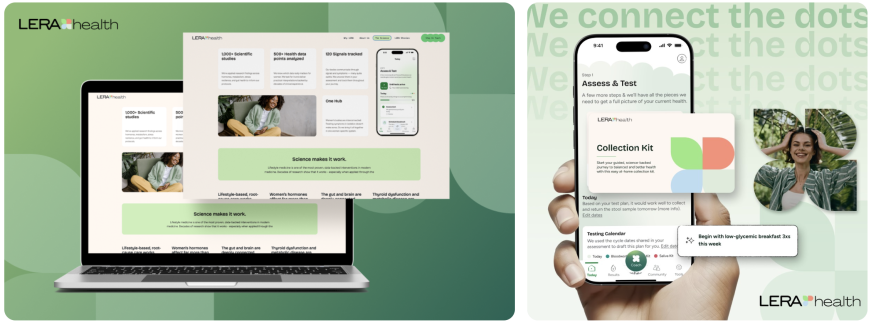
We build EMRs clinicians want to use and engineers can grow — usability at the front, standards underneath.
We design around how your team actually documents, so charting is faster — not another system clinicians fight.
HIPAA-aligned encryption, access control, and audit logging engineered into the data layer from sprint one.
FHIR-native from day one, so the EMR expands into interoperability and certification without a re-platform.
We speak clinical workflow and standards fluently, so your team spends less time explaining and more time shipping.

Usable clinical software, built on real standards
Tell us how your team documents today. We'll return a build plan for a workflow-first EMR on FHIR-native foundations, with a clear path to interoperability.
contact@agnotic.com
Partnerships
contact@agnotic.com