Hospitals & health systems
Enterprise CDS for medication safety, sepsis, and care-pathway adherence.


Clinical decision support (CDS) is software that gives clinicians patient-specific guidance at the moment they make a decision, such as a drug-interaction warning when ordering or a care-gap prompt when opening a chart. CDS can be rules, risk models or reference content, and HL7's CDS Hooks standard lets it run inside the EHR workflow.
Trusted by global innovators









Clinical decision support works by listening for events in the clinician's workflow, such as ordering a medication or opening a chart, and returning guidance in context. CDS Hooks lets your logic subscribe to EHR workflow events; SMART on FHIR apps handle richer interactions.
The real challenge is signal versus noise: poorly tuned alerts get overridden reflexively. We build severity-tiered, deduplicated, context-aware alerts against curated knowledge bases, so warnings that matter get attention.
What it is
Clinical decision support software delivers evidence-based guidance to clinicians inside their workflow: drug-interaction checks, order recommendations, risk alerts, and care-pathway prompts. The modern standard for delivering it in context is CDS Hooks, often paired with SMART on FHIR apps.
We build CDS that is workflow-native and carefully tuned, so alerts guide care instead of being reflexively dismissed. It is engineered around signal, safety, and clinician trust.
A CDS architecture built on CDS Hooks and FHIR: workflow events in, context-aware, severity-tiered guidance out.
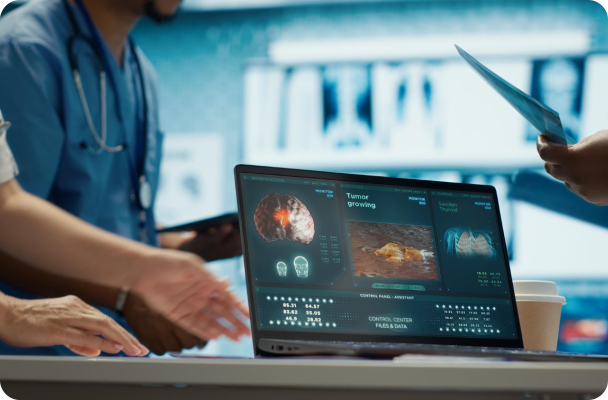
Decision support that lives in the workflow and respects the clinician's attention.
Your logic subscribes to workflow events (order-select, order-sign, patient-view, encounter-start) via CDS Hooks and returns cards in context, so guidance appears exactly where the decision happens inside the EHR.
Real-time drug-drug, drug-allergy, and drug-condition interaction checks against curated knowledge bases and RxNorm-coded medications, surfaced at order entry before a prescription is signed.
Severity-tiered, deduplicated, and context-aware alerts with override tracking and analytics, so high-value warnings cut through and low-value interruptions are suppressed to fight alert fatigue.
Rule-based pathways plus optional risk models (sepsis, readmission, deterioration) trained and validated on your data, with transparent rationale so clinicians can trust and audit each recommendation.
Richer decision-support experiences delivered as SMART on FHIR apps launched from the CDS card, reading FHIR R4 resources for full clinical context.
Versioned rule sets, clinical review workflows, and immutable logging of every alert fired and overridden, essential for safety, quality reporting, and HIPAA accountability.
Where it fits
Providers and vendors who want guidance to reach clinicians at the right moment.
Enterprise CDS for medication safety, sepsis, and care-pathway adherence.
CDS Hooks and SMART on FHIR services embedded in their platform.
Condition-specific pathways for oncology, cardiology, and chronic disease.
Interaction and dosing checks integrated into prescribing.
Prompts that close care gaps and support quality measures.
Embedded, evidence-based guidance in their own clinical tools.
The measure of good CDS is not how many alerts fire; it is how many change a decision. We engineer for signal.

Health Insurance Portability and Accountability Act
Protect PHI with privacy-first architecture, encrypted storage and transmission, strict access controls, and traceable audit logs.

General Data Protection Regulation
Implement lawful consent flows, data minimization, retention controls, and secure processing for sensitive health data.

Fast Healthcare Interoperability Resources
Enable standardized health data exchange across apps, care teams, and systems through standards-based FHIR APIs.

Health Level Seven International
Support enterprise-grade interoperability with HL7-based integrations for records, events, and clinical messaging workflows.

Health Information Trust Alliance
Align security programs to healthcare-specific control and risk management practices trusted by providers and ecosystem partners.

Health Information Technology for Economic and Clinical Health Act
Design with breach notification readiness, digital record safeguards, and operational controls that support regulated care programs.

FDA Software as a Medical Device
Plan software quality, traceability, and documentation pathways for products that may require SaMD review and submission.

Medical Device Regulation (European Union)
Prepare EU market-ready processes for risk classification, evidence tracking, and lifecycle governance under MDR expectations.

Substance Abuse and Mental Health Services Administration
Apply confidentiality controls and consent-aware sharing models for behavioral and mental health data experiences.
Standards and compliance
We start from the decisions you want to influence, then engineer the alerts to be trusted, not ignored.
We identify the clinical decisions to support, the workflow events to hook, and the knowledge sources, then design the rule and severity model with your clinical leaders.
We build the CDS Hooks services and card logic, wire drug-interaction and clinical knowledge bases, and connect FHIR R4 for patient context.
We simulate against real order patterns, measure alert and override rates, and tune severity and suppression to control fatigue before go-live.
Phased rollout with alert analytics dashboards and governance workflows to refine rules continuously in production.
Short facts we design around, each linked to its primary source.
CDS Hooks is an HL7 specification that lets an EHR call an external decision support service at points in the clinician's workflow, such as opening a chart or signing an order.
Source: HL7 International (CDS Hooks)FDA's Clinical Decision Support Software guidance explains which decision support functions meet the non-device criteria in section 520(o)(1)(E) of the FD&C Act and which remain device software functions.
Source: FDA guidance, Clinical Decision Support SoftwareThe SMART App Launch implementation guide uses OAuth 2.0 and OpenID Connect so that apps can launch from an EHR with the user's and patient's context and only the access scopes they were granted.
Source: HL7 International (SMART App Launch)The HIPAA Security Rule requires administrative, physical and technical safeguards for electronic protected health information.
Source: 45 CFR Part 164 Subpart C (eCFR)Related proof of compliant clinical delivery: for Lera Health we turned biomarker data into personalized, rules-driven care guidance on a privacy-first data layer. It illustrates how we build trustworthy, evidence-based logic on PHI: the same discipline a CDS build demands.
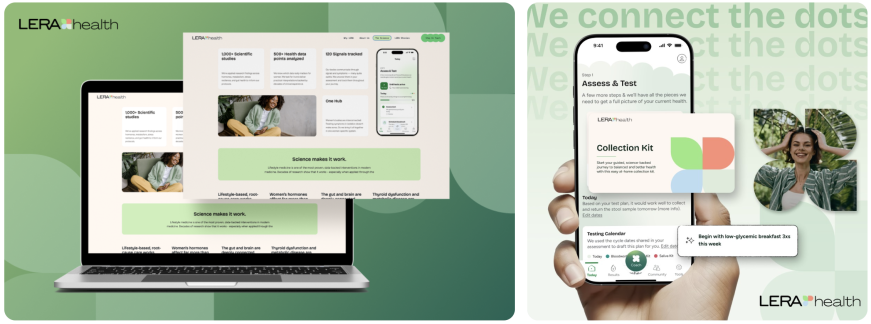
We build decision support clinicians trust: workflow-native, evidence-based, and tuned against alert fatigue.
Versioned rules, clinical review, and full audit trails so decision support is safe, transparent, and defensible.
Severity tiering, deduplication, and override analytics so alerts that matter get attention and noise gets suppressed.
We build the tooling for your clinical leaders to own, review, and evolve the rules, not a black box.
Deep CDS Hooks, FHIR, and clinical-ML experience so rule-based and predictive support work together correctly.

Guidance at the point of decision
Tell us the decisions you want to support. We'll return a plan for CDS Hooks-based guidance with drug-interaction checking and alert tuning built to avoid fatigue.
contact@agnotic.com
Partnerships
contact@agnotic.com