Sepsis bundle prompting
Surfaces Surviving Sepsis bundle steps when vitals and labs cross thresholds.



Alerts that clinicians dismiss by reflex protect no one. Agnotic Technologies builds clinical decision support software that reads the open chart and shows a few cited recommendations the clinician can accept or override.
Trusted by global innovators









Clinical decision support software development is building software that checks a patient's chart against clinical guidelines or predictive models and shows recommendations inside the EHR at the moment of a decision. Agnotic Technologies builds it for health systems and digital health companies with CDS Hooks, SMART on FHIR, visible reasoning and clinician override.
Guidelines for sepsis bundles, VTE prophylaxis, statin eligibility and antibiotic stewardship change faster than any clinician can track. Rigid rule-based alerts only add alert fatigue.
The software checks the live FHIR record (problems, medications, labs, vitals, allergies) against encoded guideline logic and returns a few evidence-linked recommendations through CDS Hooks. The clinician accepts, modifies or dismisses each one, and nothing is ordered automatically.
Our CDS Hooks development connects the service to your EHR at patient-view and order-sign, reads FHIR R4 context, and keeps the guideline library and audit trail as their own layers.
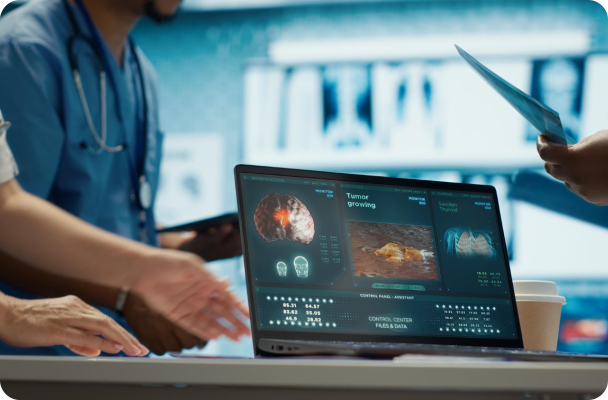
Decision support grounded in guidelines or validated models, delivered inside the clinician's workflow.
A clinical rules engine encodes society guidelines (USPSTF, ACC/AHA, IDSA, Surviving Sepsis) into machine-checkable logic matched against the live chart, so only what applies is shown.
Fires on patient-view, order-select, and order-sign hooks so recommendations appear as cards in the native EHR workflow.
Suppression logic, per-guideline thresholds, snooze windows, and firing analytics keep signal high and override rates low.
Cards launch a SMART on FHIR app or write a pre-populated order the clinician confirms, from a versioned, change-logged guideline library.
Where it runs
Surfaces Surviving Sepsis bundle steps when vitals and labs cross thresholds.
Flags de-escalation and guideline-concordant choices to prescriber and stewardship pharmacist.
Prompts USPSTF-grade screenings: statin eligibility, cancer screening, immunizations.
Checks risk-stratified prophylaxis on admission and order-sign for hospitalists.
Directional: actual results depend on guideline scope, firing thresholds, and baseline override rates.

Health Insurance Portability and Accountability Act
Protect PHI with privacy-first architecture, encrypted storage and transmission, strict access controls, and traceable audit logs.

General Data Protection Regulation
Implement lawful consent flows, data minimization, retention controls, and secure processing for sensitive health data.

Fast Healthcare Interoperability Resources
Enable standardized health data exchange across apps, care teams, and systems through standards-based FHIR APIs.

Health Level Seven International
Support enterprise-grade interoperability with HL7-based integrations for records, events, and clinical messaging workflows.

Health Information Trust Alliance
Align security programs to healthcare-specific control and risk management practices trusted by providers and ecosystem partners.

Health Information Technology for Economic and Clinical Health Act
Design with breach notification readiness, digital record safeguards, and operational controls that support regulated care programs.

FDA Software as a Medical Device
Plan software quality, traceability, and documentation pathways for products that may require SaMD review and submission.

Medical Device Regulation (European Union)
Prepare EU market-ready processes for risk classification, evidence tracking, and lifecycle governance under MDR expectations.

Substance Abuse and Mental Health Services Administration
Apply confidentiality controls and consent-aware sharing models for behavioral and mental health data experiences.
Standards we build against
Read FHIR context, reason against guideline logic, surface a recommendation, and log the decision.
A patient-view or order-sign hook passes FHIR context: problems, medications, labs, vitals, and allergies.
The agent matches the record against guideline logic, grounds each rationale in the cited source, and suppresses redundant cards.
A CDS Hooks card presents the recommendation with citation and rationale; the clinician accepts, modifies, or dismisses it.
Accepted suggestions flow into orders or the note; the decision, rationale, and guideline version are logged to an immutable audit trail.
Short facts we design clinical decision support around, each linked to its primary source.
CDS Hooks is an HL7 specification that lets an EHR call an external decision support service at points in the clinician's workflow, such as opening a chart or signing an order.
Source: HL7 International (CDS Hooks)FDA's Clinical Decision Support Software guidance explains which decision support functions meet the non-device criteria in section 520(o)(1)(E) of the FD&C Act and which remain device software functions.
Source: FDA guidance, Clinical Decision Support SoftwareThe ONC (ASTP) certification criterion for decision support interventions requires certified health IT to let users review source attributes of predictive interventions, including their intended use, intended patient population and known risks or limitations.
Source: 45 CFR 170.315(b)(11) (eCFR)The NIST AI Risk Management Framework is a voluntary framework that organizes AI risk work into four functions: Govern, Map, Measure and Manage.
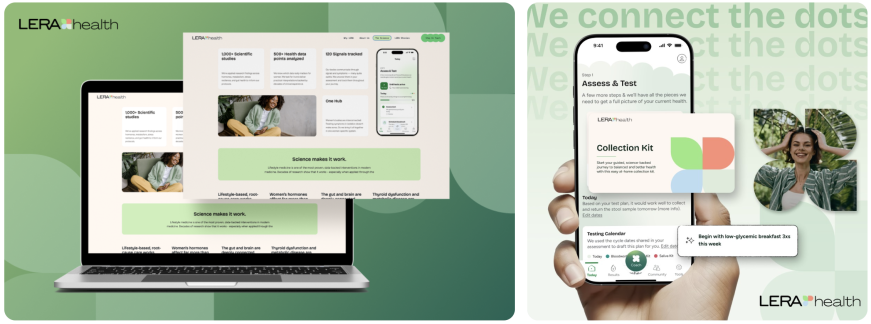
Source: NIST AI 100-1Related proof of compliant, AI-assisted delivery, not this exact agent. For Lera Health we built the privacy-first data layer and testing-to-insights workflow that turns clinical data into personalized guidance.
Decision support touches patient safety directly, so access, consent, explanations and logging are engineering decisions made from the first sprint.
Chart data stays inside your compliance boundary under a BAA, encrypted throughout, with no PHI used to train shared models.
The agent recommends; the clinician decides. No order or note is finalized without explicit human action.
Every recommendation shows its guideline citation and the triggering patient data, so clinicians verify rather than trust a black box.
Fires, accepts, modifications, dismissals, and guideline versions are logged immutably for override analytics.