Stroke workflow
Flags suspected large-vessel occlusion on CTA and moves it up the neuro worklist.


An imaging agent that reads incoming DICOM studies, flags suspected findings, and re-orders the radiology worklist so time-critical cases surface first — every flag confirmed by a radiologist.
Trusted by global innovators











Radiology worklists are usually first-in, first-out, so a suspected intracranial hemorrhage or large-vessel occlusion can sit behind dozens of routine studies while minutes matter. The agent triages the queue instead of replacing the read: as studies arrive it runs detection models on the pixel data, flags suspected findings, and moves likely-urgent cases to the top. The radiologist reads and confirms every study; the agent is assistive, not autonomous, built with FDA SaMD considerations so cleared models stay within their intended use.
See how the imaging agent sits between the modality, PACS, and reading worklist, with model inference, priority routing, and audit trail as first-class layers.

Detection and prioritization on the pixel data, surfaced to the radiologist, never substituting for the read.
Runs cleared or validated models on DICOM pixel data for target findings — intracranial hemorrhage, pulmonary embolism, pneumothorax, large-vessel occlusion.
Re-orders the worklist so suspected time-critical studies surface first, routing STAT findings to the right subspecialty queue or on-call reader.
Ingests via DICOM C-STORE / DICOMweb (STOW-RS, QIDO-RS), writes GSPS overlays, and updates worklist priority over HL7 v2 or FHIR ImagingStudy.
Deploys cleared devices within their intended use with human oversight, logging model version and intended-use scope for every study.
Where it runs
Flags suspected large-vessel occlusion on CTA and moves it up the neuro worklist.
Prioritizes suspected intracranial hemorrhage ahead of routine studies.
Detects suspected pulmonary embolism and routes it with a marked region.
Flags suspected pneumothorax for expedited review in high-volume queues.
Directional — depends on modality mix and worklist volume.
Health Insurance Portability and Accountability Act
Protect PHI with privacy-first architecture, encrypted storage and transmission, strict access controls, and traceable audit logs.

General Data Protection Regulation
Implement lawful consent flows, data minimization, retention controls, and secure processing for sensitive health data.

Fast Healthcare Interoperability Resources
Enable standardized health data exchange across apps, care teams, and systems through robust FHIR-ready APIs.

Health Level Seven International
Support enterprise-grade interoperability with HL7-based integrations for records, events, and clinical messaging workflows.

Health Information Trust Alliance
Align security programs to healthcare-specific control and risk management practices trusted by providers and ecosystem partners.

Health Information Technology for Economic and Clinical Health Act
Design with breach notification readiness, digital record safeguards, and operational controls that support regulated care programs.

FDA Software as a Medical Device
Plan software quality, traceability, and documentation pathways for products that may require SaMD review and submission.

Medical Device Regulation (European Union)
Prepare EU market-ready processes for risk classification, evidence tracking, and lifecycle governance under MDR expectations.

Substance Abuse and Mental Health Services Administration
Apply confidentiality controls and consent-aware sharing models for behavioral and mental health data experiences.
Standards we build against
The study is captured from PACS, inference runs with guardrails, priority is surfaced to the radiologist, and the confirmed result is written back with an audit trail.
The modality or PACS sends the study via C-STORE or DICOMweb; the agent picks it up and matches it to the reading worklist.
Validated models run on the pixel data within their intended use; low-confidence results are held for the standard read, and model version is recorded.
Suspected time-critical studies move to the top of the worklist with a marked region; STAT findings can notify the on-call reader.
The radiologist confirms or overrides, and the final read, AI flag, model version, and confirmation are logged to an immutable audit trail and reflected in the RIS/EHR.
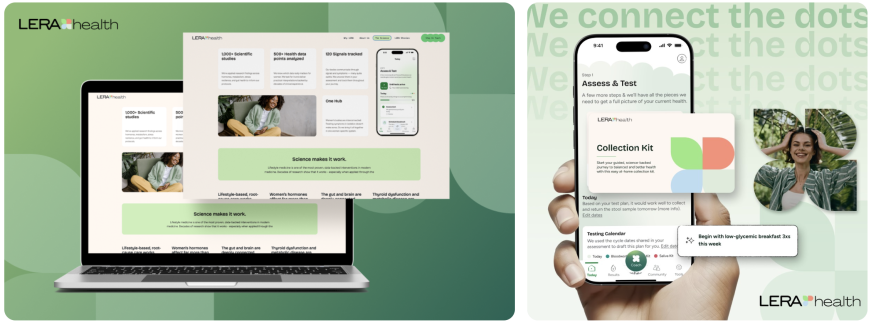
Related proof of compliant, AI-assisted delivery — not this exact agent. Lera Health shows how we build privacy-first clinical data pipelines and compliant AI workflows.
Imaging AI is regulated. The guardrails and the human read are the point.
DICOM studies and PHI stay inside your compliance boundary under a BAA, encrypted end to end.
The agent triages and marks; the radiologist reads and confirms. AI output is a secondary aid, never the final diagnosis of record.
Every flag shows the marked region and links to the study.
Model version, intended-use scope, flag, and radiologist confirmation are logged immutably per study for regulators and QA.
Tell us your target findings and PACS/RIS setup. We'll return an architecture review and a phased plan with silent-validation milestones.
contact@agnotic.com
Partnerships
contact@agnotic.com