Discharge planning
Ranks the inpatient census so case managers focus on the highest-risk patients.


An agent that scores every admission for 30-day readmission risk from the live FHIR record, explains the drivers, and hands the care team a ranked action list.
Trusted by global innovators











Readmissions are expensive and often preventable, yet the penalty falls on hospitals that can least afford to guess who is at risk. Care managers run a static LACE score by hand — work that doesn't scale and misses social and utilization signals in the record. The agent pulls LACE- and HOSPITAL-style features from FHIR data, runs an ML risk model, and routes ranked high-risk patients to the care team with a calibrated score and its top drivers.
The risk agent reads FHIR data, computes features, scores with an explainable model, and routes ranked patients to the care-team worklist.

ML risk scoring grounded in known features, explained per patient.
Trains and calibrates a gradient-boosted model on your population for a 30-day readmission probability, revalidated against your own outcomes.
Engineers features from length of stay, acuity, comorbidities (Charlson/Elixhauser), prior-year ED visits, discharge labs, and prior utilization.
Assembles the feature set from FHIR R4 — Encounter, Condition, Observation, MedicationRequest, Procedure — on live chart data, not a nightly extract.
Surfaces the top contributing factors for each score — prior admissions, low discharge hemoglobin, polypharmacy — so the care team sees why.
Where it runs
Ranks the inpatient census so case managers focus on the highest-risk patients.
Prioritizes condition-specific cohorts known for high readmission.
Triggers TCM outreach — 48-hour calls, med reconciliation — for high-risk discharges.
Feeds risk-stratified cohorts into value-based-care programs and outreach queues.
Directional — actual results depend on population, feature availability, and intervention capacity.

Health Insurance Portability and Accountability Act
Protect PHI with privacy-first architecture, encrypted storage and transmission, strict access controls, and traceable audit logs.

General Data Protection Regulation
Implement lawful consent flows, data minimization, retention controls, and secure processing for sensitive health data.

Fast Healthcare Interoperability Resources
Enable standardized health data exchange across apps, care teams, and systems through robust FHIR-ready APIs.

Health Level Seven International
Support enterprise-grade interoperability with HL7-based integrations for records, events, and clinical messaging workflows.

Health Information Trust Alliance
Align security programs to healthcare-specific control and risk management practices trusted by providers and ecosystem partners.

Health Information Technology for Economic and Clinical Health Act
Design with breach notification readiness, digital record safeguards, and operational controls that support regulated care programs.

FDA Software as a Medical Device
Plan software quality, traceability, and documentation pathways for products that may require SaMD review and submission.

Medical Device Regulation (European Union)
Prepare EU market-ready processes for risk classification, evidence tracking, and lifecycle governance under MDR expectations.

Substance Abuse and Mental Health Services Administration
Apply confidentiality controls and consent-aware sharing models for behavioral and mental health data experiences.
Standards we build against
FHIR data in, explainable score out, ranked patients to the care team, outcome written back for monitoring.
On admission and at discharge planning, the agent reads Encounter, Condition, Observation, and MedicationRequest from the live FHIR record.
Features are computed, the calibrated model scores 30-day risk, and explanations are generated; incomplete cases are flagged, not silently scored.
High-risk patients are ranked into the care-management worklist with drivers and suggested actions; the care team decides, not the agent.
The score, drivers, and actions are written to the record and logged; observed readmissions feed calibration and drift monitoring.
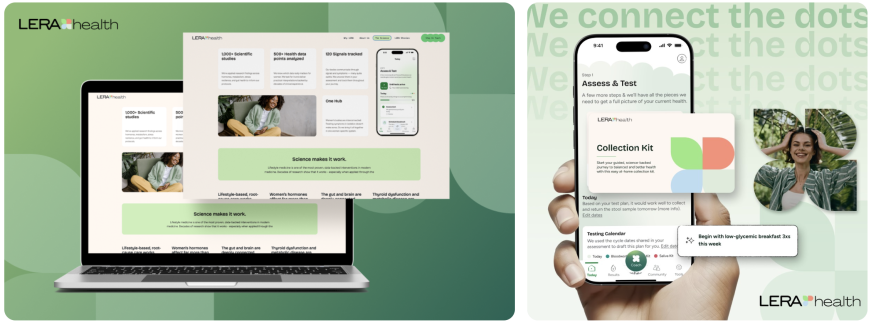
Related proof of compliant, AI-assisted delivery — not this exact agent. Lera Health shows how we turn clinical data into personalized, actionable guidance on a privacy-first data layer.
A risk model that touches discharge decisions has to be explainable, fair, and audited.
Feature computation and scoring run inside your compliance boundary under a BAA, encrypted throughout, with PHI never used to train external models.
The agent scores and ranks; care managers and clinicians decide interventions. No discharge action follows automatically from a score.
Each score ships with its top contributing features, so the care team validates rather than over-trusts an opaque number.
Scores, drivers, and outcomes are logged immutably, with subgroup calibration monitored so the model doesn't disadvantage a population.
Tell us your population and EHR. We'll return an architecture review and a plan to validate a readmission model on your outcomes before it drives decisions.
contact@agnotic.com
Partnerships
contact@agnotic.com