Challenge
Study volumes crush naive retrieval
Agnotic approach
Progressive and frame-level WADO-RS retrieval, tiled loading, and caching so viewers stay responsive at production scale.


Studies have to move between modalities, PACS, VNAs, viewers and imaging AI without losing patient identity or slowing the read. We build that imaging integration on DICOMweb (WADO-RS, QIDO-RS, STOW-RS), classic DIMSE and HL7 v2 orders and results, so every study reaches the right reader.
Trusted by global innovators








PACS integration services connect a picture archiving and communication system to the modalities, viewers, EHRs and imaging AI around it, using DICOM, DICOMweb and HL7 v2 messages. Agnotic Technologies builds these connections for imaging leads at hospitals, imaging centers and health tech companies, from worklist and routing to de-identified research exports.
DICOM is the standard for medical imaging files and network protocols. Modern interop uses DICOMweb (WADO-RS, QIDO-RS, STOW-RS) over HTTP, while established PACS speak classic DIMSE services. Ordering and reporting run on HL7 v2 ORM and ORU messages and the modality worklist.
Scale and fidelity are the hard part: studies are large, and clinical safety depends on correct patient, study, series and instance identity. We route studies between modalities, PACS, VNAs and cloud storage, serve them to zero-footprint viewers and keep the HL7 order-result loop intact.
See how we design imaging pipelines across modalities, PACS, VNA, and DICOMweb-backed cloud storage.
Common failure modes
Challenge
Study volumes crush naive retrieval
Agnotic approach
Progressive and frame-level WADO-RS retrieval, tiled loading, and caching so viewers stay responsive at production scale.
Challenge
SOP Class or transfer-syntax mismatch fails transfers
Agnotic approach
We read each conformance statement and negotiate presentation contexts explicitly, with transcoding where needed.
Challenge
De-identification leaks PHI in private tags
Agnotic approach
Profile-based de-identification that scrubs private and burned-in tags, validated before data leaves the trust boundary.
Challenge
Patient merges that leave studies under the wrong patient
Agnotic approach
HL7 v2 merge and update messages are tested against every system that holds a copy, so a correction in the RIS reaches the PACS, VNA and viewers.
Challenge
Worklist fields mapped to the wrong DICOM attributes
Agnotic approach
Each order field is traced from the HL7 v2 message to the worklist attribute the modality shows, such as accession number and requested procedure, before the first exam.
The exact DICOM and DICOMweb surface behind production imaging interoperability.
WADO-RS retrieval, QIDO-RS query, and STOW-RS storage over HTTP for zero-footprint viewers and cloud-native imaging apps.
C-STORE, C-FIND, C-MOVE, and C-GET services with correct SOP Class and Transfer Syntax negotiation for legacy PACS.
DICOM Modality Worklist (MWL), study routing rules, and de-identification for research and teaching archives.
ORM order and ORU result messaging tied to imaging so reports and studies stay linked across RIS, PACS, and the EHR.
Where it runs
Migrate studies to DICOMweb-backed cloud storage with a VNA layer.
Zero-footprint viewers for radiologists and referring clinicians.
Route studies to remote readers with secure retrieval and reporting.
Feed studies to AI models and write structured results back to PACS.
Give patients access to their own imaging through portals and apps.
Imaging integration breaks on scale and identity, not on opening a single DICOM file. We plan for both.

Health Insurance Portability and Accountability Act
Protect PHI with privacy-first architecture, encrypted storage and transmission, strict access controls, and traceable audit logs.

General Data Protection Regulation
Implement lawful consent flows, data minimization, retention controls, and secure processing for sensitive health data.

Fast Healthcare Interoperability Resources
Enable standardized health data exchange across apps, care teams, and systems through standards-based FHIR APIs.

Health Level Seven International
Support enterprise-grade interoperability with HL7-based integrations for records, events, and clinical messaging workflows.

Health Information Trust Alliance
Align security programs to healthcare-specific control and risk management practices trusted by providers and ecosystem partners.

Health Information Technology for Economic and Clinical Health Act
Design with breach notification readiness, digital record safeguards, and operational controls that support regulated care programs.

FDA Software as a Medical Device
Plan software quality, traceability, and documentation pathways for products that may require SaMD review and submission.
Medical Device Regulation (European Union)
Prepare EU market-ready processes for risk classification, evidence tracking, and lifecycle governance under MDR expectations.

Substance Abuse and Mental Health Services Administration
Apply confidentiality controls and consent-aware sharing models for behavioral and mental health data experiences.
Go-live test plan
Test a PACS integration before go-live by running each imaging workflow end to end against the production configuration, with a written pass criterion and the DICOM part or IHE profile it checks. The rows below are the tests that most often decide a go-live date.
| Test | How to run it | Pass criterion | DICOM part or IHE profile |
|---|---|---|---|
| Modality worklist | Schedule orders in the RIS, including add-on and cancelled orders, and query the worklist from each modality | Each modality shows the right patient, accession number and procedure; cancelled orders drop off | DICOM PS3.4 Basic Worklist Management; IHE SWF |
| MPPS status | Start, complete and discontinue exams on each modality and watch the status reach the RIS and PACS | In progress, completed and discontinued states arrive for every exam, and a discontinued exam never shows as ready to read | DICOM PS3.4 Modality Performed Procedure Step; IHE SWF |
| Storage commitment | Send studies from each modality and check the archive commits them before local copies are deleted | No modality deletes an image the archive has not committed | DICOM PS3.4 Storage Commitment |
| Display calibration | Measure each diagnostic display with a calibrated photometer against the Grayscale Standard Display Function, and repeat on a set schedule | Each reading display conforms within the tolerance your medical physicist sets, with every result logged | DICOM PS3.14 GSDF; IHE CPI |
| Prior fetch | Place new orders for test patients with older studies and check which priors reach the reading worklist before the exam is read | Relevant priors by body part and modality arrive before reading, and none belong to another patient | IHE SWF; C-FIND and C-MOVE, or QIDO-RS and WADO-RS |
| Patient update and merge | Send HL7 v2 update and merge messages for an unidentified trauma patient and for a study filed under the wrong patient | Studies move to the right patient in the PACS and every downstream copy, with nothing left under the old ID | IHE PIR |
| Migration verification | Compare study and instance counts and SOP Instance UIDs between the old and new archive for every patient, and reconcile patient IDs | Counts and UIDs match, and every mismatch is explained and closed | DICOM PS3.5 Unique Identifiers (UIDs) |
| Downtime and failover | Take the primary archive or network link offline in a test window, keep scanning, then restore it | Modalities queue or reroute studies, nothing is lost, and the backlog sends in order after recovery | Site downtime procedure |
| Load acceptance | Replay a busy day's study volume, including the largest studies, through routing and viewer retrieval | Routing and retrieval stay within the times agreed with radiology, with no failed transfers | DICOM PS3.18 (DICOMweb) or PS3.7 (DIMSE) |
| Conformance negotiation | Confirm each SOP Class and transfer syntax in scope over DIMSE or DICOMweb | Every association or request in scope succeeds with the negotiated settings | DICOM PS3.2 conformance statements |
| De-identification | Run research or teaching studies through the de-identification profile and inspect private and burned-in tags | No identifying data remains in headers or pixels | DICOM PS3.15 Attribute Confidentiality Profiles |
Standards we build against
Modality identity, study scale, and viewer performance treated as the real engineering.
We inventory modalities, PACS/VNA, and viewers, and map the SOP Classes and transfer syntaxes actually in use.
We stand up DICOMweb endpoints or DIMSE associations and validate against each system's conformance statement.
Study routing, retrieval, and viewer integration validated against real and synthetic studies at production sizes.
Production rollout with transfer monitoring, storage-commitment tracking, and failed-study alerting.
Protocol surface
How we choose between DICOMweb and classic DIMSE for each workflow.
| Service | Protocol | Use | Notes |
|---|---|---|---|
| WADO-RS | DICOMweb / HTTP | Retrieve studies | Preferred for web viewers and cloud apps. |
| QIDO-RS | DICOMweb / HTTP | Query metadata | Search studies/series/instances by attributes. |
| STOW-RS | DICOMweb / HTTP | Store studies | HTTP-native ingest from apps and devices. |
| C-STORE / C-MOVE | DIMSE / TCP | Push / pull studies | Still the backbone of established PACS. |
| MWL | DIMSE / TCP | Modality worklist | Feeds patient and order context to modalities. |
We negotiate SOP Classes and transfer syntaxes against each system's DICOM conformance statement.
Each fact below links to its primary source.
DICOM is the international standard to transmit, store, retrieve, print, process and display medical imaging information, and NEMA serves as the DICOM Secretariat.
Source: DICOM Standard (NEMA)DICOMweb is the DICOM Standard for web-based medical imaging: a set of RESTful services, including QIDO-RS to search (PS3.18 section 10.6) and WADO-RS to retrieve (PS3.18 section 10.4), that can be implemented directly or as a proxy to the DIMSE services.
Source: DICOM Standard, DICOMwebDICOM PS3.15 Annex E defines Attribute Confidentiality Profiles for removing or replacing identifying attributes, and states that using them does not guarantee all identifying information is removed, so they should be part of a wider de-identification process.
Source: DICOM PS3.15 Annex EHIPAA allows two ways to de-identify health data: expert determination, or the safe harbor method, which removes 18 categories of identifiers.
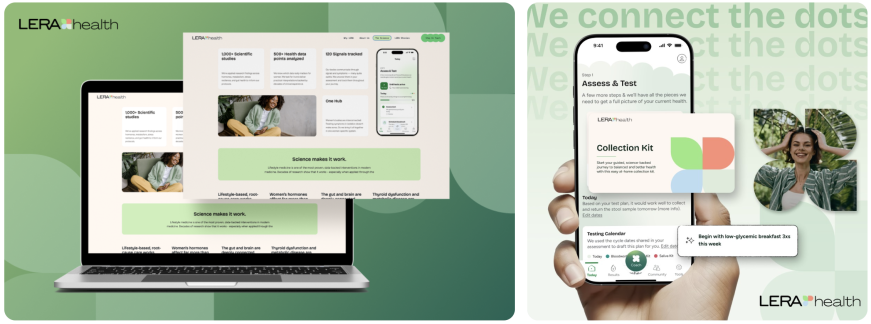
Source: 45 CFR 164.514(b) (eCFR)Lera Health is related proof of compliant, data-heavy delivery: a privacy-first health platform built end to end. Imaging work demands the same discipline: careful handling of large sensitive datasets, strict patient identity, and HIPAA-grade storage.
Real imaging interoperability, not just a viewer demo.
HIPAA-ready storage, de-identification, and audit logging around every study moved or retrieved.
We work fluently in DICOMweb, DIMSE, SOP Classes, transfer syntaxes, and the HL7 order-result loop.
We engineer for study scale and viewer latency, so radiologists are not waiting on pixels.
We get patient/study/series identity and orientation right, because imaging errors are clinical errors.

Tell us your modalities, PACS, and viewer goals. We will return a realistic connectivity and routing plan.
contact@agnotic.com
Partnerships
contact@agnotic.com