Hospital & health systems
Institutional 837I billing across inpatient and ambulatory service lines.


We build RCM platforms that move a claim from charge capture to paid remittance with fewer hands and fewer denials — EDI X12 837 submission, 835 posting, and predictive denials management engineered in from day one.
Trusted by global innovators











Revenue cycle management is the full financial arc of a patient encounter — eligibility, coding, charge capture, claim submission, remittance posting, denial rework, and patient balance. Every handoff between those stages is where money leaks: a missing modifier, a stale eligibility check, an EDI 837 rejected at the clearinghouse for a loop it never validated. Generic accounting tools and bolt-on billing modules see the ledger, not the claim, so they can't stop the leak upstream.
We build RCM systems around the transaction itself. Claims are constructed against payer-specific edits before they leave the building, EDI X12 837 files are scrubbed and tracked through the clearinghouse, 835 electronic remittance is auto-posted and reconciled to the expected contract rate, and denials are predicted, categorized, and routed to work queues instead of piling up in a spreadsheet. The result is a shorter days-in-AR cycle and a clean-claim rate you can actually defend.
What it is
RCM software governs the money side of care — from verifying a patient's coverage to collecting the last dollar of a balance. When it works, cash arrives faster, denials fall, and staff stop re-keying data between systems.
When it doesn't, claims sit in rejected queues, remittance goes unposted, and underpayments never get appealed. We build RCM platforms that treat the claim as a first-class object with a full, auditable lifecycle.
From eligibility and charge capture through 837 submission, 835 posting, and denial rework — one auditable pipeline instead of five disconnected tools.

Each capability pairs a revenue outcome with the standard, code set, or integration that makes it real in production.
Professional (837P), institutional (837I), and dental (837D) claims built to the 5010 standard, scrubbed against payer-specific edits, and submitted through clearinghouses like Availity, Change Healthcare, or Waystar with real-time acknowledgment (999/277CA) tracking.
Electronic remittance advice (EDI 835) parsed and auto-posted against open claims, with contractual adjustments, CARC/RARC reason codes, and underpayment detection reconciled to the expected contract rate — not just the billed amount.
A model that flags claims likely to be denied before submission based on payer, CPT/ICD pairing, and historical denial patterns, then routes worklists by denial category so the team reworks what actually pays back.
Charge capture wired to the EHR encounter with CPT, HCPCS, ICD-10-CM, and modifier validation, NCCI edit checks, and medical-necessity flags so claims leave clean the first time.
Real-time EDI 270/271 eligibility checks at scheduling and check-in, with coverage discovery and prior-authorization status so you bill the right payer with the right coverage from the start.
Days-in-AR, clean-claim rate, denial rate by payer, and net collection dashboards backed by FHIR-aligned data, with patient-balance workflows and payment-plan support after insurance adjudicates.
Where it runs
Institutional 837I billing across inpatient and ambulatory service lines.
Professional 837P claims with multi-specialty coding and modifier logic.
Multi-tenant RCM platforms serving many practices from one clearinghouse rail.
Inbound claim intake and remittance generation for plan administrators.
Complex coding scenarios — infusion, surgery, behavioral, and lab billing.
RCM baked into telehealth and RPM platforms for new reimbursement models.
Most revenue leaks happen before the claim leaves the building. We instrument the pipeline so leaks are visible and fixable — targets vary by payer mix and are validated in discovery.

Health Insurance Portability and Accountability Act
Protect PHI with privacy-first architecture, encrypted storage and transmission, strict access controls, and traceable audit logs.

General Data Protection Regulation
Implement lawful consent flows, data minimization, retention controls, and secure processing for sensitive health data.

Fast Healthcare Interoperability Resources
Enable standardized health data exchange across apps, care teams, and systems through robust FHIR-ready APIs.

Health Level Seven International
Support enterprise-grade interoperability with HL7-based integrations for records, events, and clinical messaging workflows.

Health Information Trust Alliance
Align security programs to healthcare-specific control and risk management practices trusted by providers and ecosystem partners.

Health Information Technology for Economic and Clinical Health Act
Design with breach notification readiness, digital record safeguards, and operational controls that support regulated care programs.

FDA Software as a Medical Device
Plan software quality, traceability, and documentation pathways for products that may require SaMD review and submission.

Medical Device Regulation (European Union)
Prepare EU market-ready processes for risk classification, evidence tracking, and lifecycle governance under MDR expectations.

Substance Abuse and Mental Health Services Administration
Apply confidentiality controls and consent-aware sharing models for behavioral and mental health data experiences.
Standards we build against
We treat clearinghouse enrollment, payer edits, and remittance posting as parallel tracks so the platform reaches production on a predictable timeline.
We map your payer mix, current clean-claim and denial rates, clearinghouse relationships, and every stage where a claim stalls today — then design the target state before any code is written.
We build the 837 generation engine, payer-specific scrubbing rules, and clearinghouse connectivity, validating against synthetic and payer-assisted test files before go-live.
835 auto-posting, reconciliation to contract rates, and the predictive denial model with categorized work queues so unpaid claims get reworked, not lost.
Phased go-live with AR dashboards, rejection alerting, and reconciliation reports, plus ongoing tuning as your payer mix and volume grow.
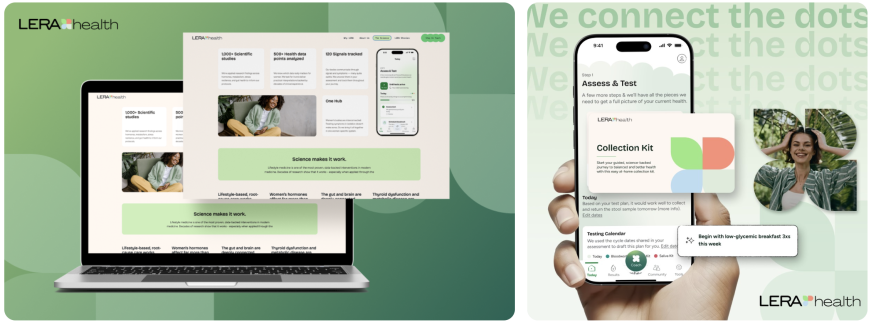
Related proof of compliant delivery: for Lera Health we built the privacy-first data layer, secure workflows, and auditable patient experience end to end. It's not an RCM product, but it shows how we handle PHI, integrations, and regulated healthcare data — the same rigor your revenue pipeline demands.
We bring EDI depth, clinical-domain context, and compliance-first engineering so your revenue platform ships once and holds up in production.
HIPAA, HITECH, and X12 transaction standards designed into architecture from sprint one — with audit trails on every claim state change.
837/835 loops, segments, and payer companion guides are our starting point, not a research project we bill you to run.
Milestone-driven delivery that gets a working claim engine into a payer-assisted test environment early instead of at the end.
We build for both sides of the transaction, so submission logic and adjudication expectations are aligned rather than adversarial.

Revenue engineering that holds up under audit
Tell us your payer mix and current denial rate. We'll return a realistic RCM plan with EDI scope, clearinghouse approach, and a first-clean-claim timeline.
contact@agnotic.com
Partnerships
contact@agnotic.com