Independent practices
Single- and multi-provider 837P billing with specialty coding logic.



We build billing software that captures the charge, codes it correctly, and files a clean EDI 837 claim through your clearinghouse, so payment arrives faster and denials stop eating your margin.
Trusted by global innovators









Medical billing software development is building the software that turns care delivered into paid claims: charge capture, coding checks, EDI 837 claims, 835 remittance posting and reporting. Agnotic Technologies builds it for practices, billing companies and digital health teams, integrated with your EHR and clearinghouse. We build the software; we do not provide billing services.
Billing lives or dies on the details between the visit and the claim: a captured charge, a CPT paired with a supported ICD-10 code, a modifier that survives. We run coding assistance, NCCI edit checks and payer-specific scrubbing before the EDI 837 leaves the system.
What it is
Medical billing software translates a clinical encounter into a payable claim: capturing the charge, applying the right codes, submitting to the payer, and posting what comes back. Its job is to get the maximum legitimate reimbursement with the least manual rework.
The difference between a good and a bad billing system shows up in the rejection queue. We build for a high first-pass rate by catching coding and edit problems before the claim ever leaves the building.
Coding integrity, charge capture, and clearinghouse submission in one workflow, instead of a coder, a spreadsheet, and a portal.

Each capability ties a billing outcome to the code set, edit, or integration that makes it work in production.
Encounter-linked charge capture with CPT, HCPCS Level II, ICD-10-CM, and modifier validation, plus NCCI procedure-to-procedure edits and medical-necessity checks so charges are complete and correct before coding is finalized.
Suggested CPT/ICD-10 codes from the clinical note with confidence scoring, flagging unbundling risks and missing modifiers while keeping a certified coder in the loop for sign-off.
Professional (837P) and institutional (837I) claim files built to the 5010 standard and submitted through Availity, Change Healthcare, or Waystar, with 999 and 277CA acknowledgment tracking so no claim is lost in transit.
835 remittance auto-posting with CARC/RARC reason-code handling, contractual adjustments, and underpayment flags reconciled against expected fee schedules.
270/271 eligibility verification before the visit and 276/277 claim-status checks after submission, so staff stop calling payers to chase where a claim stands.
Clear patient statements after insurance adjudicates, with payment plans and PCI-aware card processing to collect the balance without a separate tool.
Where it runs
Single- and multi-provider 837P billing with specialty coding logic.
Multi-tenant billing across many client practices on shared rails.
Institutional 837I billing with facility and implant charge logic.
High-volume claims with panel coding and payer-specific edits.
Time-based coding, authorization tracking, and session billing.
Billing embedded in telehealth and RPM products from launch.
Clean claims and fast posting are the whole game. We instrument both so improvement is measurable: targets are validated against your baseline in discovery.

Health Insurance Portability and Accountability Act
Protect PHI with privacy-first architecture, encrypted storage and transmission, strict access controls, and traceable audit logs.

General Data Protection Regulation
Implement lawful consent flows, data minimization, retention controls, and secure processing for sensitive health data.

Fast Healthcare Interoperability Resources
Enable standardized health data exchange across apps, care teams, and systems through standards-based FHIR APIs.

Health Level Seven International
Support enterprise-grade interoperability with HL7-based integrations for records, events, and clinical messaging workflows.

Health Information Trust Alliance
Align security programs to healthcare-specific control and risk management practices trusted by providers and ecosystem partners.

Health Information Technology for Economic and Clinical Health Act
Design with breach notification readiness, digital record safeguards, and operational controls that support regulated care programs.

FDA Software as a Medical Device
Plan software quality, traceability, and documentation pathways for products that may require SaMD review and submission.

Medical Device Regulation (European Union)
Prepare EU market-ready processes for risk classification, evidence tracking, and lifecycle governance under MDR expectations.

Substance Abuse and Mental Health Services Administration
Apply confidentiality controls and consent-aware sharing models for behavioral and mental health data experiences.
Standards we build against
Coding rules, clearinghouse enrollment, and payment posting run as parallel tracks toward a predictable go-live.
We map your specialties, fee schedules, payer mix, and current rejection reasons, then design coding and scrubbing rules that reflect how your practice actually bills.
We build charge capture, the coding assistant, and NCCI/medical-necessity edits, validating against your historical claims to catch what leaks today.
EDI 837 submission through your clearinghouse and 835 auto-posting with reconciliation, tested against payer-assisted files before go-live.
Phased launch with rejection dashboards, denial alerts, and reconciliation reports, plus tuning as new payers come online.
Billing or RCM
No. Medical billing software is the claim-to-payment part of the revenue cycle: charge capture, coding, the 837 claim, 835 posting and patient statements. Revenue cycle management (RCM) software also covers eligibility, prior authorization, patient estimates and denial prevention, as the table shows.
| Revenue cycle stage | Billing software scope | RCM platform scope |
|---|---|---|
| Scheduling and registration | Imports demographics and insurance from the EHR or practice management system | Owns registration, insurance capture and duplicate patient checks |
| Eligibility (X12 270/271) | Optional check before a claim is created | Runs before the visit and shows benefits to the front desk |
| Prior authorization (X12 278) | Carries the authorization number onto the claim | Tracks each request, payer response and expiry against scheduled services |
| Patient estimates | Not in scope | Builds a cost estimate from benefits and fee schedules before service |
| Charge capture and coding | Core: CPT, HCPCS, ICD-10-CM and NCCI edits | Same, plus coder work queues and audit sampling |
| Claim submission (X12 837) | Core: scrubbing, submission and 999 and 277CA tracking | Same |
| Remittance (X12 835) | Core: auto-posting with CARC and RARC codes | Same, plus contract variance work queues |
| Denials and appeals | Flags denied claims for rework | Groups denials by root cause, runs appeals and feeds fixes back to the front-end steps |
| Patient statements | Core: statements and payments after adjudication | Same, plus a check of each statement against the estimate given |
| A/R reporting | Aging by payer and by claim | Traces each denial or delay back to the stage that caused it |
Billing-only scope suits a practice whose EHR already handles registration, eligibility and authorizations well. When those front-end steps are the reason claims fail, the build needs RCM scope. Each X12 transaction above is a HIPAA standard transaction under 45 CFR Part 162.
Short facts we design around, each linked to its primary source.
HIPAA adopts ASC X12 standards for electronic transactions, including health care claims (837), payment and remittance advice (835), eligibility inquiries (270/271) and prior authorization requests (278).
Source: 45 CFR Part 162 (eCFR)HIPAA requires covered health care providers to obtain a National Provider Identifier (NPI) and use it on standard transactions, such as claims, wherever a provider identifier is required.
Source: 45 CFR 162.410 (eCFR)A HIPAA covered entity may share protected health information with a business associate, such as a software vendor, only under a business associate agreement that commits the vendor to safeguard it.
Source: 45 CFR 164.502(e) and 164.504(e) (eCFR)HIPAA adopts the Phase III CORE EFT and ERA operating rules for the remittance advice transaction, including a rule on the uniform use of claim adjustment reason codes and remittance advice remark codes in the 835.
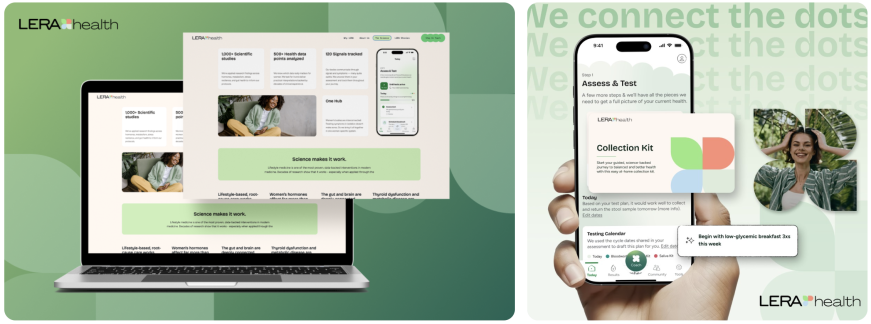
Source: 45 CFR 162.1603 (eCFR)Related proof of compliant delivery: Lera Health isn't a billing product, but building its privacy-first data layer and auditable workflows shows how we handle PHI, integrations, and regulated data: the same discipline your billing pipeline needs.
We combine coding fluency, EDI depth, and compliance-first engineering so your billing platform ships clean and stays clean.
HIPAA and X12 5010 standards designed in from sprint one, with audit trails on every charge and claim edit.
CPT, ICD-10-CM, HCPCS, NCCI edits, and 837 loops are our baseline, not a discovery cost we pass to you.
Milestone-driven delivery that gets a working claim into a payer-assisted test lane early.
Billing logic tuned to your service lines, from primary care to complex procedural and lab billing.

Billing engineering that survives the payer
Tell us your specialties and current rejection reasons. We'll return a billing-software plan with coding scope, clearinghouse approach, and a realistic timeline.
contact@agnotic.com
Partnerships
contact@agnotic.com