Direct-to-consumer telehealth
Virtual-first platforms writing encounters into partner EHRs.


We connect your telehealth platform to Epic, Cerner, athenahealth, and other EHRs — writing visit notes, encounters, and orders back via FHIR R4 and HL7 v2, so virtual care lands in the chart instead of a disconnected silo.
Trusted by global innovators











A telehealth visit that doesn't reach the EHR is a documentation gap and a billing risk. Clinicians end up double-entering notes, orders get lost between systems, and the patient's chart no longer tells the whole story. The value of virtual care only materializes when the encounter, the note, the orders, and the results flow back into the same record the rest of the care team works from.
That write-back is the hard part. It means mapping your telehealth data to FHIR R4 resources (Encounter, DocumentReference, ServiceRequest) or HL7 v2 messages, authenticating against gated EHR APIs, handling SMART on FHIR launch when the app runs inside the chart, and reconciling patient identity across systems. We've done this against Epic, Cerner (Oracle Health), and athenahealth — real integrations that reach production, not sandbox demos.
What it is
Telehealth + EHR integration connects a virtual care platform to the EHR so encounters, notes, orders, and results flow back into the patient's chart — via FHIR R4, HL7 v2, and SMART on FHIR.
The engineering that matters is gated API access, accurate data mapping, patient identity reconciliation, and reliable delivery. We handle all of it so the loop actually closes.
Patient identity reconciliation, FHIR and HL7 write-back, SMART on FHIR launch, and audit logging — designed so virtual visits and the EHR stay in sync both ways.
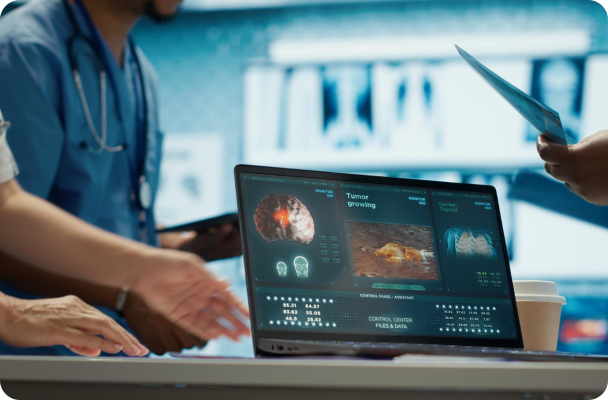
Each capability pairs a data flow with the standard and EHR mechanism that carries it.
Virtual visit encounters and clinical notes written back as FHIR R4 Encounter and DocumentReference resources, so the visit is documented in the chart the moment it ends.
Lab and imaging orders, e-prescriptions, and referrals flow via FHIR ServiceRequest or HL7 v2 (ORM/ORU), closing the loop between the virtual visit and downstream care.
When your telehealth app needs to run inside the EHR, we implement SMART on FHIR launch with OAuth2 context so clinicians start a visit without leaving the patient's chart.
MPI and identity matching so a telehealth patient maps to the right EHR record, avoiding duplicate charts and misfiled data — the failure mode that quietly breaks integrations.
Two-way scheduling and coverage/eligibility checks so virtual visits appear on the provider's EHR schedule and billing has what it needs from the start.
Every exchange runs over encrypted, BAA-covered channels with tamper-evident audit logging and reconciliation for failed messages — so nothing silently drops.
Where it runs
Virtual-first platforms writing encounters into partner EHRs.
In-chart SMART on FHIR video and documentation.
Behavioral, derm, and chronic care with full charting.
Visit data flowing to the sponsoring provider's EHR.
Follow-up encounters and orders back into the record.
Video reviews documented alongside monitoring data.
Virtual care only delivers its value when the encounter, note, and orders flow back into the record the whole team uses.

Health Insurance Portability and Accountability Act
Protect PHI with privacy-first architecture, encrypted storage and transmission, strict access controls, and traceable audit logs.

General Data Protection Regulation
Implement lawful consent flows, data minimization, retention controls, and secure processing for sensitive health data.

Fast Healthcare Interoperability Resources
Enable standardized health data exchange across apps, care teams, and systems through robust FHIR-ready APIs.

Health Level Seven International
Support enterprise-grade interoperability with HL7-based integrations for records, events, and clinical messaging workflows.

Health Information Trust Alliance
Align security programs to healthcare-specific control and risk management practices trusted by providers and ecosystem partners.

Health Information Technology for Economic and Clinical Health Act
Design with breach notification readiness, digital record safeguards, and operational controls that support regulated care programs.

FDA Software as a Medical Device
Plan software quality, traceability, and documentation pathways for products that may require SaMD review and submission.

Medical Device Regulation (European Union)
Prepare EU market-ready processes for risk classification, evidence tracking, and lifecycle governance under MDR expectations.

Substance Abuse and Mental Health Services Administration
Apply confidentiality controls and consent-aware sharing models for behavioral and mental health data experiences.
Standards we build against
We treat EHR access, data mapping, and go-live as parallel tracks so the integration reaches production.
We map your target EHRs, the data that must flow both ways, and the FHIR resources and HL7 messages involved, then design identity reconciliation up front.
Sandbox provisioning, App Orchard / Code onboarding, OAuth2 and SMART on FHIR launch flows, and BAA-covered secure channels.
Encounter, note, order, and referral write-back via FHIR R4 and HL7 v2, validated against synthetic and partner-assisted test data.
Phased production go-live with reconciliation for failed messages, integration health dashboards, and alert routing.
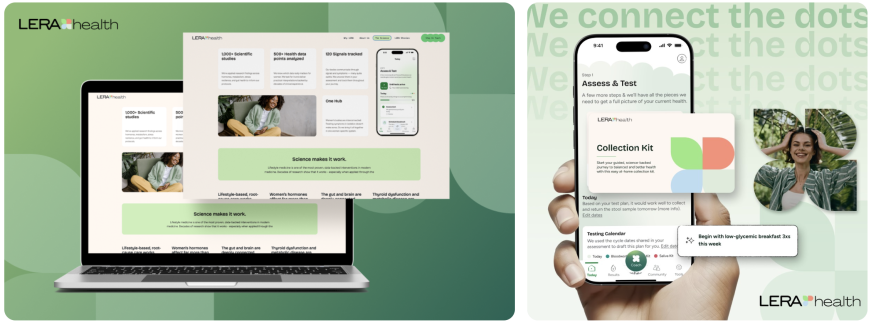
Lera Health reflects our approach to compliant healthcare data flows — connecting patient-facing experiences to a structured, privacy-first record. The same interoperability discipline drives our telehealth-to-EHR write-back work.
We bring real EHR integration experience and the discipline to close the documentation loop reliably.
Encrypted, BAA-covered exchange with audit logging and reconciliation designed in from the start.
We plan sandbox access and marketplace review into the timeline, so integrations ship instead of stalling.
Epic, Cerner (Oracle Health), and athenahealth write-back via FHIR R4 and HL7 v2 — not just familiarity.
MPI and reconciliation so telehealth data lands on the right chart, every time.

Tell us your telehealth stack and target EHRs. We'll return a realistic write-back plan with sandbox-access timeline and marketplace requirements.
contact@agnotic.com
Partnerships
contact@agnotic.com