Primary & urgent care
On-demand and scheduled visits with waiting rooms.


We build and integrate low-latency WebRTC video visits — HIPAA-ready encrypted media, secure recording, waiting rooms, and session data that connects to your EHR — so telehealth feels reliable, not like a consumer call.
Trusted by global innovators











A telehealth visit isn't a casual video call. It has to connect reliably across bad networks and cheap devices, protect a live PHI stream end to end, handle a clinician running late with a waiting room, and often record the session for documentation or compliance — all while keeping latency low enough that a real conversation is possible. Dropped calls and frozen video don't just annoy; they erode trust in the whole care model.
WebRTC is the right foundation — peer or SFU-based real-time media with built-in encryption (DTLS-SRTP) — but the clinical layer around it is where builds succeed or fail. We engineer low-latency media with TURN/STUN for connectivity through firewalls, HIPAA-ready recording and storage, waiting rooms and multi-party sessions, and the session metadata that ties a visit back to the patient's record. Whether you build on raw WebRTC or a BAA-covered platform like Twilio or Vonage, we make it clinical-grade.
What it is
WebRTC video visit integration adds real-time, encrypted audio and video to a telehealth product — with waiting rooms, recording, and the session data that connects a visit to the patient's record.
WebRTC provides the encrypted media foundation; the clinical layer — reliability, consent, recording, and EHR linkage — is where we do the engineering. We build it to production, not to demo.
Encrypted WebRTC media, SFU scaling, TURN connectivity, secure recording, and EHR-linked session data — composed into a telehealth experience that holds up in the real world.
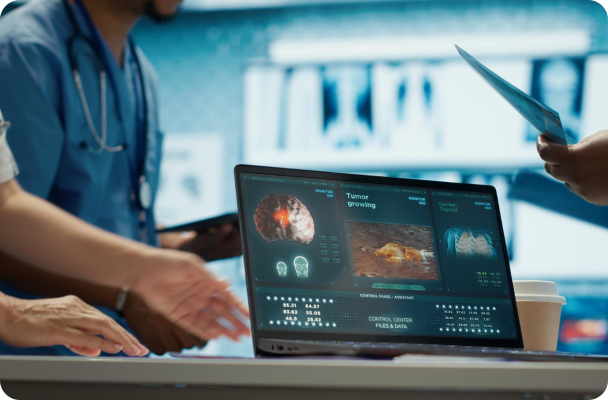
Each capability pairs a real-time feature with the media or security mechanism behind it.
Peer and SFU-based real-time audio/video with DTLS-SRTP encryption, adaptive bitrate, and TURN/STUN so calls connect and stay stable across firewalls, mobile networks, and low-end devices.
Optional session recording with consent capture, encrypted storage, retention policies, and audit logging — so recordings support documentation and compliance without becoming a liability.
Virtual waiting rooms, provider-controlled admission, in-visit chat, screen and image sharing, and graceful reconnection when a network drops mid-call.
Visit metadata — participants, timestamps, duration, consent — captured and written back via FHIR R4 (Encounter, Communication) so the video visit is part of the record, not a detached event.
Build on raw WebRTC for full control, or integrate a BAA-covered platform such as Twilio Video or Vonage — we implement either under a signed BAA with PHI-safe configuration.
SFU media servers, load handling, connection-quality telemetry, and fallbacks, so concurrent visits stay reliable as your volume grows.
Where it runs
On-demand and scheduled visits with waiting rooms.
Recurring therapy sessions with privacy and consent controls.
Multi-party visits with interpreters or referring providers.
Video check-ins tied to RPM data and trends.
Structured video follow-ups linked to the encounter.
Secure, recorded consults across organizations.
Reliability, encryption, and EHR linkage are what separate a telehealth platform from a consumer video call.

Health Insurance Portability and Accountability Act
Protect PHI with privacy-first architecture, encrypted storage and transmission, strict access controls, and traceable audit logs.

General Data Protection Regulation
Implement lawful consent flows, data minimization, retention controls, and secure processing for sensitive health data.

Fast Healthcare Interoperability Resources
Enable standardized health data exchange across apps, care teams, and systems through robust FHIR-ready APIs.

Health Level Seven International
Support enterprise-grade interoperability with HL7-based integrations for records, events, and clinical messaging workflows.

Health Information Trust Alliance
Align security programs to healthcare-specific control and risk management practices trusted by providers and ecosystem partners.

Health Information Technology for Economic and Clinical Health Act
Design with breach notification readiness, digital record safeguards, and operational controls that support regulated care programs.

FDA Software as a Medical Device
Plan software quality, traceability, and documentation pathways for products that may require SaMD review and submission.

Medical Device Regulation (European Union)
Prepare EU market-ready processes for risk classification, evidence tracking, and lifecycle governance under MDR expectations.

Substance Abuse and Mental Health Services Administration
Apply confidentiality controls and consent-aware sharing models for behavioral and mental health data experiences.
Standards we build against
We engineer for the messy real world — bad networks, cheap devices, and clinicians who need it to just work.
We define visit types, concurrency, recording needs, and connectivity constraints, then choose raw WebRTC or a BAA-covered platform and design the media topology.
Low-latency media, waiting rooms, session flow, and DTLS-SRTP encryption, with TURN/STUN configured for real-world connectivity.
HIPAA-ready recording with consent, and session metadata written back to the EHR via FHIR so visits are documented in the record.
Load testing, connection-quality telemetry, and phased rollout, with monitoring to keep concurrent visits reliable as volume grows.
Lera Health shows our ability to deliver patient-facing healthcare experiences on a compliant, privacy-first foundation — the same rigor we bring to building reliable, HIPAA-ready telehealth video.
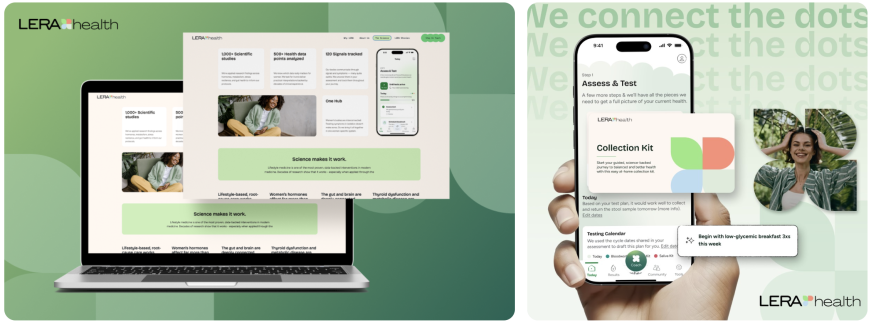
We build real-time media as a clinical system — reliable, encrypted, and connected to the record.
Encrypted streams, consented recording, and BAA-covered infrastructure engineered in from the start.
TURN/STUN, adaptive bitrate, and reconnection so visits hold up on bad networks and cheap devices.
Visit data flows back to the record via FHIR, so video is part of the clinical workflow.
We understand visit flow, waiting rooms, and the compliance nuances of recording a clinical encounter.

Clinical-grade video, engineered to hold up
Tell us your visit flow and volume. We'll return a plan covering the media approach, HIPAA-ready recording, and EHR-connected session data.
contact@agnotic.com
Partnerships
contact@agnotic.com