Challenge
Video quality degrades under real-world network conditions
Agnotic approach
SDK selection tuned to fallback paths, network-adaptive bitrate, and graceful audio-only failover.

We build telehealth apps on WebRTC-based video with EHR-linked visits and multi-state licensing support — connecting patients and providers, writing every encounter back to the chart, and holding HIPAA-grade security from solo clinics to enterprise health systems.
Trusted by global innovators











A telehealth app is clinical infrastructure, not a video widget. It has to connect patients and providers in real time, keep every encounter inside the clinical record, and hold the same security posture as the rest of the health system — while working across every state your providers are licensed in.
Generic conferencing tools break down on exactly these edges: no charting, no EHR write-back, no state-licensure routing, and no signed BAA. We build the full stack — WebRTC video, EHR-linked visits, scheduling and intake, and the compliance layer underneath — so the platform reaches production instead of stalling as a demo.
What we build
A good telehealth platform connects patients and providers, enables real-time and asynchronous interaction, integrates with clinical systems, and maintains the security posture of the rest of the health system.
We build all five layers: the patient-facing flow, the provider console, the scheduling and intake engine, the EHR integration layer, and the observability and compliance stack underneath.
A layered telehealth architecture that separates the WebRTC media layer, the EHR-integration layer, and the scheduling and compliance stack — so each can scale without destabilizing the others.

What usually goes wrong
Challenge
Video quality degrades under real-world network conditions
Agnotic approach
SDK selection tuned to fallback paths, network-adaptive bitrate, and graceful audio-only failover.
Challenge
EHR integration stretches timeline by months
Agnotic approach
Integration discovery in the first two weeks — target EHR, data model, sandbox access, and realistic go-live window.
Challenge
No-shows erode clinical capacity
Agnotic approach
Multi-channel reminders, intelligent rescheduling, and ML-based no-show risk scoring with targeted interventions.
Challenge
Compliance drift post-launch
Agnotic approach
Compliance monitoring in production — audit log integrity checks, BAA inventory, and quarterly compliance reviews.
Every capability pairs a clinical outcome with the standard, SDK, or control that makes it real in production.
Real-time consultations built on WebRTC with DTLS-SRTP encrypted media, delivered through HIPAA-eligible SDKs (Daily, Twilio, or Vonage) under a signed BAA — with in-visit notes, recording, and screen share.
Every encounter writes back to the chart via FHIR R4 and HL7 v2 sync with Epic, Cerner, and Athenahealth — visit notes, diagnoses, orders, and billing — so telehealth is part of the record, not a parallel silo.
Provider-to-patient routing that respects state licensure and cross-state credentialing, with state-specific telehealth rules, consent capture, and audit logging enforced at the scheduling layer.
Provider availability, specialty routing, and patient self-service booking synced to EHR calendars, with multi-channel reminders (SMS, email, push) that cut no-shows.
Store-and-forward workflows for dermatology, behavioral health, and chronic management where asynchronous care is clinically appropriate — with the same PHI controls as live visits.
NLP-based symptom intake with urgency classification and specialty routing, plus post-visit note generation and ICD-10 suggestions with a clinician review step in the loop.
Environments we ship into
Enterprise telehealth consultation platforms, scheduling systems, EHR-integrated workflow automation, and IoT monitoring.
Specialty-specific workflows — derm, mental health, chronic care, women's health — with clinical protocols baked in.
Remote diagnostics intake, results delivery, and patient consultation with lab data integration.
Medication tracking, ePrescription, and pharmacist-patient consultation flows.
Remote monitoring alerts, family member interfaces, and caregiver coordination.
Telehealth-enabled claims workflows, prior authorisation, and utilisation analytics.
Most telemedicine products ship as video widgets. We ship them as clinical systems with EHR sync, scheduling, documentation, and billing integration.

Health Insurance Portability and Accountability Act
Protect PHI with privacy-first architecture, encrypted storage and transmission, strict access controls, and traceable audit logs.

General Data Protection Regulation
Implement lawful consent flows, data minimization, retention controls, and secure processing for sensitive health data.

Fast Healthcare Interoperability Resources
Enable standardized health data exchange across apps, care teams, and systems through robust FHIR-ready APIs.

Health Level Seven International
Support enterprise-grade interoperability with HL7-based integrations for records, events, and clinical messaging workflows.

Health Information Trust Alliance
Align security programs to healthcare-specific control and risk management practices trusted by providers and ecosystem partners.

Health Information Technology for Economic and Clinical Health Act
Design with breach notification readiness, digital record safeguards, and operational controls that support regulated care programs.

FDA Software as a Medical Device
Plan software quality, traceability, and documentation pathways for products that may require SaMD review and submission.

Medical Device Regulation (European Union)
Prepare EU market-ready processes for risk classification, evidence tracking, and lifecycle governance under MDR expectations.

Substance Abuse and Mental Health Services Administration
Apply confidentiality controls and consent-aware sharing models for behavioral and mental health data experiences.
Standards we build against
A phased delivery that treats video, EHR integration, scheduling, and compliance as parallel tracks — so the platform reaches production on a predictable timeline.
We map your target EHRs, clinical workflows, and the states your providers are licensed in, then select the WebRTC SDK and design the data and access flows before any code is written.
WebRTC video, the patient-facing intake and booking flow, and the provider console with in-visit documentation — built on a HIPAA-ready core with role-based access and audit logging.
FHIR R4 and HL7 v2 write-back, visit-note exchange, e-prescribing, and claims pathways — validated against sandbox and partner-assisted test data.
BAA execution, penetration testing, audit-log integrity checks, and a phased rollout with monitoring as your visit volume and specialty mix grow.
Video SDK decision
The video backbone is one of the most consequential decisions in a telehealth build. Here's how we think about the trade-offs.
| Dimension | Daily | Twilio Video | Vonage Video |
|---|---|---|---|
| HIPAA posture | BAA available, healthcare-focused | BAA available, broad SDK | BAA available, enterprise-oriented |
| Developer experience | Fast setup, modern SDK | Mature, extensive docs | Solid, slightly heavier |
| Recording & storage | Cloud recording, HIPAA-safe | Cloud + compliant storage | Cloud + archiving features |
| Scale profile | Startup-friendly, scales up | Any scale | Enterprise strong |
| Price shape | Competitive at mid scale | Predictable usage-based | Bundled enterprise pricing |
| Fit | MVPs and mid-market telehealth | Any telehealth with broad needs | Enterprise health systems |
There's no universally right answer — we pick per build based on clinical workflow, recording needs, scale, and existing vendor relationships.
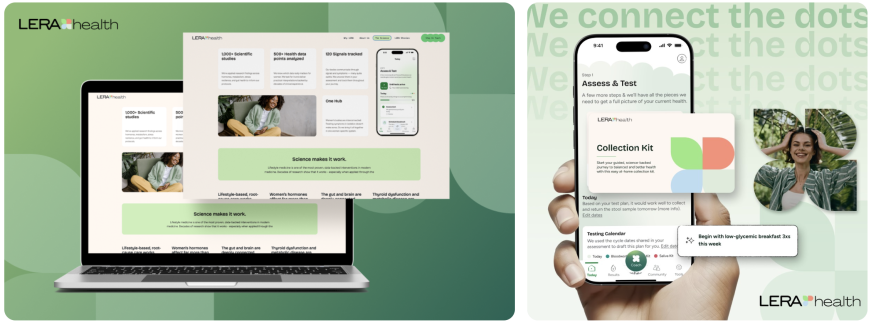
Related proof of compliant delivery: for Lera Health we built a privacy-first data layer and patient experience end to end. It is not a telehealth product, but it demonstrates how we structure PHI, consent, and standards-based data the same way a compliant virtual-care build demands.
From solo specialty clinics to enterprise health systems — we bring the clinical-domain depth and standards fluency to get virtual care right the first time.
HIPAA, BAA execution, and multi-state telehealth rules designed into the architecture from sprint one — never bolted on before launch.
We build across primary care, behavioral health, dermatology, and chronic care, so your team won't spend the engagement teaching us how care actually works.
Milestone-driven delivery built for founder and health-system timelines — a working video-visit flow in weeks, not quarters.
Design, engineering, QA, and compliance under one point of accountability — a team that speaks FHIR and clinical workflow fluently.

Standards-native virtual care, delivered to production
Tell us about your clinical environment, target EHR, and specialty scope. We'll return a scoped plan and timeline.
contact@agnotic.com
Partnerships
contact@agnotic.com