Sponsor CTMS
Multi-study, multi-site management for pharma and biotech sponsors.


We build CTMS platforms that manage sites, subjects, and visits on FHIR ResearchStudy and ResearchSubject, with eConsent, EDC integration, and real-world evidence pipelines drawn from EHR data.
Trusted by global innovators









Clinical trial management software (CTMS) runs the operational side of a study: sites, participants, visit schedules, enrollment, milestones and monitoring. Agnotic Technologies builds CTMS platforms for sponsors, CROs and research sites, modeled on HL7 FHIR ResearchStudy, with eConsent, EDC integration and 21 CFR Part 11 controls designed in.
Modeled on FHIR ResearchStudy and ResearchSubject, trial data connects to the clinical world instead of living in spreadsheets and separate EDC systems.
eConsent makes informed consent a documented digital workflow, and real-world evidence pipelines pull de-identified EHR data through FHIR for feasibility and recruitment.
What it is
A CTMS manages the operations of a clinical study (sites, subjects, visits, enrollment, and monitoring) as a single source of truth across every site and stakeholder.
A modern one goes further: eConsent for auditable digital consent, EDC integration for clinical data, and FHIR-based real-world evidence pipelines that connect the trial to EHR data, all under 21 CFR Part 11 controls.
See how we connect FHIR ResearchStudy, eConsent, EDC, and real-world evidence pipelines across the trial platforms we build.
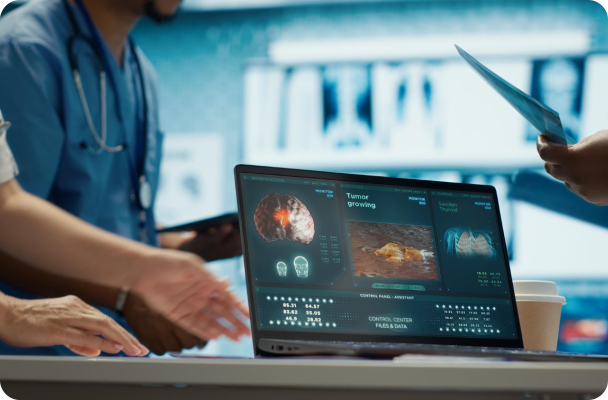
Each capability ties a trial operation to the standard or regulation that keeps it credible.
Study, site, subject, and visit data modeled on FHIR ResearchStudy and ResearchSubject so trial operations connect to clinical systems instead of living in isolation.
Digital informed consent with versioned forms, comprehension checks, e-signatures, and a full audit trail that satisfies 21 CFR Part 11 and IRB expectations.
Integration with electronic data capture systems and structured CRFs so operational and clinical data stay reconciled across the study.
De-identified data extraction from EHRs over FHIR to power recruitment, feasibility, cohort discovery, and post-market real-world evidence.
Enrollment tracking, visit scheduling, protocol deviations, and milestone monitoring across sites with role-scoped access for sponsors, CROs, and coordinators.
Electronic records and signatures, immutable audit trails, and validated system controls engineered in from day one, not retrofitted before inspection.
Where it runs
Multi-study, multi-site management for pharma and biotech sponsors.
Contract research organization tools spanning many client studies.
Coordinator-facing tools for study conduct at research sites.
Remote enrollment, eConsent, and telehealth-integrated visits.
Long-run observational studies and post-market surveillance.
EHR-driven cohort discovery to accelerate enrollment.
CTMS fails when compliance and data integration are afterthoughts. We build Part 11 controls and FHIR pipelines in from the start.

Health Insurance Portability and Accountability Act
Protect PHI with privacy-first architecture, encrypted storage and transmission, strict access controls, and traceable audit logs.

General Data Protection Regulation
Implement lawful consent flows, data minimization, retention controls, and secure processing for sensitive health data.

Fast Healthcare Interoperability Resources
Enable standardized health data exchange across apps, care teams, and systems through standards-based FHIR APIs.

Health Level Seven International
Support enterprise-grade interoperability with HL7-based integrations for records, events, and clinical messaging workflows.

Health Information Trust Alliance
Align security programs to healthcare-specific control and risk management practices trusted by providers and ecosystem partners.

Health Information Technology for Economic and Clinical Health Act
Design with breach notification readiness, digital record safeguards, and operational controls that support regulated care programs.

FDA Software as a Medical Device
Plan software quality, traceability, and documentation pathways for products that may require SaMD review and submission.

Medical Device Regulation (European Union)
Prepare EU market-ready processes for risk classification, evidence tracking, and lifecycle governance under MDR expectations.

Substance Abuse and Mental Health Services Administration
Apply confidentiality controls and consent-aware sharing models for behavioral and mental health data experiences.
Standards we build against
Operational data, consent, and evidence pipelines are built together under Part 11 controls so the platform is inspection-ready.
We map the protocol, site model, visit schedule, and regulatory requirements, and design the FHIR ResearchStudy data model before building.
We build enrollment, visit scheduling, and monitoring with role-scoped access for sponsors, CROs, and coordinators.
We build eConsent workflows and integrate EDC and EHR-sourced RWE pipelines, validated against real study data.
21 CFR Part 11 validation, audit-trail verification, and phased rollout with enrollment and data-quality dashboards.
Short facts we design around, each linked to its primary source.
21 CFR Part 11 sets FDA's requirements for electronic records and electronic signatures, including secure, computer-generated audit trails.
Source: 21 CFR Part 11 (eCFR)FDAAA 801 and its final rule require registration and results reporting for applicable clinical trials on ClinicalTrials.gov.
Source: ClinicalTrials.govThe HIPAA Privacy Rule lets covered entities use or disclose health information for research with a waiver of authorization approved by an IRB or privacy board.
Source: 45 CFR 164.512(i) (eCFR)The HIPAA Security Rule requires administrative, physical and technical safeguards for electronic protected health information.
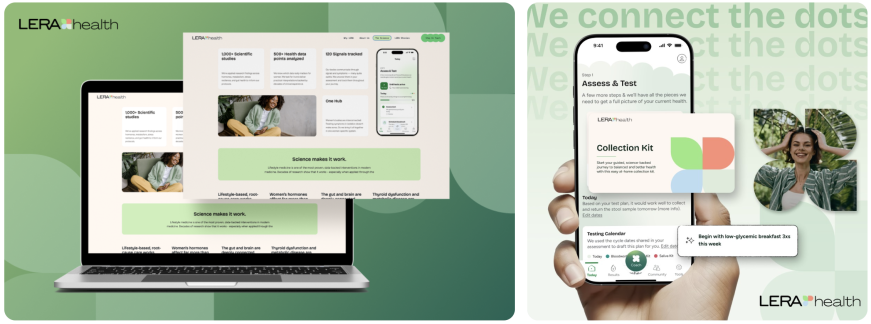
Source: 45 CFR Part 164 Subpart C (eCFR)Related proof of compliant delivery: on Lera Health we built the privacy-first data layer, consent flows, and auditable clinical workflows end to end: the same rigor around records, signatures, and de-identification that trial software demands.
Trial software is regulated and data-heavy. We bring the FHIR depth and Part 11 discipline it requires.
21 CFR Part 11 records, signatures, and audit trails designed into the platform from sprint one, not before an inspection.
FHIR ResearchStudy, EDC integration, and EHR-sourced RWE are our working ground, so your team isn't teaching us the domain.
Feasibility and cohort-discovery pipelines built to accelerate enrollment, the metric that decides whether a trial stays on schedule.
Role-scoped, multi-site architecture that fits how sponsors, CROs, and sites actually collaborate.

Tell us your study model and data sources. We'll return a phased plan covering FHIR ResearchStudy, eConsent, EDC integration, and real-world evidence pipelines.
contact@agnotic.com
Partnerships
contact@agnotic.com