Challenge
PHI sprawls across analytics stack
Agnotic approach
PHI classification on ingestion, column-level masking, and BAA coverage across every analytics vendor.


We build healthcare data analytics platforms with PHI-safe pipelines, FHIR-native ingestion, a data lakehouse, population-health and clinical dashboards, and an ML layer tuned for regulated environments.
Trusted by global innovators











Healthcare data analytics is the engineering that turns clinical, claims and operational data into dashboards, risk scores and quality measures that people can act on. Agnotic Technologies builds analytics platforms for providers, payers and digital health companies: FHIR-native ingestion, a PHI-safe lakehouse, terminology mapping and governed models, with HIPAA safeguards designed in.
Healthcare data analytics turns clinical, claims, and operational data into signals that support clinical, business, and population-level decisions: risk stratification, population health, quality measures, and operational improvement. The dashboards are the easy part.
The hard parts come first: PHI handling under HIPAA, terminology resolution across SNOMED, LOINC, ICD-10, and RxNorm, clinical-context preservation, and ML governance. We build the full stack (FHIR-native ingestion, a PHI-safe data lakehouse, and governed dashboards and models) so analytics is trustworthy, not just presentable.
What it is
Healthcare analytics turns clinical, claims, and operational data into signals that support clinical, business, and population-level decisions. Done well, it powers risk stratification, population health, clinical quality measures, and operational improvement.
The hard parts aren't the dashboards. They're PHI handling, terminology resolution (SNOMED, LOINC, ICD-10, RxNorm), clinical context preservation, and ML governance, all before you write the first SQL query.
A three-layer analytics architecture (ingestion, lakehouse and consumption), each with explicit PHI boundaries, so clinical data is governed from source to dashboard.

Common failure modes
Challenge
PHI sprawls across analytics stack
Agnotic approach
PHI classification on ingestion, column-level masking, and BAA coverage across every analytics vendor.
Challenge
Terminology chaos: same concept coded three ways
Agnotic approach
Terminology services as first-class infrastructure, not a reporting afterthought.
Challenge
Dashboards measure what's easy, not what matters
Agnotic approach
Use case discovery anchored on clinical and operational decisions, not data availability.
Challenge
ML models ship without governance or drift monitoring
Agnotic approach
Model registry, drift monitoring, and retraining cadence built into the ML lifecycle.
Every capability pairs an analytics outcome with the data standard, store, or control that makes it trustworthy in production.
Production-grade ingestion from EHR FHIR R4 endpoints, HL7 v2, claims, and operational systems, with PHI classification and data-quality validation on the way in.
A healthcare-tuned data lakehouse on Snowflake, BigQuery, or Databricks, combining data-lake flexibility with warehouse performance, with explicit PHI segregation and derived tables for dashboards and ML.
SNOMED CT, LOINC, ICD-10, and RxNorm resolution and mapping as first-class infrastructure, so the same clinical concept isn't coded three different ways downstream.
Cohort definition, risk stratification, care-gap identification, and quality-measure tracking at population scale: the core of value-based and payer analytics.
Three dashboard classes: population, clinical (provider-facing quality and patient views), and operational (capacity, throughput, revenue cycle). Each has its own data freshness and access pattern.
Risk, readmission, and no-show models under BAA-covered infrastructure with a model registry and drift monitoring, plus Safe Harbor and Expert Determination de-identification for research and partner access.
Where it runs
Risk stratification, care gap closure, and quality measure tracking at cohort scale.
Quality measure dashboards, specialist-level performance, and improvement initiatives.
Claims analytics, denial tracking, and revenue cycle optimisation.
Capacity forecasting, staffing analytics, and operational KPI tracking.
De-identified data access for research, RWE generation, and partner analytics.
Risk scoring, utilisation analytics, and care management support for payer orgs.
Reference architecture
We design analytics architecture in three layers (ingestion, analytics and consumption), each with explicit PHI boundaries.
Healthcare analytics is rarely just BI. It's PHI handling, terminology resolution, clinical context, and ML governance all at once.

Health Insurance Portability and Accountability Act
Protect PHI with privacy-first architecture, encrypted storage and transmission, strict access controls, and traceable audit logs.

General Data Protection Regulation
Implement lawful consent flows, data minimization, retention controls, and secure processing for sensitive health data.

Fast Healthcare Interoperability Resources
Enable standardized health data exchange across apps, care teams, and systems through standards-based FHIR APIs.

Health Level Seven International
Support enterprise-grade interoperability with HL7-based integrations for records, events, and clinical messaging workflows.

Health Information Trust Alliance
Align security programs to healthcare-specific control and risk management practices trusted by providers and ecosystem partners.

Health Information Technology for Economic and Clinical Health Act
Design with breach notification readiness, digital record safeguards, and operational controls that support regulated care programs.

FDA Software as a Medical Device
Plan software quality, traceability, and documentation pathways for products that may require SaMD review and submission.

Medical Device Regulation (European Union)
Prepare EU market-ready processes for risk classification, evidence tracking, and lifecycle governance under MDR expectations.

Substance Abuse and Mental Health Services Administration
Apply confidentiality controls and consent-aware sharing models for behavioral and mental health data experiences.
Standards we build against
A phased delivery that treats PHI handling, terminology, and governance as first-class from the start, so the highest-value dashboards land first.
We define which decisions need better evidence and for whom, map clinical, claims, and operational sources, and set PHI classification and access before any pipeline is built.
The PHI-safe data lakehouse, terminology services, and BAA coverage across every analytics vendor: the governed foundation dashboards and models sit on.
FHIR and HL7 pipelines, derived tables with clinical-coding alignment, and the first population, clinical, and operational dashboards plus targeted ML models.
Data governance, access review, drift monitoring, and ongoing pipeline-health monitoring so analytics stays trustworthy as sources and models evolve.
Short facts we design around, each linked to its primary source.
HIPAA allows two ways to de-identify health data: expert determination, or the safe harbor method, which removes 18 categories of identifiers.
Source: 45 CFR 164.514(b) (eCFR)The HIPAA Privacy Rule's minimum necessary standard requires covered entities to limit uses and disclosures of protected health information to the minimum needed for the purpose.
Source: 45 CFR 164.502(b) (eCFR)HHS adopts the United States Core Data for Interoperability (USCDI) as the standard set of health data classes and data elements for certified health IT.
Source: 45 CFR 170.213 (eCFR)The HIPAA Security Rule requires administrative, physical and technical safeguards for electronic protected health information.
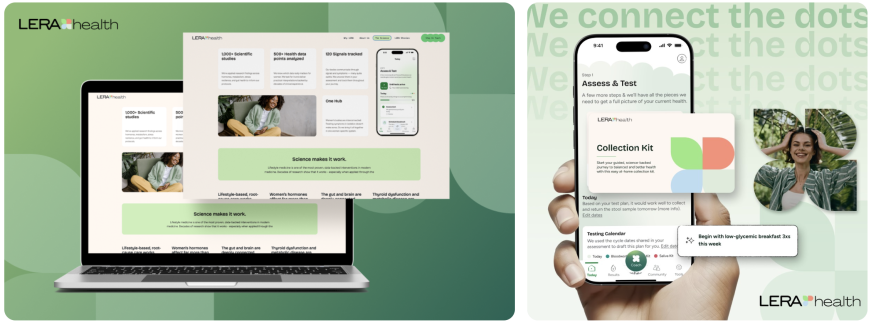
Source: 45 CFR Part 164 Subpart C (eCFR)Related proof of PHI-safe delivery: for Lera Health we built a privacy-first data layer and a testing-to-insights workflow end to end, with the same PHI classification, consent, and standards-based modeling a governed analytics platform demands.
From provider quality teams to payers and research organizations, we bring the data engineering, clinical-terminology, and governance depth healthcare analytics actually needs.
PHI classification on ingestion, column-level masking, BAA coverage, and de-identification designed into the lakehouse from sprint one, never bolted on before a partner review.
We treat SNOMED, LOINC, ICD-10, and RxNorm as first-class infrastructure, so your team won't spend the engagement teaching us how clinical data actually behaves.
Decision-first delivery that ships the dashboards tied to real clinical and operational decisions before expanding coverage.
Data engineering, analytics, ML, and compliance under one point of accountability: a team fluent in FHIR, lakehouse design, and healthcare governance.

Governed, PHI-safe analytics, delivered to production
Tell us what decisions you need to inform and what data you have. We'll share an analytics architecture and delivery plan.
contact@agnotic.com
Partnerships
contact@agnotic.com