Primary care & family medicine
High-volume clinics where E&M accuracy and same-day closure drive revenue.


An ambient scribe that drafts a structured clinical note and proposes ICD-10/CPT codes, then writes to the chart only after the clinician signs off.
Trusted by global innovators











Clinicians spend one to two hours on notes per hour of care — driving rushed notes, missed detail, and burnout. This agent inverts that: ambient capture records the visit, ASR transcribes it, and an LLM structures a SOAP or specialty note with a coded assessment and ICD-10/CPT suggestions. Nothing files until the clinician signs, when it writes back to the EHR as a FHIR DocumentReference on the Encounter.
Ambient audio to structured note to coded, signed EHR write-back, clinician-controlled at every step.
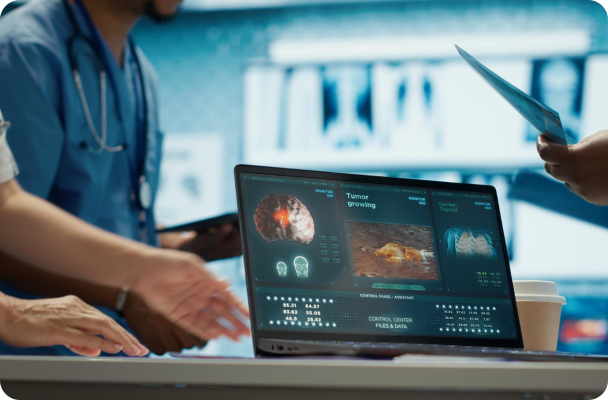
Concrete outputs on every encounter — not generic 'AI-powered' features.
Diarized multi-speaker capture from an in-room device or telehealth stream — no dictation.
A medical-tuned model transcribes; an LLM structures a SOAP or specialty note from your templates, grounded in what was said.
Coded ICD-10 diagnoses, CPT/E&M levels, and HCC candidates, each linked to its supporting transcript line.
On sign-off, writes back as a FHIR R4 DocumentReference on the Encounter, with the coded assessment as Condition and Procedure resources.
Who runs it
Where an ambient scribe earns its keep across care settings.
High-volume clinics where E&M accuracy and same-day closure drive revenue.
Cardiology, orthopedics, and others with structured notes and procedure coding.
Virtual visits captured from the video stream, filed before the call ends.
Long narrative visits where documentation burden is heaviest.
Fast-turnover settings needing rapid, coded documentation.
Value-based practices needing consistent HCC capture.
Expected-impact framing, validated per practice during pilot, not guaranteed numbers.
Health Insurance Portability and Accountability Act
Protect PHI with privacy-first architecture, encrypted storage and transmission, strict access controls, and traceable audit logs.

General Data Protection Regulation
Implement lawful consent flows, data minimization, retention controls, and secure processing for sensitive health data.

Fast Healthcare Interoperability Resources
Enable standardized health data exchange across apps, care teams, and systems through robust FHIR-ready APIs.

Health Level Seven International
Support enterprise-grade interoperability with HL7-based integrations for records, events, and clinical messaging workflows.

Health Information Trust Alliance
Align security programs to healthcare-specific control and risk management practices trusted by providers and ecosystem partners.

Health Information Technology for Economic and Clinical Health Act
Design with breach notification readiness, digital record safeguards, and operational controls that support regulated care programs.

FDA Software as a Medical Device
Plan software quality, traceability, and documentation pathways for products that may require SaMD review and submission.

Medical Device Regulation (European Union)
Prepare EU market-ready processes for risk classification, evidence tracking, and lifecycle governance under MDR expectations.

Substance Abuse and Mental Health Services Administration
Apply confidentiality controls and consent-aware sharing models for behavioral and mental health data experiences.
Standards we build against
Capture, structure under guardrails, review, and write back only what the clinician signs.
Ambient audio is captured and diarized in a BAA-covered environment; raw audio is discarded after transcription.
ASR transcribes; an LLM structures the coded note (ICD-10/CPT/HCC), grounding every line in a transcript span.
The clinician reviews the draft and each coded suggestion, edits inline, and signs; edits tune future drafts.
The signed note writes to the EHR as a FHIR DocumentReference on the Encounter; diagnoses and procedures post, audit-logged.
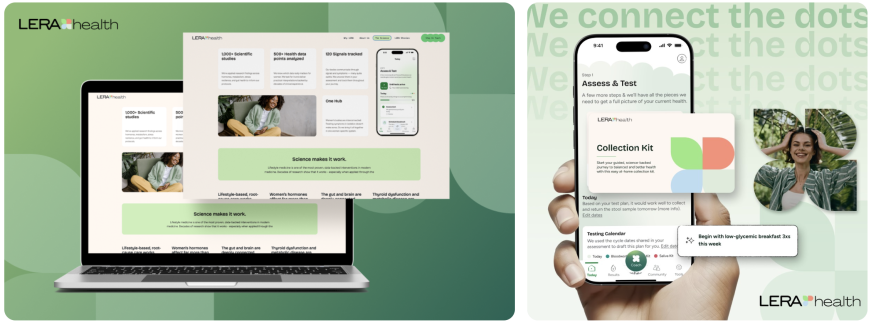
Lera Health shows how we build the privacy-first data layer and AI-assisted workflows this agent depends on — related proof, not this exact scribe.
Documentation touches the legal record and billing. The guardrails are the product.
BAA-covered infrastructure, encrypted throughout; raw audio never trains shared models.
The clinician signs every note and accepts every code; the agent never files autonomously.
Each sentence and code links to its transcript span, so reviewers verify rather than trust.
Every action is logged with user, timestamp, and version — a defensible trail for appeals.
Tell us your EHR and specialties; we'll return a pilot plan with the FHIR write-back, coding scope, and sign-off workflow mapped out.
contact@agnotic.com
Partnerships
contact@agnotic.com