Primary care access centers
Standardize how portal messages and calls are triaged across a large panel.


Structured symptom intake with validated acuity scoring that routes patients to self-care, telehealth, in-person, or emergency escalation — with a clinician reviewing every high-acuity result.
Trusted by global innovators











Every inbound message, call, and portal request is a triage decision: how urgent, and where does it go? Today that falls on nurses and front-desk staff, creating long holds and inconsistent routing. This agent standardizes it: structured symptom intake, acuity scored against validated protocols, and a proposed route — self-care, telehealth, in-person, or escalation. Low-acuity cases route automatically; urgent or ambiguous ones queue to a clinician, and the summary writes back to the EHR as FHIR resources.
Before triage, the same agent handles digital patient intake — patient registration, medical-history collection, insurance-information gathering, pre-visit questionnaires, and appointment scheduling — with automated form completion and patient-data validation, and EHR integration throughout. The visit starts with clean, verified data instead of staff re-keying paperwork.
Symptom intake feeds validated acuity logic, which proposes a route — a clinician reviews every escalation before the patient moves.

What the triage agent produces on each patient contact.
Conversational intake asks the right follow-ups — onset, severity, red flags — for a structured chief complaint.
Acuity is scored against established triage protocols (ESI-style logic, evidence-based question sets), not a black box.
Routes to self-care, telehealth, or in-person; emergent presentations (chest pain, stroke signs, suicidal ideation) hard-stop to a human.
Intake summary, acuity, and disposition write to the EHR as FHIR Encounter, Observation, and Communication resources.
Automates patient registration and onboarding, capturing demographics, consent, and contact details up front.
Collects medical history and gathers insurance information as part of intake, ready for eligibility and the chart.
Pre-visit questionnaires with automated form completion, so intake paperwork fills itself before the visit.
Validates patient-entered data on capture to catch errors before they reach the EHR or the clinician.
Who runs it
Where standardized triage relieves the front-line team.
Standardize how portal messages and calls are triaged across a large panel.
Pre-structure intake so nurses spend time on judgment, not data entry.
Consistent acuity flagging that always defers emergent cases to staff.
Route virtual-first patients to the right visit type or escalate to in-person.
Balance load across sites by routing patients to the right level and location.
Member-facing intake routing to plan-covered care options with human oversight.
Expected-impact framing, calibrated per organization during pilot, not fixed numbers.

Health Insurance Portability and Accountability Act
Protect PHI with privacy-first architecture, encrypted storage and transmission, strict access controls, and traceable audit logs.

General Data Protection Regulation
Implement lawful consent flows, data minimization, retention controls, and secure processing for sensitive health data.

Fast Healthcare Interoperability Resources
Enable standardized health data exchange across apps, care teams, and systems through robust FHIR-ready APIs.

Health Level Seven International
Support enterprise-grade interoperability with HL7-based integrations for records, events, and clinical messaging workflows.

Health Information Trust Alliance
Align security programs to healthcare-specific control and risk management practices trusted by providers and ecosystem partners.

Health Information Technology for Economic and Clinical Health Act
Design with breach notification readiness, digital record safeguards, and operational controls that support regulated care programs.

FDA Software as a Medical Device
Plan software quality, traceability, and documentation pathways for products that may require SaMD review and submission.

Medical Device Regulation (European Union)
Prepare EU market-ready processes for risk classification, evidence tracking, and lifecycle governance under MDR expectations.

Substance Abuse and Mental Health Services Administration
Apply confidentiality controls and consent-aware sharing models for behavioral and mental health data experiences.
Standards we build against
Capture the complaint, score it under validated logic, escalate to a clinician, and record the outcome.
Symptoms arrive via chat, portal, or voice; the agent structures them into a coded chief complaint in BAA scope.
Validated protocol logic scores acuity and flags red flags, mapping answers to the disposition so reviewers see why.
High-acuity and ambiguous cases queue to a clinician; low-acuity cases route automatically, and the clinician can override.
Disposition, intake summary, and acuity write back to the EHR as FHIR resources, audit-logged.
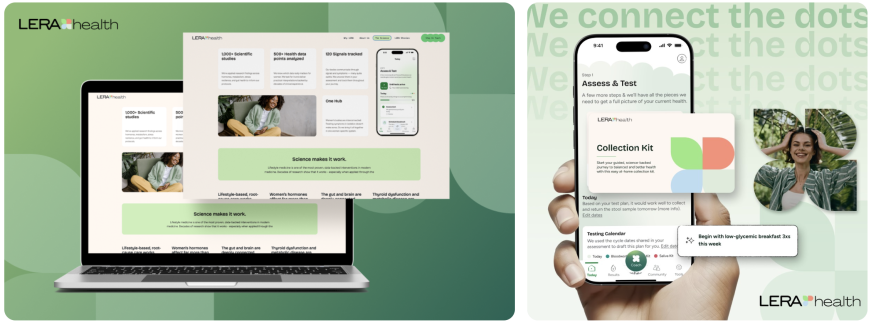
Lera Health demonstrates the compliant, AI-assisted patient workflows and privacy-first data layer this triage agent builds on — related proof, not this exact agent.
Triage is safety-critical; the guardrails are built in from the first sprint.
Symptom data is processed in BAA-covered infrastructure, encrypted end to end; no PHI trains shared models.
The agent recommends, never diagnoses; every high-acuity result is clinician-confirmed and red flags route to a human.
Acuity scores trace to the answers and the protocol rule that fired, so reviewers validate rather than trust.
Every intake, score, override, and route is logged with timestamp and reviewer — a defensible safety record.
Tell us your protocols and channels. We'll return a pilot plan with the acuity logic, escalation paths, and FHIR write-back mapped out.
contact@agnotic.com
Partnerships
contact@agnotic.com