Oncology trial recruitment
Matches patients to biomarker- and stage-specific protocols where eligibility is dense.


An agent that reads a patient's FHIR record, evaluates it against structured trial eligibility criteria, and returns a ranked, evidence-linked shortlist — so coordinators confirm matches instead of screening charts by hand.
Trusted by global innovators











Trial enrollment is the research bottleneck: coordinators screen charts by hand against dense inclusion/exclusion criteria, one patient and one protocol at a time, so most eligible patients are never found. The agent does first-pass screening at scale — it encodes each trial's eligibility as structured FHIR criteria, reads the patient's record, and evaluates fit criterion by criterion, returning a ranked met/unmet/unknown shortlist with links to the data. A coordinator confirms every candidate before outreach; the agent screens, it does not enroll.
See how the matching agent reads FHIR patient data, evaluates against ResearchStudy eligibility criteria, and produces a coordinator-reviewed shortlist with an audit trail.

Criterion-by-criterion eligibility matching on structured and unstructured data — explainable and coordinator-gated.
Evaluates a patient against each inclusion and exclusion criterion and returns met / unmet / unknown per criterion — not an opaque yes-or-no.
Represents trials as FHIR ResearchStudy with structured eligibility, so protocols are machine-checkable and reusable across sites, not trapped in a PDF.
Extracts stage, biomarker status, ECOG performance, and prior therapy from clinical notes so criteria in narrative text are still evaluable.
Ranks candidate trials per patient with the criteria met and supporting data; every match is a candidate a coordinator confirms before outreach.
Where it runs
Matches patients to biomarker- and stage-specific protocols where eligibility is dense.
Estimates how many patients could qualify for a protocol before the study opens.
Runs a new protocol's criteria across the population via bulk FHIR.
Hands coordinators a ranked, explained shortlist so review starts from candidates, not raw charts.
Directional — depends on protocol complexity and data quality.

Health Insurance Portability and Accountability Act
Protect PHI with privacy-first architecture, encrypted storage and transmission, strict access controls, and traceable audit logs.

General Data Protection Regulation
Implement lawful consent flows, data minimization, retention controls, and secure processing for sensitive health data.

Fast Healthcare Interoperability Resources
Enable standardized health data exchange across apps, care teams, and systems through robust FHIR-ready APIs.

Health Level Seven International
Support enterprise-grade interoperability with HL7-based integrations for records, events, and clinical messaging workflows.

Health Information Trust Alliance
Align security programs to healthcare-specific control and risk management practices trusted by providers and ecosystem partners.

Health Information Technology for Economic and Clinical Health Act
Design with breach notification readiness, digital record safeguards, and operational controls that support regulated care programs.

FDA Software as a Medical Device
Plan software quality, traceability, and documentation pathways for products that may require SaMD review and submission.

Medical Device Regulation (European Union)
Prepare EU market-ready processes for risk classification, evidence tracking, and lifecycle governance under MDR expectations.

Substance Abuse and Mental Health Services Administration
Apply confidentiality controls and consent-aware sharing models for behavioral and mental health data experiences.
Standards we build against
Structured criteria and FHIR patient data in, per-criterion evaluation with guardrails, a coordinator-reviewed shortlist, and a logged screening record.
Trial eligibility is encoded as structured criteria (FHIR ResearchStudy), and the agent reads the patient's FHIR record plus NLP-extracted facts from notes.
Each criterion is evaluated met / unmet / unknown; unknowns are surfaced honestly rather than assumed, and low-confidence NLP extractions are flagged for review.
A ranked shortlist is presented with per-criterion evidence; a coordinator or investigator confirms eligibility and consent — the agent proposes, the human enrolls.
The screening result, matched criteria, and coordinator decision are recorded and logged to an immutable audit trail for regulatory and monitoring needs.
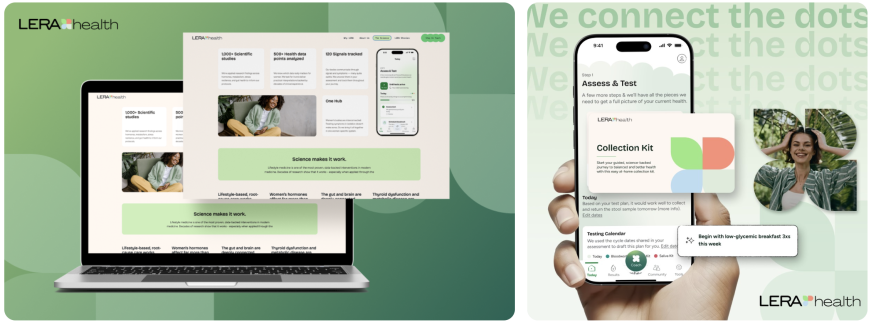
Related proof of compliant, AI-assisted delivery — not this exact agent. Lera Health shows how we build FHIR-native data pipelines and compliant AI workflows that turn clinical data into structured output.
Research touches PHI, consent, and regulatory scrutiny. The guardrails are non-negotiable.
Screening runs inside your compliance boundary under a BAA, encrypted throughout, scoped to authorized research staff and IRB-aligned data use.
The agent produces candidates, not enrollments. A coordinator confirms eligibility and obtains consent before any patient is contacted.
Every match shows which criteria are met, unmet, or unknown and the data behind each.
Screening decisions, matched criteria, and coordinator actions are logged immutably — the record trial monitoring and audits require.
Tell us your protocols and EHR. We'll return an architecture review and a plan to encode eligibility and validate matching before it touches recruitment.
contact@agnotic.com
Partnerships
contact@agnotic.com