Pre-visit chart prep
A clinician pulls the salient history before the visit, citations included.


Ask a plain-language question and get a cited answer drawn only from that patient's chart — a FHIR-native agent surfacing the right note, lab, or medication in seconds.
Trusted by global innovators











A single patient carries hundreds of encounters, PDFs, summaries, and labs, so finding one fact — the last echo, whether a statin was tolerated — means minutes of scrolling mid-visit. This agent makes the chart queryable: it retrieves over FHIR R4 resources and documents, grounds every answer in its source, and states nothing the chart doesn't support.
FHIR resources and documents are chunked, embedded, and retrieved under PHI scoping, then answered with verifiable citations.
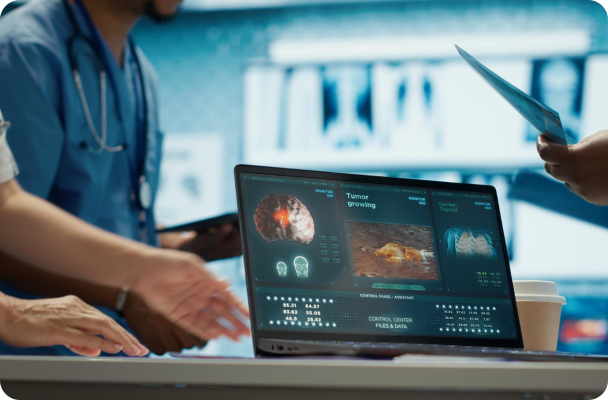
Built for the clinical record — grounded, scoped, and auditable, not a chatbot pointed at PHI.
Every response links to the exact FHIR resource or document chunk — Observation, Condition, MedicationRequest — for one-click verification.
Indexes FHIR R4 resources alongside notes and scanned PDFs, so 'last HbA1c trend' returns the Observation series.
When retrieval finds nothing relevant, the agent says so; a grounding check rejects any unsupported claim.
Launches inside the chart via SMART on FHIR and reasons over the encounter timeline for longitudinal questions.
Who runs it
A clinician pulls the salient history before the visit, citations included.
A specialist queries the referral reason and prior workup fast.
Nurses confirm the latest medication list without paging the provider.
A read-only version answers patients' questions about their own results.
Expected impact, not guarantees — depends on chart quality and index coverage.

Health Insurance Portability and Accountability Act
Protect PHI with privacy-first architecture, encrypted storage and transmission, strict access controls, and traceable audit logs.

General Data Protection Regulation
Implement lawful consent flows, data minimization, retention controls, and secure processing for sensitive health data.

Fast Healthcare Interoperability Resources
Enable standardized health data exchange across apps, care teams, and systems through robust FHIR-ready APIs.

Health Level Seven International
Support enterprise-grade interoperability with HL7-based integrations for records, events, and clinical messaging workflows.

Health Information Trust Alliance
Align security programs to healthcare-specific control and risk management practices trusted by providers and ecosystem partners.

Health Information Technology for Economic and Clinical Health Act
Design with breach notification readiness, digital record safeguards, and operational controls that support regulated care programs.

FDA Software as a Medical Device
Plan software quality, traceability, and documentation pathways for products that may require SaMD review and submission.

Medical Device Regulation (European Union)
Prepare EU market-ready processes for risk classification, evidence tracking, and lifecycle governance under MDR expectations.

Substance Abuse and Mental Health Services Administration
Apply confidentiality controls and consent-aware sharing models for behavioral and mental health data experiences.
Standards we build against
Capture, retrieve under guardrails, answer, and log the trail — every step auditable.
The clinician asks in plain language inside the chart; patient, role, and consent scope the query.
Hybrid retrieval pulls the relevant FHIR resources and document chunks for that patient only, gated by a relevance threshold.
The model answers from retrieved passages only, one citation per claim; unsupported statements are stripped.
Question, retrieved resources, answer, and citations write to an immutable access log.
Related proof of compliant delivery — not this exact agent. For Lera Health we built a privacy-first data layer and AI-assisted insights over sensitive health data, the same foundations this agent depends on.
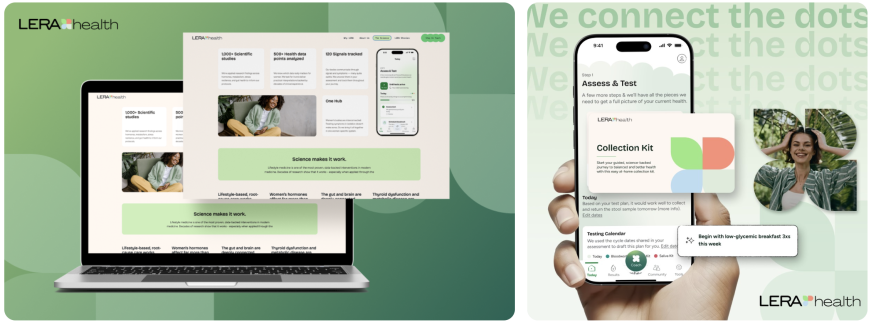
A chart-facing agent earns trust by proving where answers came from.
Retrieval is scoped by patient, role, and consent; PHI never leaves the boundary.
The agent informs, not decides; no-match or low-confidence queries defer rather than guess.
Every claim cites its source FHIR resource or document, confirmable in one click.
Every query, retrieval set, and answer writes to an immutable log.
Tell us your EHR and document sources. We'll return an architecture for a grounded, cited, PHI-scoped agent — and a plan to prove it on your data.
contact@agnotic.com
Partnerships
contact@agnotic.com