End-to-end prior authorization
Plan, gather evidence, assemble the packet, submit via X12 278, and track the response.


Some workflows are too long for one prompt. We build systems where a planner, executors, and a critic divide the work, use real tools, share memory, and run under guardrails and observability.
Trusted by global innovators











Real healthcare operations — verify eligibility, gather evidence, assemble a prior-auth packet, submit, track the response — span many systems and steps, and one model doing it all in a single shot loses the thread. A multi-agent system gives it shape: a planner decomposes the goal, executors own bounded tasks and call real tools, a critic reviews output against policy, and shared memory keeps every agent on the same state.
Planner, executors, and critic coordinate through shared memory and a tool layer — guardrails at each handoff, traces across the full run.

Orchestrated architectures built for reliability on long, multi-system healthcare workflows.
A planner decomposes the goal into steps, executors own each task, and a critic validates outputs against policy before the workflow advances.
Agents call real tools — eligibility (X12 270/271), FHIR R4 reads, document generation, EHR write-back — through typed, validated interfaces.
Common working memory keeps every agent on the same facts, so no agent redoes another's work.
Every step, tool call, and decision is traced end to end — inputs, outputs, latency, cost — to debug and prove what happened.
Who runs it
Plan, gather evidence, assemble the packet, submit via X12 278, and track the response.
Classify a denial, retrieve evidence, draft the appeal, and route for human sign-off.
Verify coverage, collect the workup, and generate the referral packet across systems.
Reconcile charges against documentation with a critic flagging gaps for a coder.
Expected impact, not guarantees — depends on workflow complexity and review policy.

Health Insurance Portability and Accountability Act
Protect PHI with privacy-first architecture, encrypted storage and transmission, strict access controls, and traceable audit logs.

General Data Protection Regulation
Implement lawful consent flows, data minimization, retention controls, and secure processing for sensitive health data.

Fast Healthcare Interoperability Resources
Enable standardized health data exchange across apps, care teams, and systems through robust FHIR-ready APIs.

Health Level Seven International
Support enterprise-grade interoperability with HL7-based integrations for records, events, and clinical messaging workflows.

Health Information Trust Alliance
Align security programs to healthcare-specific control and risk management practices trusted by providers and ecosystem partners.

Health Information Technology for Economic and Clinical Health Act
Design with breach notification readiness, digital record safeguards, and operational controls that support regulated care programs.

FDA Software as a Medical Device
Plan software quality, traceability, and documentation pathways for products that may require SaMD review and submission.

Medical Device Regulation (European Union)
Prepare EU market-ready processes for risk classification, evidence tracking, and lifecycle governance under MDR expectations.

Substance Abuse and Mental Health Services Administration
Apply confidentiality controls and consent-aware sharing models for behavioral and mental health data experiences.
Standards we build against
Capture the goal, execute under guardrails, critique, then write back — every hop observable.
A workflow goal enters with its patient and PHI scope, and the planner produces an ordered, checkable plan from shared memory.
Executors run each step with typed tools for eligibility, FHIR reads, or document generation, schema-validated and PHI-scoped into shared memory.
A critic agent checks the result against policy, sends failing work back, and escalates high-stakes decisions to a human checkpoint.
Approved output writes back to the EHR, and the full run — every step, tool call, approval — persists as an auditable trace.
Related proof of compliant delivery — not this exact system. For Lera Health we orchestrated a multi-step testing-to-insights workflow over sensitive data — the same discipline: bounded steps, validation, and traceability.
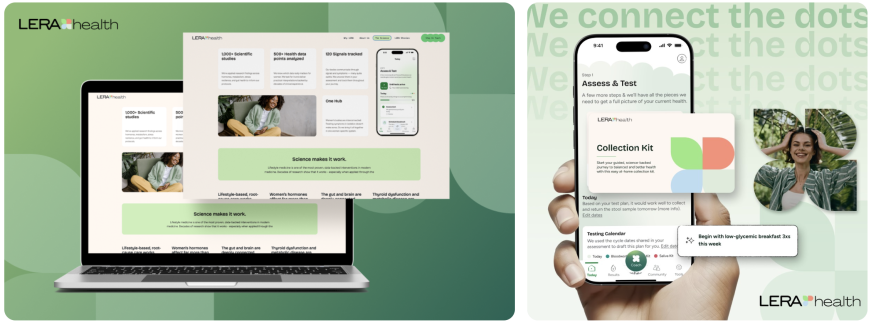
Orchestration earns trust by making each agent's behavior bounded, reviewable, and traceable.
Patient scope and consent travel through shared memory; every step is PHI-scoped, and PHI never leaves the boundary or trains models.
High-stakes steps pause for human approval; the critic surfaces what needs review rather than acting autonomously.
The plan, each executor's tool calls, and the critic's rationale are recorded, so a completed run can be explained step by step.
End-to-end traces capture every input, output, latency, and cost across agents — one source of truth for compliance and engineering.
Bring us a multi-step process that keeps breaking in one shot. We'll design the planner, executors, critic, and observability to make it complete reliably — and prove it on your data.
contact@agnotic.com
Partnerships
contact@agnotic.com