Insider-threat monitoring
Compliance teams watch for snooping and over-broad use against behavioral baselines.


A security agent that watches how PHI is accessed and moved — flagging anomalous access, catching data leaving where it shouldn't, and de-identifying records — so a breach is caught by behavior instead of discovered in an audit months later.
Trusted by global innovators











Insider snooping, over-broad access, and quiet exfiltration rarely trip a hard rule, so many PHI breaches surface only in a retrospective audit. This agent watches PHI behavior in near real time: it baselines normal access from the audit logs, flags anomalies, inspects data movement for PHI leaving where it shouldn't, and de-identifies records for safe downstream use. Every alert is scored, explained, and routed to an analyst — the agent prioritizes, people decide.
Access logs and data flows feed anomaly detection, DLP, and de-identification — with scored, explainable alerts routed to human review.

PHI protection built on behavior, not just static rules — detection, prevention, and de-identification with human-reviewed alerts.
Baselines each user's normal access from EHR audit logs, then flags outliers — unusual patients, volume spikes, off-hours access, VIP-record snooping — with a risk score and reason.
Inspects data in motion — email, uploads, exports, API responses — for PHI patterns (MRN, SSN) leaving sanctioned channels, and blocks or quarantines before it exits.
Removes or masks HIPAA Safe Harbor identifiers to produce de-identified datasets for analytics, testing, and model work — so teams operate on safe data, not raw PHI.
Every alert carries a risk score and plain-language rationale — which behavior deviated from baseline and why — so analysts triage fast, correlating access, auth, and data-movement signals.
Who runs it
Compliance teams watch for snooping and over-broad use against behavioral baselines.
Security ops block PHI leaving over email, uploads, or exports before it exits.
Near-real-time detection and immutable trails support HIPAA disclosures and notification timelines.
Data teams get de-identified datasets so analytics never touches raw PHI.
Expected impact, not guarantees — depends on log coverage and your response process.
Health Insurance Portability and Accountability Act
Protect PHI with privacy-first architecture, encrypted storage and transmission, strict access controls, and traceable audit logs.

General Data Protection Regulation
Implement lawful consent flows, data minimization, retention controls, and secure processing for sensitive health data.

Fast Healthcare Interoperability Resources
Enable standardized health data exchange across apps, care teams, and systems through robust FHIR-ready APIs.

Health Level Seven International
Support enterprise-grade interoperability with HL7-based integrations for records, events, and clinical messaging workflows.

Health Information Trust Alliance
Align security programs to healthcare-specific control and risk management practices trusted by providers and ecosystem partners.

Health Information Technology for Economic and Clinical Health Act
Design with breach notification readiness, digital record safeguards, and operational controls that support regulated care programs.

FDA Software as a Medical Device
Plan software quality, traceability, and documentation pathways for products that may require SaMD review and submission.

Medical Device Regulation (European Union)
Prepare EU market-ready processes for risk classification, evidence tracking, and lifecycle governance under MDR expectations.

Substance Abuse and Mental Health Services Administration
Apply confidentiality controls and consent-aware sharing models for behavioral and mental health data experiences.
Standards we build against
Capture the logs, detect against baseline, prevent leakage, and route scored alerts to a human — everything logged.
The agent ingests EHR access logs, IAM events, and data-movement telemetry, normalizing them into a common event stream.
Models learn each user's normal behavior and score deviations; DLP inspects data in motion for PHI, and de-identification masks identifiers for downstream use.
A risk-scored alert with a rationale is routed to a security analyst; high-severity leakage can auto-block, access anomalies escalate for human decision.
The alert, its evidence, and the analyst's disposition write to a case record and an immutable audit log for incident response and compliance.
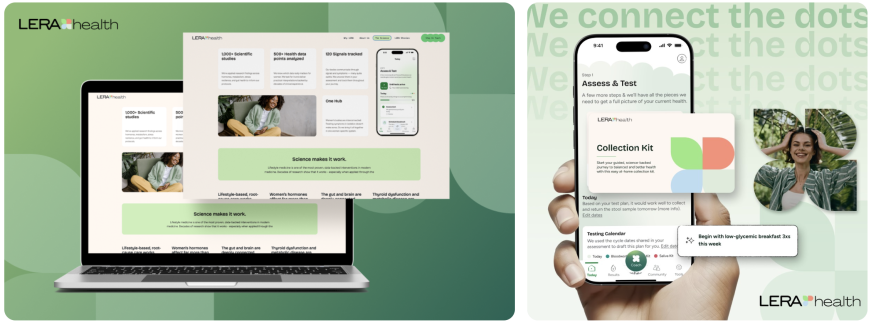
Related proof of compliant delivery — not this exact agent. For Lera Health we built a privacy-first data layer with strict PHI handling and access controls, the same foundation a PHI-security agent monitors.
A PHI-security agent has to protect data without becoming a new way to over-access it.
The agent works on access metadata and de-identified data where possible; any PHI access is least-privilege, scoped, and itself logged.
The agent detects and prioritizes; an analyst investigates and decides. Auto-blocking is reserved for clear, high-severity leakage, always with a reviewable record.
Every alert states which behavior deviated from baseline and why it scored as it did, so analysts and auditors can defend each decision.
Alerts, evidence, and dispositions write to an immutable log, supporting HIPAA accounting-of-disclosures and breach-notification readiness.
Tell us your log sources and data flows. We'll return an architecture for anomaly detection, DLP, and de-identification — with scored, human-reviewed alerts and a full audit trail.
contact@agnotic.com
Partnerships
contact@agnotic.com