Commercial payers
Pre-payment scoring to hold suspect claims for review before dollars go out.


The agent scores incoming and paid claims for fraud, waste, and abuse using anomaly and graph machine learning, surfacing the suspicious few for a Special Investigations analyst instead of leaving them buried in millions of clean lines.
Trusted by global innovators











Payers adjudicate millions of claims, and the fraudulent, wasteful, or abusive ones — upcoding, unbundling, phantom billing, collusive rings — are a tiny fraction hidden in the flood. Rules-only edits catch obvious patterns and miss adaptive ones; manual review can only sample. The agent narrows the haystack: anomaly models flag claims and providers that deviate from peer and historical norms, and graph ML surfaces suspicious relationships across providers, members, and referrals. Each flag is scored, explained, and routed to a Special Investigations analyst — the agent never denies a claim or accuses a provider on its own.
Score, explain, and route the suspicious minority to investigators — with a human deciding every outcome.

Detection built for how healthcare fraud behaves — anomalies and relationships, not just static rules.
Scores each provider and claim against peer-group and historical baselines to catch upcoding, unbundling, and impossible-day billing rules miss.
Builds a graph of providers, members, and referrals to expose collusive rings, kickbacks, and identity misuse no single claim shows.
Ingests X12 837 claims and 835 remittances with CPT/HCPCS, ICD-10, and modifier context so scores reflect real coding.
Every flag carries the features that drove it — codes, peers, relationships — so investigators act on evidence, not a black box.
Flags route to Special Investigations for a human decision; the agent prioritizes and explains, never denies or sanctions automatically.
Who runs it
The same agent, aimed at where payer losses concentrate.
Pre-payment scoring to hold suspect claims for review before dollars go out.
Program-integrity screening tuned to public-program billing patterns and rules.
A ranked, evidenced queue that replaces sampling with prioritized casework.
FWA detection for administrators managing claims on behalf of employers.
Graph analysis to surface collusive referral and billing rings across a network.
Retrospective scoring of paid claims to target audit and recoupment efforts.
Directional targets measured on your own claims, never fabricated.

Health Insurance Portability and Accountability Act
Protect PHI with privacy-first architecture, encrypted storage and transmission, strict access controls, and traceable audit logs.

General Data Protection Regulation
Implement lawful consent flows, data minimization, retention controls, and secure processing for sensitive health data.

Fast Healthcare Interoperability Resources
Enable standardized health data exchange across apps, care teams, and systems through robust FHIR-ready APIs.

Health Level Seven International
Support enterprise-grade interoperability with HL7-based integrations for records, events, and clinical messaging workflows.

Health Information Trust Alliance
Align security programs to healthcare-specific control and risk management practices trusted by providers and ecosystem partners.

Health Information Technology for Economic and Clinical Health Act
Design with breach notification readiness, digital record safeguards, and operational controls that support regulated care programs.

FDA Software as a Medical Device
Plan software quality, traceability, and documentation pathways for products that may require SaMD review and submission.

Medical Device Regulation (European Union)
Prepare EU market-ready processes for risk classification, evidence tracking, and lifecycle governance under MDR expectations.

Substance Abuse and Mental Health Services Administration
Apply confidentiality controls and consent-aware sharing models for behavioral and mental health data experiences.
Standards it speaks
A four-stage pipeline that turns a flood of claims into a ranked, evidenced queue for investigators.
The agent ingests X12 837 claims and 835 remittances, plus provider and member reference data, into a governed, PHI-secured pipeline.
Anomaly and graph ML models score each claim and provider and surface suspicious relationships, flagging uncertainty.
Each flag is packaged with its driving features and routed to a Special Investigations analyst, who confirms, clears, or escalates.
The decision and rationale are written back to case management, and the outcome feeds model retraining.
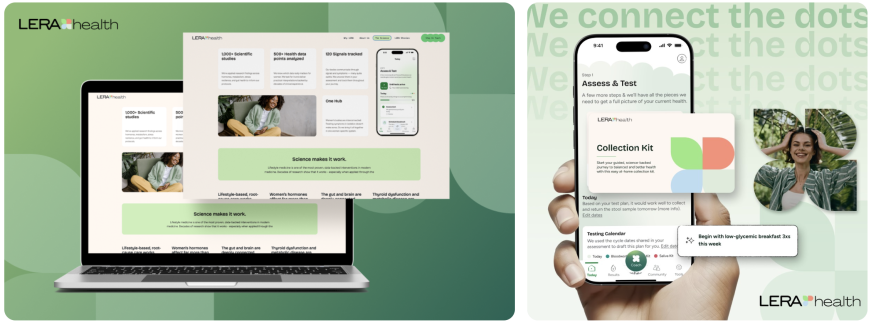
A different domain, not a payer-integrity deployment, but it shows how we engineer AI on sensitive data: privacy-first architecture, consented flows, and human-reviewed outputs.
An investigator owns every consequential decision, and every score can be explained and audited.
Claims and member data stay in HIPAA-ready, encrypted infrastructure under a BAA, with least-privilege access scoped to the investigations team.
Every flag is decided by a Special Investigations analyst; the agent scores and prioritizes, never acts against a provider on its own.
Each score exposes the anomalies and relationships behind it, so decisions withstand provider appeals and regulatory scrutiny.
Every score, flag, review, and outcome is timestamped and attributed for a defensible record.
Tell us your lines of business and the fraud types that hurt most. We'll return an architecture plan with anomaly and graph ML detection and an investigator-in-the-loop workflow.
contact@agnotic.com
Partnerships
contact@agnotic.com