Challenge
Payer companion guides differ from the base X12 guide
Agnotic approach
We implement per-payer conformance and validate 837 and 270 transactions against each companion guide before enabling that payer in production.


Availity is one of the largest healthcare clearinghouses connecting providers to payers. We build real integrations across the X12 transaction set — 270/271 eligibility, 276/277 status, 837 claims, and 835 ERA — over EDI and Availity's REST APIs, not just a portal login.
Trusted by global innovators











Availity is a healthcare clearinghouse and connectivity network that sits between providers and payers for administrative and financial transactions. Integrating with it means implementing the HIPAA X12 transaction set — 270/271 for eligibility and benefits, 276/277 for claim status, 837 (professional, institutional, and dental) for claim submission, 835 for electronic remittance advice, and 278 for prior authorization — over Availity's EDI gateway and, increasingly, its REST APIs for real-time eligibility, claim status, and remittance.
The non-trivial part is payer variability. Every payer publishes its own companion guide with specific loops, segments, and qualifier expectations on top of the base X12 implementation guides, and the real-time versus batch behavior differs by transaction and payer. We scope the transaction set, payer mix, and companion-guide conformance up front so claims and eligibility checks succeed instead of bouncing with cryptic rejections.
See how we design revenue-cycle integrations that hold up across payers — X12 transactions and REST APIs wired for real-time and batch.

Common failure modes
Challenge
Payer companion guides differ from the base X12 guide
Agnotic approach
We implement per-payer conformance and validate 837 and 270 transactions against each companion guide before enabling that payer in production.
Challenge
Claims reject with cryptic 277CA or 835 codes
Agnotic approach
We capture and translate rejection and denial reasons into actionable worklists so billing staff know exactly what to fix.
Challenge
Real-time vs batch behavior is inconsistent
Agnotic approach
We choose real-time REST or batch EDI per transaction and payer and design retry and reconciliation to match each mode.
Challenge
Unacknowledged transactions hide failures
Agnotic approach
999 and TA1 handling with alerting so a missing acknowledgement surfaces immediately rather than at month-end reconciliation.
The exact X12 transaction sets and REST APIs that carry eligibility, claims, and remittance data.
Real-time eligibility and benefit inquiry and response so coverage and patient responsibility are known before or at the point of service.
Professional (837P), institutional (837I), and dental (837D) claim generation with validation against payer companion guides.
Electronic Remittance Advice parsing and auto-posting, reconciling payments and adjustments back to submitted claims.
Claim status inquiry and response and prior-authorization request/response, so follow-up and approvals are automated rather than phoned in.
Real-time Coverages, Claim Status, and Remittance REST endpoints for modern, synchronous integration alongside the EDI gateway.
X12 999 and TA1 handling plus companion-guide validation so rejections are caught and explained, not discovered at month-end.
Where it runs
Real-time 270/271 checks at scheduling and registration.
837 claim submission with pre-send companion-guide validation.
835 ERA auto-posting reconciled to claims and adjustments.
Structured denial capture feeding worklists and root-cause analytics.
278 request/response for services that require pre-authorization.
End-to-end revenue-cycle products built on Availity connectivity.
Claims fail on payer-specific companion guides, not the base standard. We build per-payer conformance so transactions succeed in production.

Health Insurance Portability and Accountability Act
Protect PHI with privacy-first architecture, encrypted storage and transmission, strict access controls, and traceable audit logs.

General Data Protection Regulation
Implement lawful consent flows, data minimization, retention controls, and secure processing for sensitive health data.

Fast Healthcare Interoperability Resources
Enable standardized health data exchange across apps, care teams, and systems through robust FHIR-ready APIs.

Health Level Seven International
Support enterprise-grade interoperability with HL7-based integrations for records, events, and clinical messaging workflows.

Health Information Trust Alliance
Align security programs to healthcare-specific control and risk management practices trusted by providers and ecosystem partners.

Health Information Technology for Economic and Clinical Health Act
Design with breach notification readiness, digital record safeguards, and operational controls that support regulated care programs.

FDA Software as a Medical Device
Plan software quality, traceability, and documentation pathways for products that may require SaMD review and submission.

Medical Device Regulation (European Union)
Prepare EU market-ready processes for risk classification, evidence tracking, and lifecycle governance under MDR expectations.

Substance Abuse and Mental Health Services Administration
Apply confidentiality controls and consent-aware sharing models for behavioral and mental health data experiences.
Standards we build against
We treat connectivity, payer conformance, and go-live as parallel tracks so revenue-cycle transactions flow cleanly.
We map the transaction set, payer mix, and real-time versus batch needs, and gather the companion guides that matter before build.
We provision Availity EDI connectivity and REST API credentials and confirm the transaction and endpoint specifications in a test environment.
We build X12 generation and parsing and REST clients, validating against payer companion guides and Availity test transactions.
Phased cutover with transaction dashboards, acknowledgement tracking, and rejection alerting across payers.
Transaction table
How we approach the main transactions — the X12 set, typical timeline, and the friction to expect.
| Capability | X12 / API | Typical timeline | Notes |
|---|---|---|---|
| Eligibility | 270/271 or Coverages API | 3–5 weeks | Real-time; payer benefit granularity varies widely. |
| Claim submission | 837P / 837I / 837D | 4–8 weeks | Companion-guide conformance per payer is the main effort. |
| Remittance | 835 ERA | 3–6 weeks | Auto-posting logic and claim reconciliation. |
| Claim status | 276/277 or Claim Status API | 2–4 weeks | Automates follow-up; batch and real-time both available. |
| Prior authorization | 278 | 3–6 weeks | Payer support and companion guides vary. |
Timelines assume gateway and API connectivity is provisioned. Payer companion-guide conformance drives the schedule more than the base standard.
Availity isn't the subject here, but Lera Health is honest proof of the same discipline: standards-conformant data flows, a privacy-first data layer, and a compliant, integration-heavy platform delivered end to end.
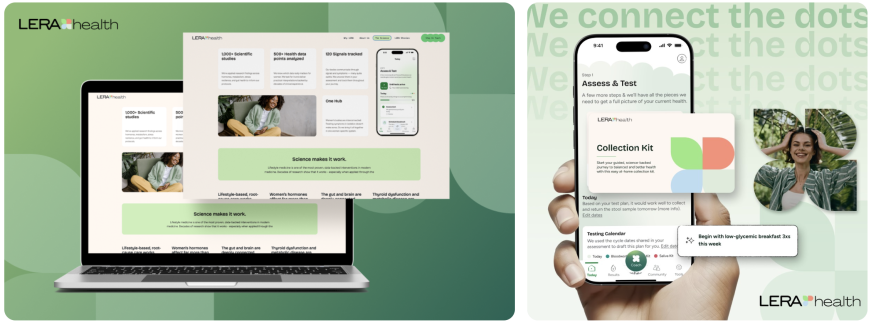
We bring the X12 conformance and payer-companion-guide discipline that clearinghouse integrations actually require.
HIPAA X12 transaction standards and audit trails designed into the revenue-cycle flow from the start.
We know 837 loops, 835 auto-posting, and companion guides — your billing team won't be explaining a claim reject to ours.
We engineer per-payer conformance so transactions succeed across a real payer mix, not just the one you tested with.
One accountable team across discovery, build, QA, and monitoring, with a named engineer for transaction and rejection issues.

Real integrations, not just familiarity.
Tell us your transaction set and payer mix. We'll return a realistic plan with the connectivity timeline and companion-guide-conformance scope.
contact@agnotic.com
Partnerships
contact@agnotic.com