Challenge
Payer companion guides override the base standard
Agnotic approach
We build per-payer profiles from companion guides and validate against them, not just generic 5010 schemas.


We build real X12 EDI pipelines for claims, eligibility, and remittance (837 professional and institutional, 835 ERA, 270/271, and 276/277) with correct loops, segments, and clearinghouse routing.
Trusted by global innovators









X12 EDI healthcare integration connects your billing, practice management or payer software to clearinghouses and health plans through the ASC X12 transactions adopted under HIPAA: 837 claims, 835 remittance, 270/271 eligibility, 276/277 claim status and 278 prior authorization. Agnotic Technologies builds these pipelines for providers, billing companies and health tech teams.
X12 is the ANSI standard behind US healthcare's administrative transactions. The HIPAA-mandated 5010 versions cover claims submission (837P/837I/837D), electronic remittance advice (835 ERA), eligibility inquiry and response (270/271), and claim status (276/277): each a structured hierarchy of interchange, functional group, transaction set, loops, and segments.
The difficulty is the ecosystem, not the format. Payers and clearinghouses each have companion guides, situational rules and enrollment requirements. We build EDI pipelines that generate compliant 837s, reconcile 835 remittances to claims and handle real-time 270/271 eligibility, with 999/TA1 acknowledgments and rejection routing.
See how we design X12 EDI pipelines with clearinghouse routing, acknowledgment handling, and remittance reconciliation.

Common failure modes
Challenge
Payer companion guides override the base standard
Agnotic approach
We build per-payer profiles from companion guides and validate against them, not just generic 5010 schemas.
Challenge
Trading-partner enrollment blocks go-live for weeks
Agnotic approach
We start clearinghouse and payer enrollment in week one and run engineering in parallel until it lands.
Challenge
835 remittances do not reconcile to claims
Agnotic approach
A reconciliation engine keyed on claim and service-line identifiers with CARC/RARC-driven exception queues.
Challenge
Silent rejections at the 999/TA1 layer
Agnotic approach
Full acknowledgment handling with dashboards so rejected interchanges are caught before revenue is lost.
The exact 5010 transaction surface, generated and parsed against payer companion guides.
Professional (837P), Institutional (837I), and Dental (837D) claim generation with correct 2000/2300/2400 loops and situational rules.
Electronic Remittance Advice parsing with claim, service-line, adjustment (CAS), and CARC/RARC reason-code reconciliation back to submitted claims.
Real-time eligibility and benefit inquiry and response, including coverage, copay, deductible, and plan-level details.
Claim status inquiry/response plus 999 and TA1 acknowledgment handling with automated rejection routing and resubmission.
Where it runs
Automated 837 generation from your billing or RCM system to payers.
835-driven auto-posting of payments and adjustments.
270/271 checks at scheduling and registration to reduce denials.
276/277 polling to keep billing teams ahead of adjudication.
Structured surfacing of denials and underpayments for follow-up.
Most EDI projects stall in payer testing and enrollment. We plan companion guides and trading-partner setup from week one.

Health Insurance Portability and Accountability Act
Protect PHI with privacy-first architecture, encrypted storage and transmission, strict access controls, and traceable audit logs.

General Data Protection Regulation
Implement lawful consent flows, data minimization, retention controls, and secure processing for sensitive health data.

Fast Healthcare Interoperability Resources
Enable standardized health data exchange across apps, care teams, and systems through standards-based FHIR APIs.

Health Level Seven International
Support enterprise-grade interoperability with HL7-based integrations for records, events, and clinical messaging workflows.

Health Information Trust Alliance
Align security programs to healthcare-specific control and risk management practices trusted by providers and ecosystem partners.

Health Information Technology for Economic and Clinical Health Act
Design with breach notification readiness, digital record safeguards, and operational controls that support regulated care programs.

FDA Software as a Medical Device
Plan software quality, traceability, and documentation pathways for products that may require SaMD review and submission.

Medical Device Regulation (European Union)
Prepare EU market-ready processes for risk classification, evidence tracking, and lifecycle governance under MDR expectations.

Substance Abuse and Mental Health Services Administration
Apply confidentiality controls and consent-aware sharing models for behavioral and mental health data experiences.
Validation levels
To read an X12 file, start with the fixed-length ISA segment, which sets the separators, then confirm the ISA/IEA, GS/GE and ST/SE envelopes carry matching control numbers and counts. We then run the seven WEDI SNIP validation types before any 837 leaves.
| SNIP type | What it checks | Typical error it catches | Where we catch it |
|---|---|---|---|
| Type 1: Integrity | X12 syntax: segments, elements, separators, envelope control numbers and counts | SE01 count wrong, invalid characters, mismatched control numbers | Pre-submission validator |
| Type 2: Requirement | Implementation guide rules: required segments and elements, repeat limits, lengths | Missing billing provider NPI segment or an element longer than allowed | Pre-submission validator |
| Type 3: Balancing | Totals that must add up within the transaction | Service line charges that do not sum to the claim total charge | Pre-submission validator |
| Type 4: Situation | Situational rules that depend on other data in the transaction | A segment required only when another value is present, sent without it | Pre-submission validator |
| Type 5: External code sets | Values against external code sets such as ICD-10-CM, CPT, HCPCS and place of service codes | An invalid or expired diagnosis or procedure code | Pre-submission validator, with code sets kept current |
| Type 6: Product type or line of service | Rules specific to a claim type or service, such as ambulance or home health data | Ambulance claim sent without the transport information the guide requires | Pre-submission validator, by claim type |
| Type 7: Trading partner specific | Rules from each payer's or clearinghouse's companion guide | A payer-specific identifier or value the companion guide requires | Validator rules per partner, then the clearinghouse and payer |
The seven WEDI SNIP types run from basic syntax to trading-partner rules. Types 1 to 6 come from the standard and its implementation guides; type 7 changes whenever a partner updates its companion guide, so we keep those rules as versioned configuration.
Standards we build against
Companion guides, enrollment, and acknowledgment handling treated as first-class work.
We map your target payers and clearinghouse, gather companion guides, and define which transaction sets are in scope.
We set up clearinghouse or direct payer connectivity, trading-partner enrollment, and SFTP or API transport.
Generate and parse transaction sets, validate against 5010 rules, and run payer test files through to acceptance.
Production submission with 999/TA1 handling, rejection dashboards, and 835 reconciliation monitoring.
Reading an X12 file
The envelopes come before the claims. These checks run before any SNIP validation, in this order.
ISA is the only fixed-length segment. The character right after "ISA" is the element separator, ISA11 holds the repetition separator, ISA16 holds the sub-element (component) separator, and the character after ISA16 ends each segment. Parse with those, never with assumed asterisks and tildes.
The control number in ISA13 must equal IEA02, and IEA01 must count the functional groups inside. ISA15 tells you whether the file is marked test or production.
GS06 must equal GE02, GE01 must count the transaction sets in the group, and GS08 names the implementation guide version the transactions follow.
ST02 must equal SE02, and SE01 must count every segment from ST to SE, including both. A count that is off by one usually means a segment was dropped or duplicated during mapping.
Only after the envelopes balance do the seven SNIP validation types run. Acknowledgment handling after submission, the 999 and TA1 responses, is covered in the pitfalls section on this page.
Transaction surface
The core HIPAA 5010 transactions and how we handle each.
| Transaction | Purpose | Direction | Notes |
|---|---|---|---|
| 837P / 837I / 837D | Claim submission | Outbound | Professional, institutional, dental; heavy situational rules. |
| 835 | Electronic remittance advice | Inbound | Reconcile payments, adjustments, CARC/RARC back to claims. |
| 270 / 271 | Eligibility inquiry / response | Round-trip | Often real-time; coverage, copay, deductible details. |
| 276 / 277 | Claim status inquiry / response | Round-trip | Track adjudication progress after submission. |
| 999 / TA1 | Acknowledgments | Inbound | Interchange and functional-group acceptance or rejection. |
Every payer publishes a companion guide that constrains these further. We build to the guide, not just the base standard.
Each fact below links to its primary source.
HIPAA adopts ASC X12 standards for electronic transactions, including health care claims (837), payment and remittance advice (835), eligibility inquiries (270/271) and prior authorization requests (278).
Source: 45 CFR Part 162 (eCFR)HIPAA adopts version 5010 of the ASC X12 837 claim: 005010X222 for professional claims, 005010X223 for institutional claims and 005010X224 for dental claims.
Source: 45 CFR 162.1102 (eCFR)The HL7 Da Vinci Prior Authorization Support implementation guide lets providers send prior authorization requests as FHIR and is designed to map to the X12 278 transactions where X12 is still required.
Source: HL7 International, Da Vinci Prior Authorization Support (PAS)HIPAA requires covered health care providers to obtain a National Provider Identifier (NPI) and use it on standard transactions, such as claims, wherever a provider identifier is required.
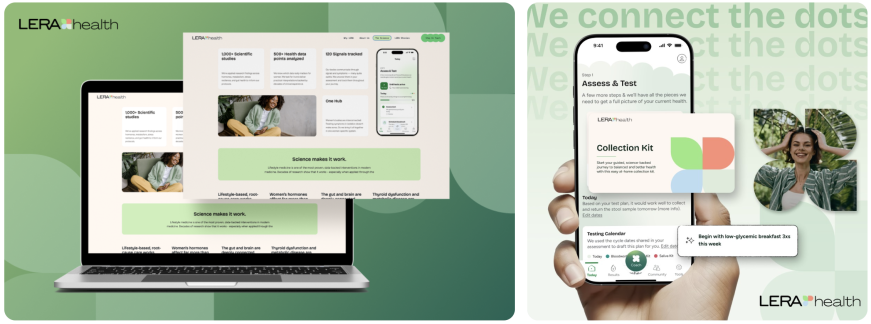
Source: 45 CFR 162.410 (eCFR)Lera Health shows the delivery discipline EDI work demands: a compliant, data-heavy platform built end to end. It is related proof of our ability to model structured healthcare data and handle sensitive records under HIPAA, the same rigor claims and remittance pipelines require.
Real claims and remittance flows, not just format familiarity.
HIPAA 5010 conformance and audit logging around every transaction generated or received.
We read companion guides fluently and know where situational rules and enrollment trip teams up.
We close the loop from 837 submission to 835 reconciliation so denials and underpayments are visible.
We connect EDI to your billing, RCM, and analytics stack rather than delivering an isolated parser.

Claims, eligibility, and ERA that reconcile
Send us your payer list and transaction scope. We will return a realistic plan with enrollment and testing milestones.
contact@agnotic.com
Partnerships
contact@agnotic.com