Challenge
Per-user rate limits throttle sync
Agnotic approach
We batch, back off, and drive sync from notifications rather than brute-force polling.


Google is retiring the Fitbit Web API, so Fitbit apps need a new connection. We build Fitbit access on the Google Health API, migrate existing builds with a re-consent flow, and map activity, sleep and heart rate data into FHIR Observations through a HIPAA-ready pipeline.
Trusted by global innovators









Fitbit data for third-party apps comes through the Google Health API, which Google calls the next generation of the Fitbit Web API. Google ended support for the Fitbit Web API on September 30, 2026 and turns it off on October 30, 2026. Agnotic Technologies builds new Fitbit connections on the Google Health API and migrates existing ones.
The move is more than a new base URL. Apps register in the Google Cloud console, use Google's OAuth2 client libraries and set access per scope. Existing tokens cannot carry over, so every Fitbit user must consent again, the step most teams underestimate.
The engineering concerns stay the same: token management, rate limits, notifications you reconcile against pulls, and turning activity, sleep and heart rate data into clinically meaningful FHIR Observations with correct coding and de-duplication. That is what separates a fitness widget from a monitoring platform.
A server-to-server pipeline from Fitbit data to a FHIR-native record your platform can act on.

Common failure modes
Challenge
Per-user rate limits throttle sync
Agnotic approach
We batch, back off, and drive sync from notifications rather than brute-force polling.
Challenge
Migrated users stop syncing
Agnotic approach
Tokens cannot move to the Google Health API, so we plan an in-app re-consent journey and track who has reconnected.
Challenge
Refresh tokens expire and break sync
Agnotic approach
Reliable token rotation and re-consent flows so users don't silently drop off.
Challenge
Raw activity data isn't clinically usable
Agnotic approach
FHIR mapping, de-duplication, and derived trends before data reaches clinicians.
The surface your Fitbit integration rides on: the Google Health API, the legacy Fitbit Web API it replaces, auth and the FHIR targets.
The next generation of the Fitbit Web API, for Fitbit, Pixel Watch and other device data on Google's OAuth 2.0 framework.
Google OAuth2 client libraries with scope-level read and write access, consent per data type and refresh-token rotation.
Notifications on new data, reconciled against pulls so your store stays current without over-polling.
Moving existing Fitbit Web API builds to the Google Health API, including a re-consent journey for every user.
Activity, sleep stages, and heart rate mapped to FHIR R4 with LOINC codes and UCUM units.
Per-user rate-limit awareness, backoff, and secure token storage so sync stays reliable at scale.
Where it runs
Steps and activity challenges with consented data at population scale.
Resting heart rate and sleep trends feeding an RPM dashboard.
Activity and sleep tied to care-plan adherence.
Consented activity and sleep data for study endpoints.
Behavioral signals feeding DTx engagement logic.
Sleep-stage data driving coaching and intervention.
Rate limits, token churn and re-consent are where Fitbit integrations break. We engineer for the operational reality.

Health Insurance Portability and Accountability Act
Protect PHI with privacy-first architecture, encrypted storage and transmission, strict access controls, and traceable audit logs.

General Data Protection Regulation
Implement lawful consent flows, data minimization, retention controls, and secure processing for sensitive health data.

Fast Healthcare Interoperability Resources
Enable standardized health data exchange across apps, care teams, and systems through standards-based FHIR APIs.

Health Level Seven International
Support enterprise-grade interoperability with HL7-based integrations for records, events, and clinical messaging workflows.

Health Information Trust Alliance
Align security programs to healthcare-specific control and risk management practices trusted by providers and ecosystem partners.

Health Information Technology for Economic and Clinical Health Act
Design with breach notification readiness, digital record safeguards, and operational controls that support regulated care programs.

FDA Software as a Medical Device
Plan software quality, traceability, and documentation pathways for products that may require SaMD review and submission.

Medical Device Regulation (European Union)
Prepare EU market-ready processes for risk classification, evidence tracking, and lifecycle governance under MDR expectations.

Substance Abuse and Mental Health Services Administration
Apply confidentiality controls and consent-aware sharing models for behavioral and mental health data experiences.
Standards we build against
A phased approach across app registration, OAuth2, migration and FHIR mapping.
We map the Fitbit data types and scopes your use case needs, their FHIR targets, and any existing Fitbit Web API users to migrate.
Register the app in the Google Cloud console, enable the Google Health API, configure scopes and redirect URIs, and build the OAuth2 flow.
Endpoint pulls, subscription webhooks, FHIR mapping, and rate-limit handling validated against test accounts.
Re-consent prompts for existing users, phased rollout, and sync-health dashboards once live.
Data surface
Each Fitbit data type has its own scope and clinical value.
| Data | What it holds | Access | Notes |
|---|---|---|---|
| Activity | Activity summary | Read scope | Daily steps, distance, and active minutes. |
| Sleep | Sleep log | Read scope | Sleep stages and efficiency. |
| Heart rate | Heart-rate time series | Read scope | Resting and time-series heart rate. |
| Notifications | New-data notifications | Webhook | Push on new data; reconcile against pulls. |
Endpoint names and access rules change with the move to the Google Health API, so we confirm each data type against Google's current documentation before the build.
Each fact below links to Google's own developer documentation, checked on 22 October 2026.
Support for the legacy Fitbit Web API ended on September 30, 2026, and on October 30, 2026 Google turns the Fitbit Web API off, after which it no longer syncs data to or from Fitbit users.
Source: Fitbit, Web API referenceThe Google Health API is the next generation of the Fitbit Web API and covers health and fitness data from Fitbit, Pixel Watch and other third-party devices and apps on Google's OAuth 2.0 framework.
Source: Google for Developers, Google Health APIFitbit users must re-consent when an app moves to the Google Health API, because it uses a different OAuth library, and existing access and refresh tokens cannot be transferred.
Source: Google for Developers, Google Health API migration: data accessAll Google Health API apps must be registered in the Google Cloud console, and read and write access is controlled at the scope level rather than the app level used by the Fitbit Web API.
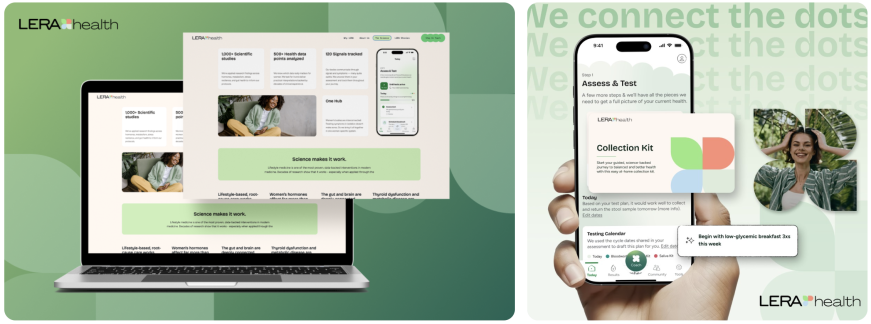
Source: Google for Developers, Google Health API migration: data accessRelated proof of compliant, integration-heavy delivery: the privacy-first data layer we built for Lera Health is the same foundation we bring to ingesting Fitbit activity, sleep, and heart-rate data into a FHIR record.
We ship Fitbit integrations that stay reliable under real user volume.
HIPAA, OAuth2 consent, and secure token handling designed in from sprint one.
We know Fitbit data, the move to the Google Health API, and FHIR mapping, so there is no learning curve on your budget.
App registration, OAuth2, and FHIR mapping run in parallel toward a live integration.
One accountable team across backend engineering, FHIR, and compliance.

Tell us the data types and use case. We'll return a plan covering the Google Health API, OAuth2, re-consent and FHIR mapping.
contact@agnotic.com
Partnerships
contact@agnotic.com