Chart summarization
Condense a long record into a clinician-ready synopsis with citations.


We build retrieval-augmented (RAG) systems over clinical data — summaries, drafting, and Q&A grounded in the actual record, with PHI guardrails, citations back to source, and human review on anything clinical.
Trusted by global innovators










The healthcare value of generative AI is real — summarizing a long chart, drafting a patient-friendly discharge note, answering 'what's this patient's cardiac history?' in seconds. The risk is equally real: a model that confidently invents a medication or a lab value is worse than no model at all. The difference is grounding.
We build retrieval-augmented generation (RAG) over your clinical data: the model answers only from retrieved, permissioned source documents, cites the spans it used, and abstains when the record doesn't support an answer. Every generation runs behind PHI guardrails and, for anything clinical, a human-in-the-loop review step. That's the line between a demo and a system you can deploy.
What it is
Generative AI for healthcare uses large language models to summarize, draft, and answer questions — but constrained by retrieval so the output is grounded in your actual clinical data rather than the model's training set.
The engineering that matters is retrieval quality, PHI guardrails, citation, abstention, and human review. We build all of it, and we measure faithfulness rather than trusting a good demo.
Retrieval, PHI guardrails, grounded generation with citations, and a review layer — assembled so you can defend every output to compliance and to clinicians.

Each capability pairs a generative feature with the guardrail that makes it safe to ship.
Answers are grounded in retrieved clinical documents via a vector store and hybrid search over FHIR resources and notes, so the model draws from the real record instead of its training data.
Chart summaries, visit recaps, referral letters, and patient-friendly instructions — each generation carries citations back to the source span so a clinician can verify before signing.
Prompt and output filtering, per-user data scoping, de-identification where full PHI isn't needed, and BAA-covered model hosting so no PHI leaks into a public endpoint.
The system cites the exact documents it used and abstains when retrieval doesn't support an answer — hallucination is engineered against, not hoped away.
Retrieval spans structured FHIR R4 resources and unstructured notes, so a summary reflects both the coded record and the narrative — not one at the expense of the other.
Faithfulness, groundedness, and safety are evaluated against curated test sets, and clinical output routes through review before it reaches a chart or a patient.
Where it runs
Condense a long record into a clinician-ready synopsis with citations.
Draft structured notes for clinician review and sign-off.
Plain-language discharge and instruction drafts at the right reading level.
Assemble and draft supporting documentation from the record.
Answer questions about a patient grounded in their own data.
Suggest codes and surface documentation gaps for review.
Grounded summarization and drafting save clinician time — but only when hallucination is engineered against and a human stays in the loop.
Health Insurance Portability and Accountability Act
Protect PHI with privacy-first architecture, encrypted storage and transmission, strict access controls, and traceable audit logs.

General Data Protection Regulation
Implement lawful consent flows, data minimization, retention controls, and secure processing for sensitive health data.

Fast Healthcare Interoperability Resources
Enable standardized health data exchange across apps, care teams, and systems through robust FHIR-ready APIs.

Health Level Seven International
Support enterprise-grade interoperability with HL7-based integrations for records, events, and clinical messaging workflows.

Health Information Trust Alliance
Align security programs to healthcare-specific control and risk management practices trusted by providers and ecosystem partners.

Health Information Technology for Economic and Clinical Health Act
Design with breach notification readiness, digital record safeguards, and operational controls that support regulated care programs.

FDA Software as a Medical Device
Plan software quality, traceability, and documentation pathways for products that may require SaMD review and submission.

Medical Device Regulation (European Union)
Prepare EU market-ready processes for risk classification, evidence tracking, and lifecycle governance under MDR expectations.

Substance Abuse and Mental Health Services Administration
Apply confidentiality controls and consent-aware sharing models for behavioral and mental health data experiences.
Standards we build against
We treat evaluation and guardrails as the hard part of clinical GenAI — because they are.
We pick a use case with clear value and bounded risk, define what 'correct' means, and decide where a human must stay in the loop.
We build the RAG pipeline over your clinical data — chunking, embeddings, hybrid retrieval, and citation tracking across FHIR resources and notes.
PHI filtering, abstention behavior, and a faithfulness/groundedness eval harness so quality and safety are measured against real test cases.
Human-in-the-loop review for clinical output, BAA-covered hosting, and monitoring for drift, cost, and hallucination signals in production.
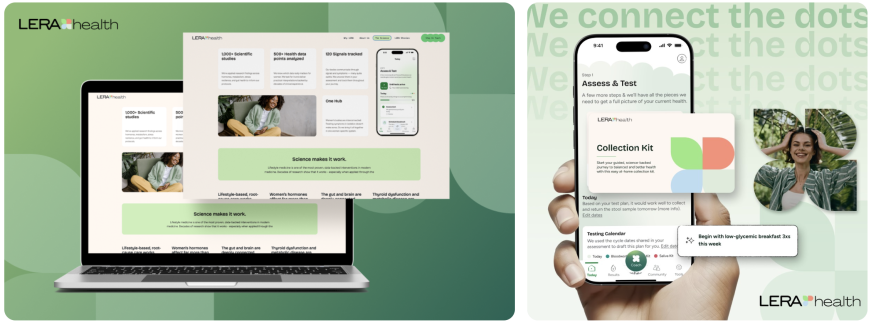
Lera Health demonstrates our approach to turning clinical inputs into trustworthy, personalized output within a privacy-first data layer — the same foundation that makes generative AI safe to deploy in a regulated setting.
We build for grounding, safety, and audit — the properties that separate a healthcare GenAI product from a risky demo.
PHI filtering, grounding, and abstention are designed in from the first prototype, not patched after a bad output.
RAG over your real clinical data with citations, so answers reflect the patient in front of you — not the internet.
Clinical output routes through review, and we build the workflow that makes that fast rather than a bottleneck.
We understand where generative AI helps and where it must never be trusted unattended.

Generative AI that survives a compliance review
Tell us the workflow you want to accelerate. We'll return a grounded, guardrailed design with an evaluation plan and a human-in-the-loop approach.
contact@agnotic.com
Partnerships
contact@agnotic.com