

01
Before a health system go-live
Interface and workflow testing against the hospital's test environment.



A missed defect in healthcare software can put a result in the wrong chart or lock a patient out of their care plan. Agnotic Technologies tests and validates healthcare software before each release, from HL7 v2 and FHIR interfaces to accessibility and FDA validation evidence, using synthetic data instead of patient records.
Trusted by global innovators











Healthcare quality assurance is the testing and validation that shows clinical and patient software is safe to release: functional and regression tests, HL7 v2 and FHIR interface tests, accessibility and security checks and, where FDA rules apply, documented system validation. Agnotic Technologies plans and runs this testing with synthetic data, never real patient records.
General QA catches broken buttons. Healthcare releases fail in places a general test plan never looks.
Interfaces are tested with a handful of clean sample messages, then real HL7 v2 feeds arrive with optional segments, repeats and local Z-segments.
FHIR APIs pass a quick smoke test but fail profile validation or terminology bindings when a partner connects.
Test environments are loaded with copies of production data, so PHI ends up on laptops and in vendor tools.
Accessibility is checked once by eye, so screen reader users meet unlabeled form fields in the patient app.
An EHR upgrade on the hospital side changes a message or an API, and nobody reruns the interface tests.
Software that holds FDA-regulated records ships without the validation evidence an auditor will ask for.
We start every test plan from this table, then adjust it to the risk of the specific release.
| Release type | Must-have tests | Evidence to keep | Common miss |
|---|---|---|---|
| Patient-facing web or mobile app | Functional, accessibility, security, device and browser coverage | Test results per release, accessibility report | Screen reader and keyboard paths |
| HL7 v2 interface | Message conformance, edge cases, error and retry handling, volume | Message test sets, interface sign-off | Optional segments and repeating fields |
| FHIR API or SMART on FHIR app | Profile validation, OAuth scopes, paging, error responses | Validator output, conformance test results | Terminology bindings and scope edge cases |
| EHR upgrade on the provider side | Interface regression, workflow regression in the EHR | Before and after test runs | Changed fields nobody announced |
| Software holding FDA-regulated records | Validation against requirements, audit trail and signature tests | Validation plan, traceability matrix, summary report | Traceability from requirement to test |
| AI or analytics feature | Accuracy on held-out synthetic cases, bias checks, fallback behaviour | Evaluation set, results, model version | Behaviour when the input is out of range |
Three principles run through every test plan we write for a healthcare client.
The tests that protect patient safety and data, such as result routing and access control, run on every build. Lower-risk areas get lighter coverage.
We generate synthetic patients and messages that look like real traffic, so testers and tools never need production records.
Interface and API tests run against the partner's test environment or sandbox, not only against our own mocks.
Testing and validation work we plan, automate and run for healthcare software teams.
A test plan built from the release's clinical and data risks, with clear entry and exit criteria for each test level.
Message sets for ADT, orders and results, with edge cases, malformed messages, acknowledgements and retry behaviour.
Resources checked against FHIR R4 profiles with the FHIR Validator, and APIs exercised with conformance test kits such as Inferno.
Generated patients, encounters and messages that cover your edge cases, with no real patient identifiers.
Automated checks plus manual screen reader and keyboard testing against WCAG 2.2 success criteria.
Automated interface and workflow suites rerun before and after an EHR upgrade, with the differences reported.
Access control, session, audit log and data exposure tests tied to the HIPAA Security Rule safeguards the product relies on.
Validation plans, traceability matrices and summary reports for software that holds FDA-regulated electronic records.
Chosen to fit your stack, your CI pipeline and the systems you integrate with.
Measures we report each release and review with your engineering and clinical leads.
Defects found in production, by severity and by the test level that should have caught them.
Which message types, segments and FHIR profiles have automated tests.
Open accessibility issues by success criterion and by screen.
Requirements linked to passing tests, where validation evidence is needed.
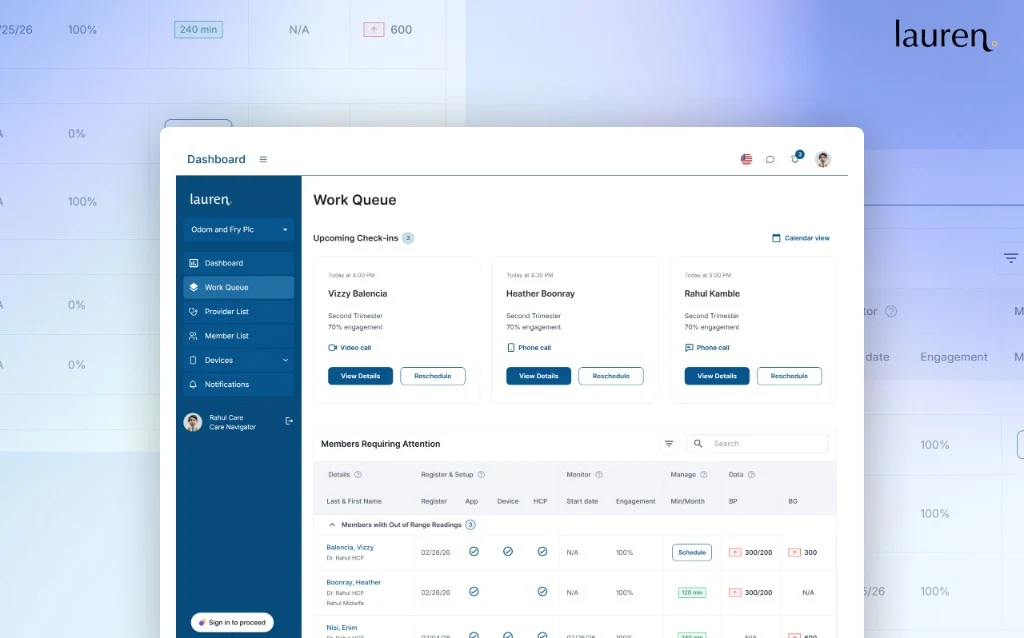
A HIPAA-ready maternal health platform enabling remote patient monitoring, care coordination, and personalized engagement from pre-pregnancy through postpartum.
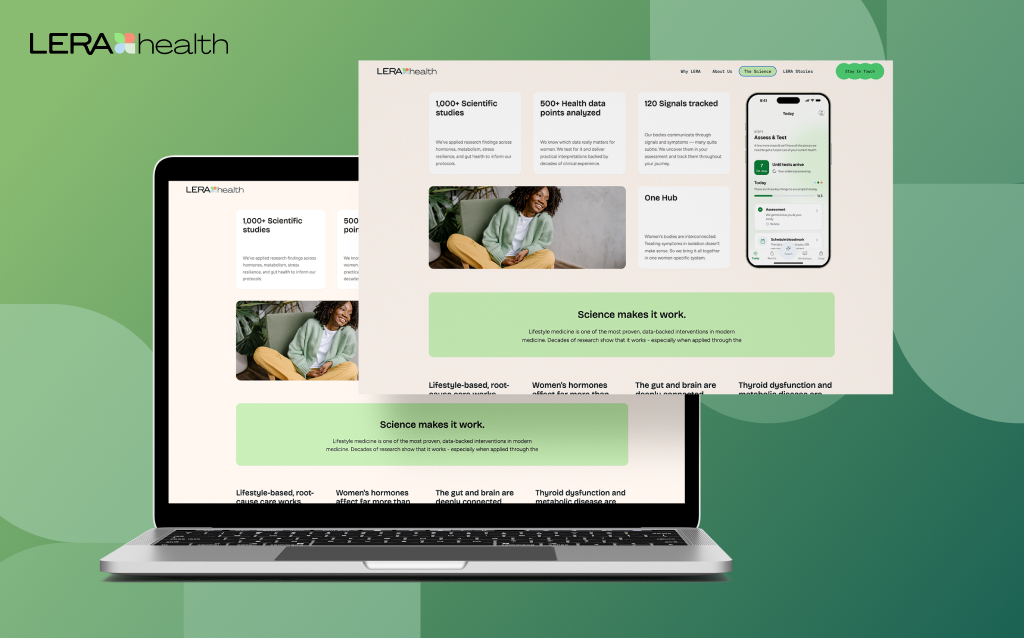
A women’s health product experience focused on guided care journeys, education, and compliance-aware workflows to support long-term engagement.
The moments that most often start a healthcare quality assurance engagement.
Interface and workflow testing against the hospital's test environment.
Regression suites run before and after the upgrade window.
Profile validation and conformance testing ahead of formal test runs.
Validation plans and evidence for systems that hold regulated records.
Root cause tests added so the same defect cannot return.
Automation for the regression tests your team repeats every sprint.
The environments and partners our test suites run against.
Tick what is true for your next release. Every gap is a question we would ask on the scoping call.
We build secure, scalable products designed for privacy, interoperability, and regulatory readiness from day one across every sector we serve.

Protect PHI with privacy-first architecture, encrypted storage and transmission, and strict access controls.

Enabling standardized health data exchange through standards-based API mappings.

Supporting enterprise-grade interoperability for clinical messaging and record workflows.
We combine deep technical expertise with industry-specific knowledge to deliver solutions that aren't just functional, but transformational.
We implement rigorous security protocols and compliance standards (HIPAA, GDPR, SOC2) across all industrial solutions to protect sensitive data.
Our architectures are built to handle massive data loads and user bases, keeping performance steady whether you're serving ten or ten million.
Using our suite of internal tools and proven frameworks, we reduce development cycles and get your product to market 40% faster.
Beyond simple wrappers, we build deep-learning integrations and predictive analytics directly into the core of your industry-specific workflows.
We start with the release that carries the most risk. Timing depends on scope; we agree a fixed first release of the test suite on the scoping call.
We review the product, the integrations, the regulatory context and the next release date.
Risks, test levels, environments, synthetic data needs and evidence to keep are agreed in writing.
Automated tests for the highest-risk flows and interfaces, running in your CI pipeline.
Manual, exploratory and accessibility testing alongside the automated suite for each release.
Suites kept current as interfaces, EHR versions and regulations change.
Short facts we test against, each linked to its primary source.
The HL7 FHIR R4 specification describes several ways to validate resources, from XML and JSON schema checks to the FHIR Validator, which tests structure, cardinality, terminology bindings, invariants and profiles.
Source: HL7 FHIR R4, Validating ResourcesInferno is an open source tool for automated FHIR conformance testing, and ONC's public Inferno host runs the (g)(10) Standardized API Test Kit, an approved test method for the 170.315(g)(10) certification criterion.
Source: ONC (ASTP), Inferno on HealthIT.govWCAG 2.2 is the W3C Recommendation commonly used as the technical benchmark for accessible web and mobile interfaces.
Source: W3CFor closed systems that hold FDA-regulated electronic records, 21 CFR Part 11 requires validation of systems to ensure accuracy, reliability, consistent intended performance and the ability to discern invalid or altered records.
Source: 21 CFR 11.10(a) (eCFR)HIPAA allows two ways to de-identify health data: expert determination, or the safe harbor method, which removes 18 categories of identifiers.
Source: 45 CFR 164.514(b) (eCFR)We don't just build products; we forge lasting partnerships. See how we've helped industry leaders transform their vision into technical reality.
“I can clearly see how Agnotic has a unique way of handling end-to-end development. They are always active on quick chat and provide support quickly.”

Aaron Phelan
Founder, Benchmark
“Agnotic combines deep technical expertise with strong domain knowledge. They understand the business context, anticipate challenges, and make collaboration smooth and effective.”

John Pasmore
Founder, Latimer
“Agnotic is the best technical team we evaluated. Their engineering excellence made our work dramatically easier and allowed us to stay focused on what matters most for maternal care outcomes. They took full ownership of the technical execution, and we are always happy to continue working together.”

Kim Smith
Founder, My Lauren
This page covers testing for healthcare software. These pages cover the build and integration work it protects.
Our general software testing and automation services across industries.
Building and running the HL7 v2 interfaces our tests exercise.
FHIR APIs and apps built to the profiles we validate against.
Software as a medical device built with design controls and validation evidence.
Secure delivery pipelines where automated tests run on every build.
Explore other production-grade engineering platforms we deliver across healthcare.
The technical patterns behind this platform translate naturally into adjacent verticals.