

Pharmacovigilance and drug safety
Teams that receive, triage and report adverse events.
- Intake forms for call centers, field reps and patients
- Case triage with seriousness and expectedness flags
- Deadline tracking for 15-day alert reports



Pharma teams run on systems that must prove who did what and when: adverse event intake, batch and quality records, serialization, and field tools for medical affairs. Agnotic Technologies builds this software for pharmaceutical companies, with 21 CFR Part 11 audit trails and validation evidence designed in.
Trusted by global innovators











Pharmaceutical software development is building the systems a pharmaceutical company runs outside the clinic: pharmacovigilance intake, quality and batch records, serialization and traceability, and commercial and medical affairs tools. Agnotic Technologies builds these systems for pharma teams as a services engagement, with 21 CFR Part 11 audit trails, validation evidence and data integration designed in from the first release.
Each function in a pharmaceutical company has its own records, its own regulator-facing deadlines and its own gaps between packaged systems.
Teams that receive, triage and report adverse events.
QA and operations teams working under CGMP rules.
Teams responsible for DSCSA product tracing.
Field and HQ teams that work with HCPs and payers.
Failure points we see most often when a pharmaceutical company audits its own software landscape.
Audit trail gaps: a record can be edited without a who, when and why, so it cannot be relied on in an inspection.
Spreadsheet handoffs: adverse event data moves from intake to the safety database by email, and deadlines are tracked by hand.
Unvalidated changes: a configuration change ships without a documented test, and the validated state is lost.
Serialization islands: the packaging line, the ERP and the trading partner portal each hold a different version of the product trace.
Field tools without controls: reps capture HCP interactions in consumer apps with no retention or access rules.
Not every system in a pharmaceutical company is a GxP system. This table is how we decide, on the scoping call, which controls a build needs.
| System | Governing rules | What the software must do | Validation depth |
|---|---|---|---|
| Pharmacovigilance intake | 21 CFR 314.80, 21 CFR Part 11 | Capture cases, flag serious and unexpected events, track the 15-day clock | Full: audit trail, e-signatures, test evidence |
| Batch and quality records | 21 CFR Part 211, 21 CFR Part 11 | Record complete data, back it up, check inputs and outputs | Full |
| Serialization and tracing | DSCSA | Hold product identifiers and transaction data, support 24-hour illegitimate product notices | Full for tracing data |
| Medical information requests | Internal SOPs, privacy law | Log requests and responses, control access | Moderate: access and retention controls |
| HCP engagement and field tools | Privacy law, company policy | Record interactions, enforce spend and sample rules | Moderate |
| Internal analytics and reporting | Depends on the data source | Read from validated systems without altering them | Light, unless used for GxP decisions |
Controls are design decisions, not a document written at the end. These are the ones every regulated build gets.
Every create, update and delete on a regulated record stores who, when, the previous value and the reason.
Signature meaning, re-authentication and signer identity on records that need them, per 21 CFR Part 11.
Requirements, risk assessment, test scripts and traceability written during the build, so the validated state is documented, not reconstructed.
Common systems, each delivered as a fixed-scope first release that can grow.
Web, mobile and call-center intake with seriousness triage and handoff to your safety database.
Deviations, CAPA, change control and training records with approval chains.
Product identifier capture, transaction data exchange and investigation records for suspect product.
Medical information request handling, standard response libraries and HCP interaction logs.
Pipelines that bring CRM, sample, spend and market data into one governed model.
Enrollment, adherence reminders and hub services, with HIPAA safeguards where PHI is involved.
Chosen for traceability, long support windows and fit with your existing platforms.
There is no fixed price. These are the factors that move effort most, and we size each on the scoping call.
A GxP system needs requirements, risk assessment, test scripts and traceability; a reporting tool needs far less.
Safety databases, ERP, CRM, document management and trading partner exchanges each add interface work.
Each signature point adds meaning text, re-authentication and signer records.
Historical cases, batch records and trace data must be migrated with their audit history intact.
A HIPAA-ready maternal health platform enabling remote patient monitoring, care coordination, and personalized engagement from pre-pregnancy through postpartum.
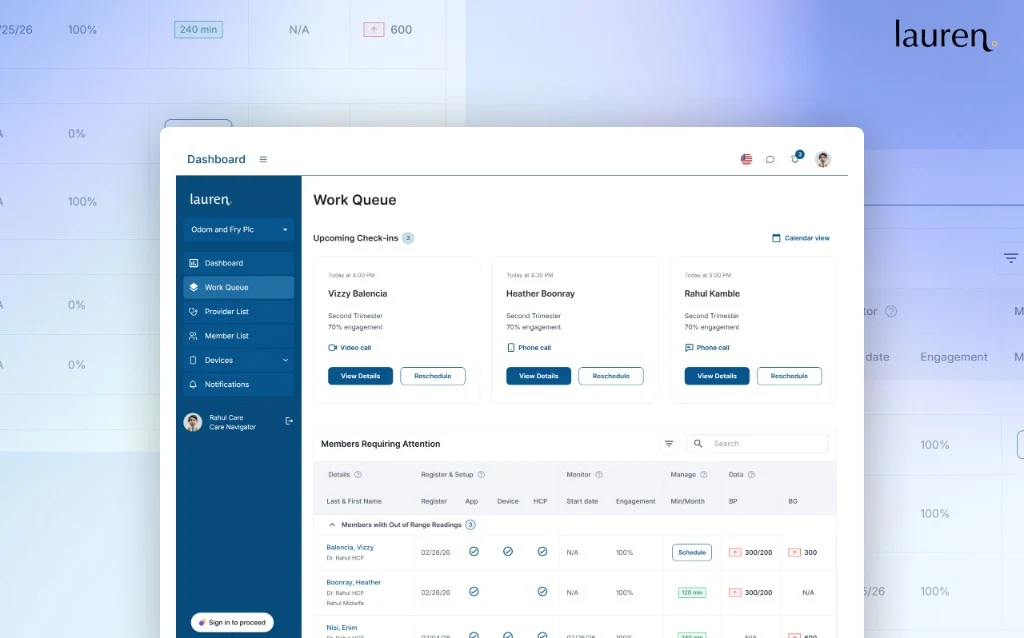
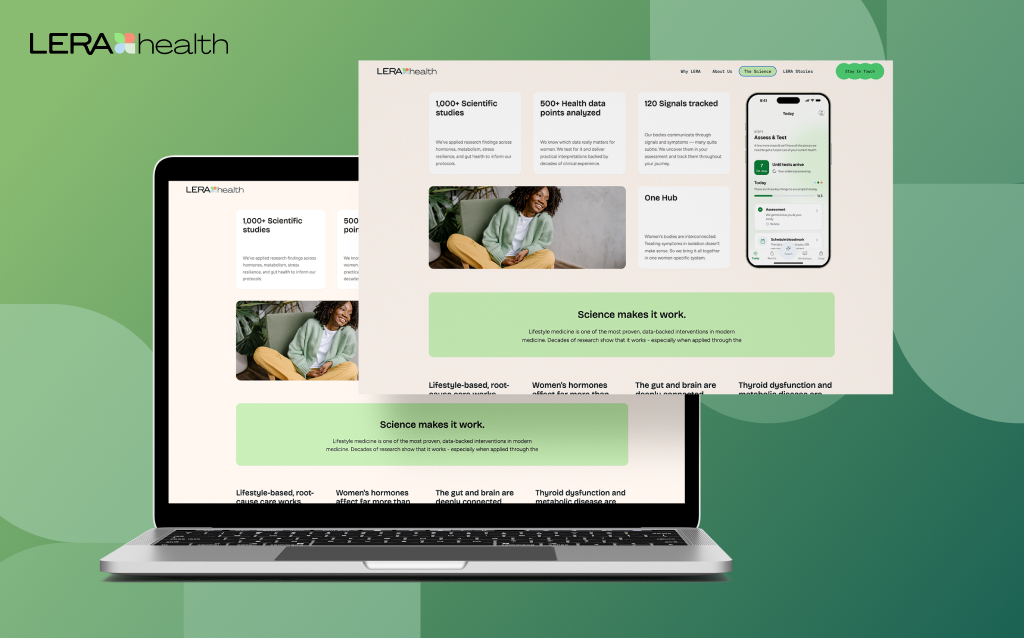
A women’s health product experience focused on guided care journeys, education, and compliance-aware workflows to support long-term engagement.
First releases we scope most often with pharmaceutical teams and pharmaceutical startups.
One intake path for call center, field and patient reports, with the 15-day clock visible from receipt.
Replaces a spreadsheet with an approval workflow and an audit trail.
A queue for mismatched or missing trace data, with investigation records and notification support.
Request logging, standard responses and reporting for medical affairs.
Mobile tools for reps and MSLs with retention and access rules built in.
A governed data model that replaces competing spreadsheets across sales, access and marketing.
The platforms a pharmaceutical company usually already runs.
What we agree with your quality team before the first release of any GxP-impacting system. Use it to check a vendor, too.
We build secure, scalable products designed for privacy, interoperability, and regulatory readiness from day one across every sector we serve.

Protect PHI with privacy-first architecture, encrypted storage and transmission, and strict access controls.
We combine deep technical expertise with industry-specific knowledge to deliver solutions that aren't just functional, but transformational.
We implement rigorous security protocols and compliance standards (HIPAA, GDPR, SOC2) across all industrial solutions to protect sensitive data.
Our architectures are built to handle massive data loads and user bases, keeping performance steady whether you're serving ten or ten million.
Using our suite of internal tools and proven frameworks, we reduce development cycles and get your product to market 40% faster.
Beyond simple wrappers, we build deep-learning integrations and predictive analytics directly into the core of your industry-specific workflows.
Timing depends on scope and validation depth. We agree a fixed first release on the scoping call.
We agree the system, its users, the rules that apply and the systems it must connect to.
User requirements and a risk assessment reviewed with your quality team.
One workflow built with weekly demos, audit trail and test evidence from the first sprint.
Executed test scripts, traceability and a change control procedure handed over with the release.
Later releases follow the same documented path, so the system stays validated.
Facts we design around, each linked to its primary source.
21 CFR Part 11 sets FDA's requirements for electronic records and electronic signatures, including secure, computer-generated audit trails.
Source: 21 CFR Part 11 (eCFR)Under 21 CFR 314.80, an applicant must report each adverse drug experience that is both serious and unexpected to FDA as soon as possible and no later than 15 calendar days from initial receipt of the information.
Source: 21 CFR 314.80 (eCFR)21 CFR 211.68 requires that computers used in drug manufacturing have input and output checked for accuracy and that a backup file of entered data is maintained, secure from alteration, inadvertent erasure or loss.
Source: 21 CFR 211.68 (eCFR)The Drug Supply Chain Security Act sets out steps toward an electronic, interoperable system to identify and trace certain prescription drugs at the package level, and trading partners must notify FDA within 24 hours of determining that a product is illegitimate.
Source: FDA, Drug Supply Chain Security Act (DSCSA)We don't just build products; we forge lasting partnerships. See how we've helped industry leaders transform their vision into technical reality.
“I can clearly see how Agnotic has a unique way of handling end-to-end development. They are always active on quick chat and provide support quickly.”

Aaron Phelan
Founder, Benchmark
“Agnotic combines deep technical expertise with strong domain knowledge. They understand the business context, anticipate challenges, and make collaboration smooth and effective.”

John Pasmore
Founder, Latimer
“Agnotic is the best technical team we evaluated. Their engineering excellence made our work dramatically easier and allowed us to stay focused on what matters most for maternal care outcomes. They took full ownership of the technical execution, and we are always happy to continue working together.”

Kim Smith
Founder, My Lauren
Detailed pages for the work that usually sits next to a pharma build.
Trial matching, eConsent and data capture for studies, covered on its own page.
Governed pipelines for safety, commercial and supply chain data.
Test scripts, automation and evidence for validated systems.
The safeguards we apply when a pharma program handles patient data.
Our main service page for custom healthcare builds.
Connecting safety, ERP, CRM and document systems.
Explore other production-grade engineering platforms we deliver across healthcare.
The technical patterns behind this platform translate naturally into adjacent verticals.